April 08, 2026
Postcards from Enrique: Berlin 2026
In Chicago, Music Director Enrique Mazzola is known as the “Maestro-around-town” — and indeed, he fondly calls the city home — but his international engagements continue at a brisk pace. We caught up with him during his run of a new Un ballo in maschera, with the Staatsoper Berlin.
You know Berlin very well, having been Principal Guest Conductor at the Deutsche Oper for a long time.
I’ve lived here before. I was doing Barber of Seville with Deutsche Oper, a new production with Katharina Thalbach. She is a very famous actress and director from West Berlin, going back to when she played the stepmother in The Tin Drum.
We had something like 10 performances, so I was here for several months
What’s your impression of the Staatsoper?
It’s a magnificent, iconic building in a beautiful 18th century style. That’s where the shows take place. More or less around the back there is another complete building which has everything — rehearsal rooms and offices, and it’s connected by an underground passage to the opera.
What have been your impressions of the orchestra itself?
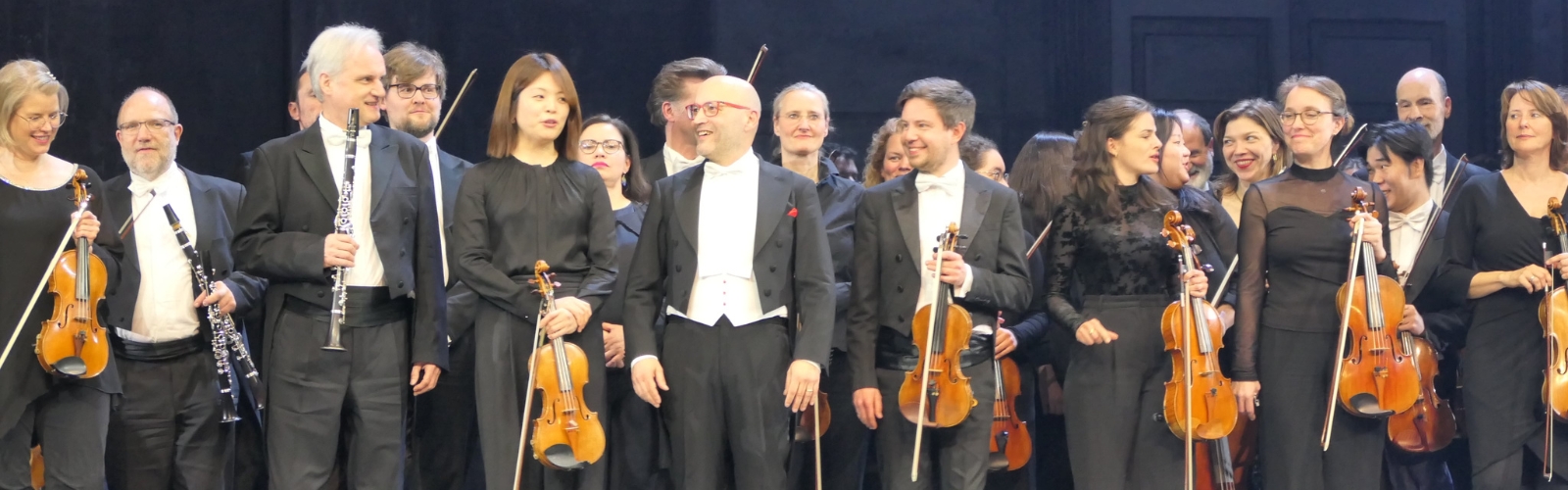
This is the Staatskapelle Berlin, a prestigious orchestra. It’s Christian Thielemann’s orchestra.
The strings have a beautiful, dark, velvety sound — and they have a magical (and useful) ability to play together even in emergencies — for instance if a singer isn’t connected to the tempo.
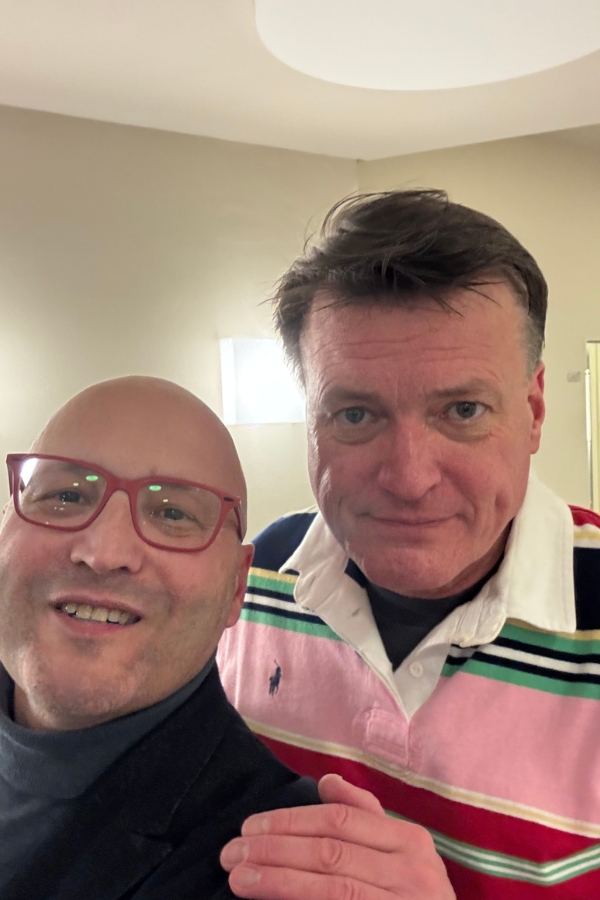
Enrique Mazzola and Christian Thielemann backstage.
Un ballo is of course a Verdi work. Is it a familiar part of your repertoire?
It’s almost hard to believe this is my first time conducting it. It's an opera that — how to put this? — was resounding in my home all the time. It's one of the operas that I sang in as a kid in the children's chorus of La Scala. The operas you learn as a kid become yours for your whole life. It’s imprinted on me. I knew Act I very well, and Acts II and III a little less, because we were not in them. But I heard them many, many times. My daddy had to stay — he was a co-repetiteur, a maestro, a coach. I was seven years old so there was no way that when I finished singing I could just change my costume and go home.
Amazing. Any other memories of that time?
There was the legendary mezzo Elena Obraztsova singing Ulrica. And I was literally terrified. She had very heavy makeup, and a dirty long wig — what Verdi really wants for Ulrica. I did my job. I was singing, but I wouldn't go near her. I was thinking, I know that this is theater. But what if she's really a witch? I had been instructed to understand that nothing was real, but there was always doubt in me, from the way the music was entering my brain. Like, OK, she's pretending, but what if she's really like this?
How is your cast for this production?
Well, we have three big stars. We have Charles Castronovo and Amartuvshin Enkhbat — perfect for these very typical Verdi tenor and baritone roles. Amartushvin will be with us at Lyric next season, for La traviata. And we have Anna Netrebko, a perfect Amelia. The opera is from 1859, very late bel canto, when the orchestras start to be bigger. And the voices need to be bigger.
And this is a new production?
It is — a co-production of Valencia, Spain, and the Staatsoper. The original 1859 work experienced a lot of censorship, and we are using the definitive version, which is the one set in Boston. In our version, director Rafael Villalobos has us in the U.S., during 1980s.
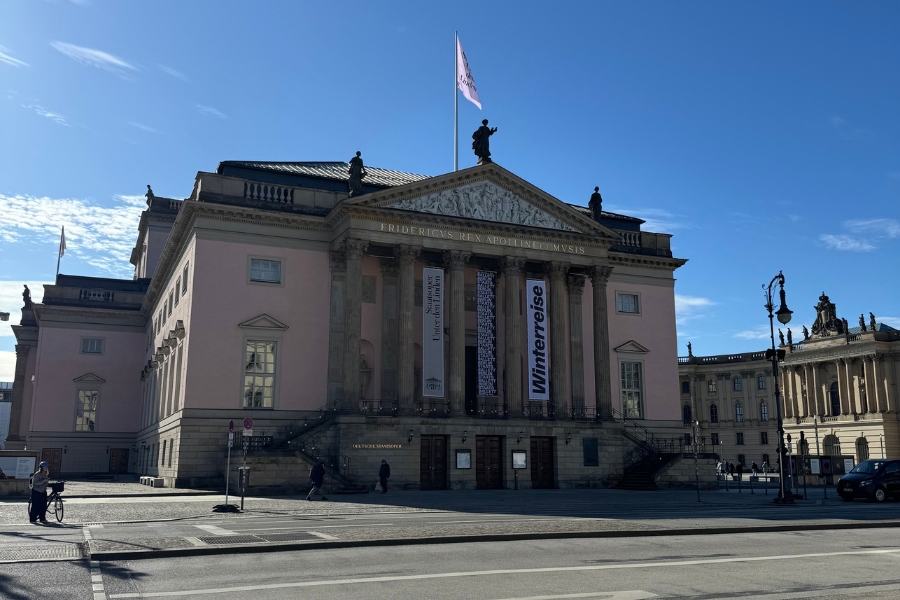
The facade of the Staatsoper Berlin.
This was your debut in this house. Does that still bring some excitement for you?
A lot. It's true that Berlin is very familiar to me. But getting to know a completely new orchestra and chorus, and a new administration, so many different people — it's part of the adrenaline. There is a lot of life here now. They are preparing Der Rosenkavalier and The Cunning Little Vixen. And of course they have the wonderful institution of the canteen.
That’s in the opera house?
Yes it is. The canteen at the Deutsche Oper is well known because it’s for all the opera company, but also for people walking in from the street for a cappuccino. The canteen at the Staatsoper is only for the people working here. It's a very beautiful meeting point. You have to update something with the dramaturg, you have to double-check which artists you want in the second rehearsal? OK, let's meet in the canteen.
We always ask you — have you had any free time?
Just this morning, because we started at 11, at 10 I went to the Neue Nationalgalerie. Just 40 minutes, but it was almost an intellectual need to see what’s new. They have an interesting Gerhard Richter collection — he loaned 100 works to them. So it's very engaging.
That's a lot of work. The Art Institute usually shows just a few by him.
That’s true. But in Chicago we have a lot — a lot — of other magnificent things.

Join Maestro Mazzola for his last performance of the season, Rising Stars in Concert, April 25 at 7:30 p.m.