October 01, 2026
A history of Spanish-language opera at Lyric
September 15 to October 15 marks the celebration of Hispanic Heritage Month, a wide-ranging festivity honoring the histories, cultures, and contributions of Americans whose ancestors came from Spain, Mexico, the Caribbean, and Central and South America. This year’s theme, "Unidos, Somos Más" (Together, We Are More), seems especially descriptive of the forces required to bring opera alive. Indeed, works sung in Spanish have a noteworthy history at Lyric.
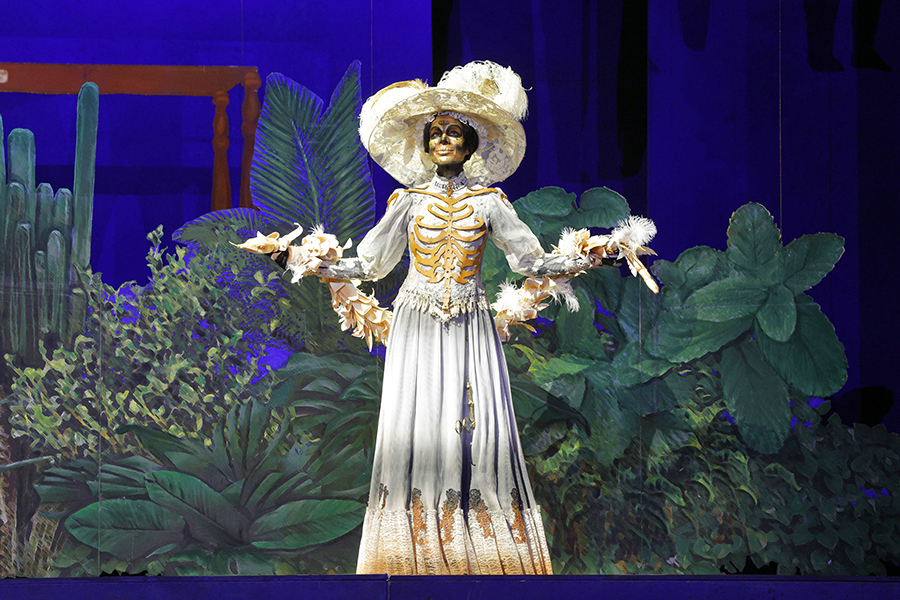
Ana María Martínez as Catrina in El último sueño de Frida y Diego.
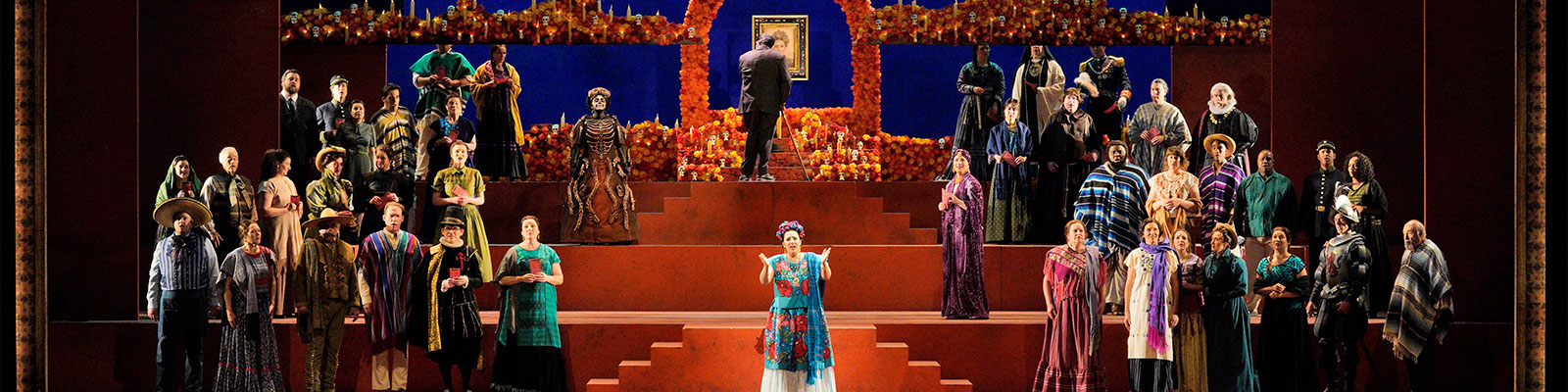
Most recently, in the 2025/26 Season, the company presented El último sueño de Frida y Diego, a magical-realist work by composer Gabriela Lena Frank and Pulitzer Prize winning librettist Nilo Cruz. Set during Día de los Muertos in 1957, the story unfolds as the aging, ailing muralist Diego Rivera longs to reunite with his deceased wife, painter Frida Kahlo. Frida is granted permission to return to the mortal world for 24 hours. As they journey through memories, art, and the vibrant landscapes of Mexico — from Alameda Central Park to Casa Azul — the opera explores profound themes of enduring love, physical pain, grief, and the immortal legacy of their turbulent marriage.
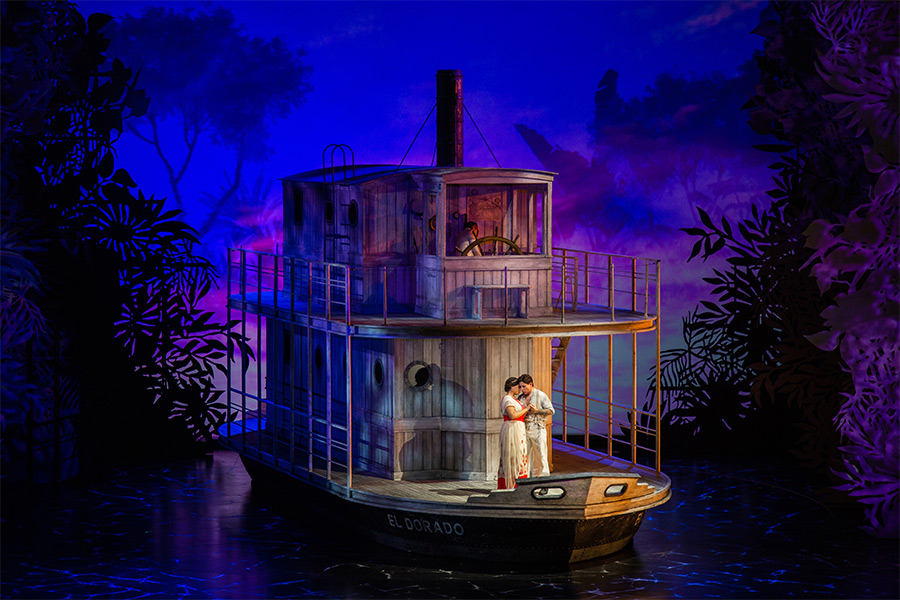
Gabriella Reyes and Mario-Rojas in Florencia en el Amazonas.
The first large-scale opera in Spanish at Lyric was the lush Florencia en el Amazonas, a gorgeous and mystical work by Mexican composer Daniel Catán presented in the 2021/22 Season. It is similarly magical realist, in the style of Gabriel García Márquez, and features a libretto by Marcela Fuentes-Berain, one of his pupils. Florencia was co-commissioned by Houston Grand Opera, Los Angeles Opera, and Seattle Opera and premiered in Houston in 1996. It was the first Spanish-language opera to be commissioned by major United States opera houses. When the Metropolitan Opera performed it for the 2023/24 Season, it was the first Spanish language opera in that company’s long history.
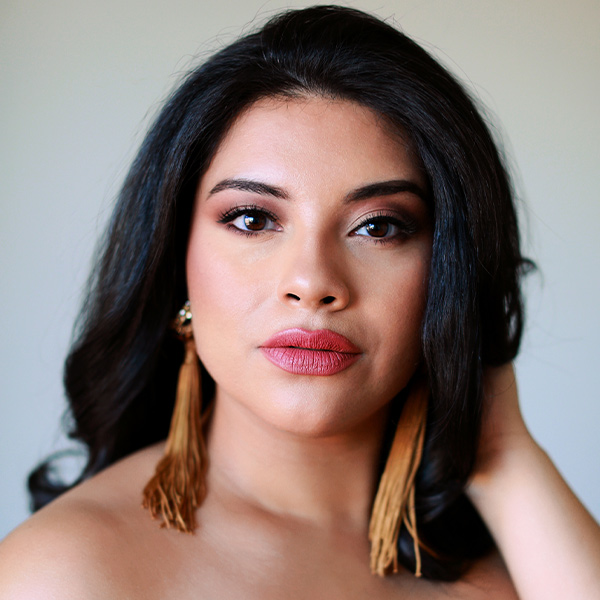
Gabrielle Reyes
At Lyric, the title character was sung by a true house favorite, Gabrielle Reyes, making her debut. The Nicaraguan-American soprano has since appeared at Lyric twice more, as Musetta/La Bohème (2024/25) and Nedda/I pagliacci (2025/26).
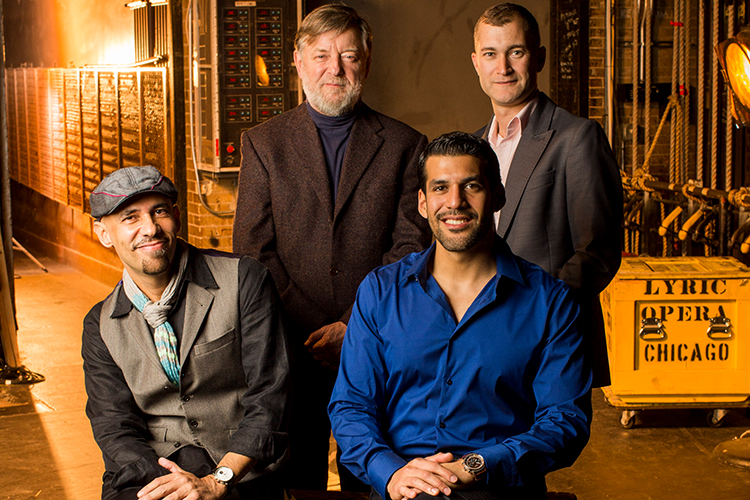
Bel Canto librettist Nilo Cruz, conductor Sir Andrew Davis, director Kevin Newbury, and composer Jimmy López.
Any list of works celebrating Hispanic heritage at Lyric would not be complete without mention of the company’s massive commission Bel Canto, from Peruvian composer Jimmy López with a libretto by Cruz. A highlight of the 2015/16 Season under the baton of Sir Andrew Davis, the libretto was sung in nine different languages including Spanish and Quechua (an indigenous language of Peru). The production was filmed for the PBS Great Performances series.
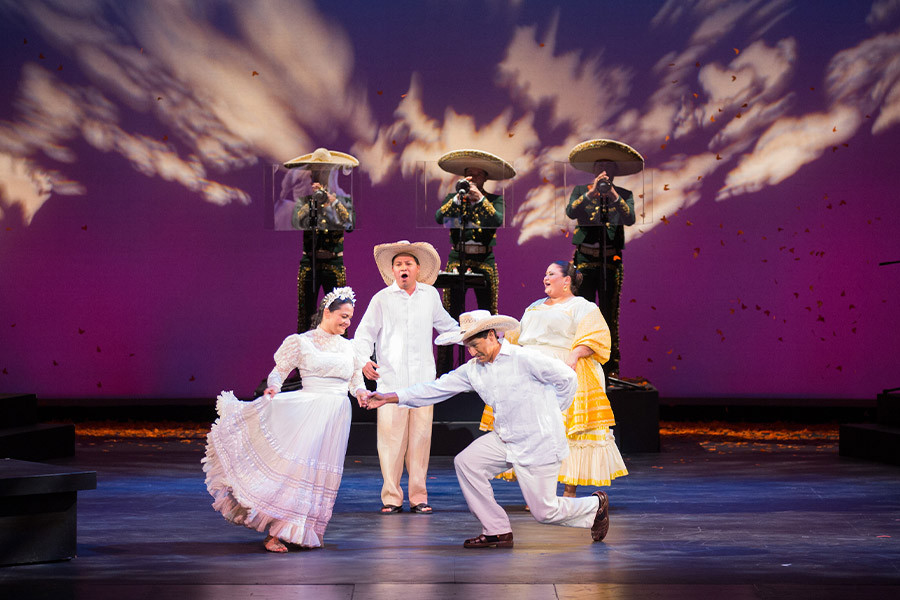
Midwest premiere of the world's first mariachi opera, Cruzar la Cara de la Luna (To Cross the Face of the Moon) with world-renowned Mariachi Vargas de Tecalitlán.
In 2013, Lyric brought the mariachi opera Cruzar la Cara de la Luna (To Cross the Face of the Moon) to both the Lyric Opera House and the surrounding community. Considered the world’s first mariachi opera, and written by José "Pepe" Martínez and Leonard Foglia, the story explores the bittersweet realities of migration, family, and home across generations. It follows Laurentino, an aging Mexican immigrant in Texas, as he looks back on his life, his late wife, Renata, left behind in Mexico, and his split identity. Merging traditional mariachi music with operatic storytelling, the piece beautifully captures the emotional and physical borders that divide and define immigrant families. Lyric subsequently commissioned its sequel El Pasado Nunca Se Termina (The Past is Never Finished), a bilingual family drama set on the eve of the 1910 Mexican Revolution, from the same creative team.
These works at Lyric are part of a larger, perhaps somewhat surprising trend in the operatic world. While Spain (and especially Seville) have been popular settings for operas from, for example, Mozart (The Marriage of Figaro and Don Giovanni), Rossini (The Barber of Seville), Verdi (Ernani, Il trovatore, La forza del destino, and Don Carlos), and, of course, Bizet (Carmen), among others, Latin American diasporic culture has rarely been centered. That may be changing. To the list of prominent works that features El último sueño de Frida y Diego and Florencia el Amazonas must be added Osvaldo Golijov’s Ainadamar (in Arabic, “Fountain of Tears”), first composed in 2003 and featuring a libretto in Spanish.
Golijov’s fusion of classical opera with flamenco singing, acoustic guitar, and electronic soundscapes created a deeply emotional, tragic, and distinctly Spanish atmosphere. Gabriella Reyes sang the lead in a number of performances.
Though the musical languages of these three works are quite different, they each present diasporic stories that encompass Spain and Latin America — Colombia, Brazil, Mexico, and Uruguay — in ways that move across time, language, and history. This month especially, but all year, Lyric joins in the celebrations.