May 15, 2026
Jackie Chan and Enrique Mazzola: Martial-ing artists
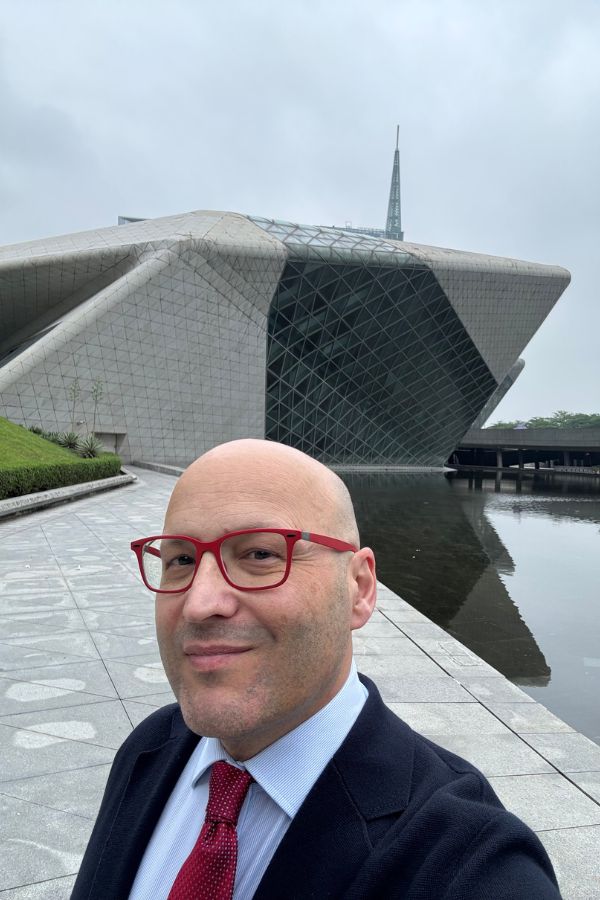
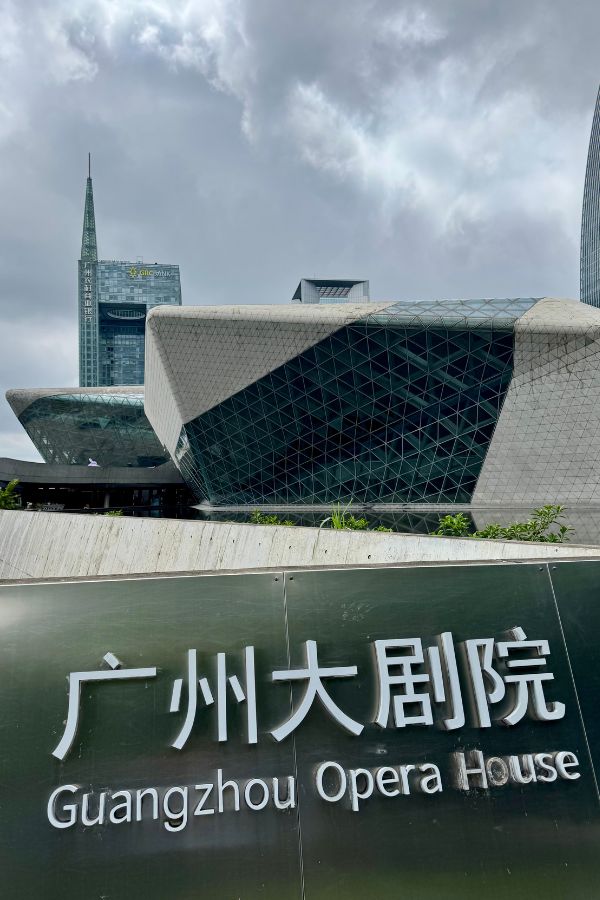
Music Director Enrique Mazzola travels to Guangzhou to conduct a new Turandot — directed by legendary martial arts actor Jackie Chan.
Let’s start with the basics. Have you traveled to China before?
This is my second time. The first was a tour with the Vienna Symphony — we did almost all Strauss, like a New Year’s concert. I remember thinking it was odd that they called me to conduct that tour. But it’s funny, in a way: with a Viennese orchestra, you just have to listen to how they play. You don't have to explain ¾ because it's in their DNA.
Calling you for Turandot makes a bit more sense.
This work is really in my DNA — it’s another opera that I did in the children’s chorus at La Scala. The finale is highly complex, so there are a lot of things that I have studied, and I have spent a lot of time building a structure of tempi that makes sense. But really we are here because it is almost exactly 100 years since Turandot premiered at La Scala.
How is your cast?
Oh, it's a very good cast — a Scala-, or Lyric-level cast. Ewa Plonka was singing Turandot in Milan until the day before yesterday. And Selene Zanetti was also there. The tenor is Ivan Gyngazov, who has sung Calaf in many houses.
And of course, a very unusual director is in place!
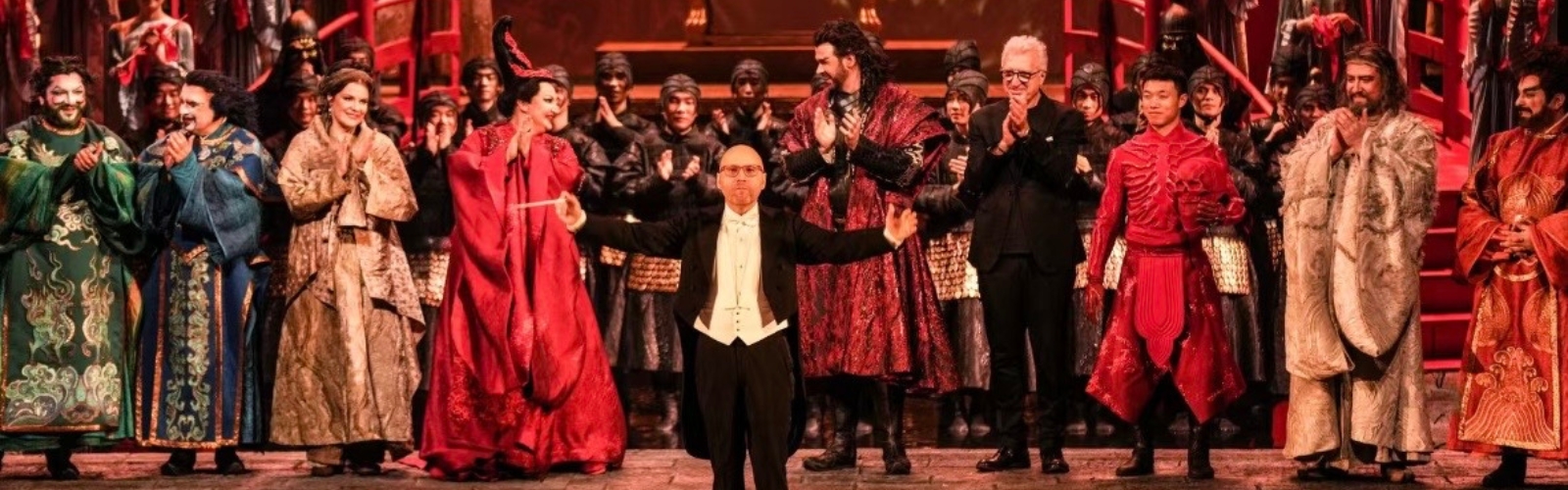
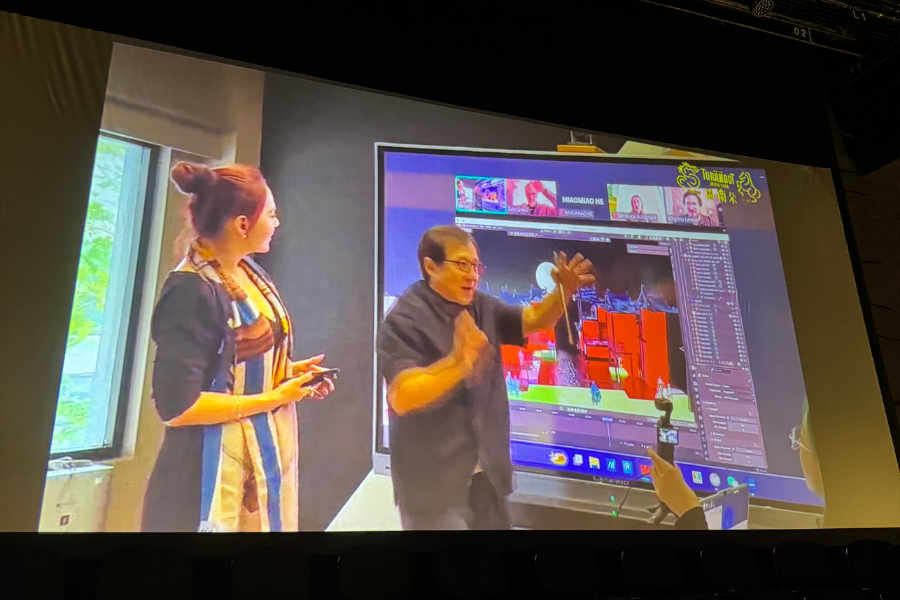
Jackie Chan! It's a very beautiful, spectacularly Chinese production, and the core of the production is the inclusion of young artists from the Jackie Chan Film Academy. Every main character has an equivalent “spirit” on stage — Turandot has a dancer who is a spirit, Calaf has a dancer. They are highly trained in martial arts, kung fu specifically, and there are a lot of fight scenes.
It sounds very interesting.
The opera starts with a prequel. You know, Turandot says that a barbarian horde killed her ancestor while attacking Beijing, and this story is shown. It's a very interesting concept, with the real characters and the spirits of the characters moving on stage in a very harmonious way.
Do you know Jackie Chan's films at all?
Oh, yes. As a kid, I saw everything. Of course, it was all dubbed in Italian.
He’s well known for his sense of humor.
I think so. And he is very funny. Of course, it's not a humorous opera. Though I do see humor in the music for the three ministers, Ping, Pang, and Pong. Puccini created the characters sort of like cynical old Tuscans, and I see Puccini himself smiling when he writes the parts. Actually I have three Italians in the roles so they really, really enjoy all the double meanings, and the subtlety of the text. There’s a very spicy, direct irony, which reminds me completely of Gianni Schicchi.
Turandot is very late Puccini, of course.
The reading I want to give is a reading of Puccini who is very aware of what’s happening in the world at the beginning of the 20th century. I hear a lot of Stravinsky, a lot of Debussy. It’s amazing how Turandot is almost post-impressionistic. We tend to categorize Puccini as verismo — but with Turandot he is well beyond verismo. Turandot is a fairy tale — a myth or a legend. And I think that with La Rondine, for example, in 1917, and definitely with Turandot, in 1924, Puccini is evolving in a very intelligent way. Verismo had become, I would say, a cliché — a lot of minor composers used the style to get their work into theaters in Europe. But Puccini — like, let's say, Verdi with Falstaff — elegantly just jumps beyond and creates something that is a manual of early 20th century music. There are some echoes of Bartók, there is definitely Stravinsky, there is so much Debussy, and I find the score highly interesting, highly evolved from Tosca and Butterfly and Bohème.
Are you hearing some actual direct influence?
We tend to see the history of music as if each composer was thinking, ‘What am I going to do next?’ But we know that Giuseppe Verdi had all of Wagner's operas on his piano. I'm sure that Puccini had all the scores he wanted. And he heard a lot. In the first two decades of the 20th century, there was much more mobility in Europe, and Puccini was a great traveler. We were already into the era of the Second Viennese School. What Puccini hears in the first two decades of the 20th century is the dissolution of tonality, the creation of a new world. It’s Braque and Picasso.
A great movement across the arts.
Crash the line, crash naturalism. For me, those first 20 years of the century are when the cultural, artistic, modern world was created. It's poetry, it's literature. I'm not speaking about war. There have always been wars. There were always politics. But look at what happened in Paris. Paris was like a bouillon at that time – new tendencies, fights, imagination, Cubism, Post-Impressionism — and Puccini was there. Turandot is the result of this big, boiling pot of ingredients.
You’re saying there is a different sound in this score.
It's about the finesse in the writing, the blurring of lines, like in Debussy, like in Pélleas. The sonic material remains in the air, like very distant voices and echoes that you hear from backstage. And you sit and think, did I hear it or imagine it?
He was a very cosmopolitan man, wasn't he?
He was. But, you know, sometimes in his libretti, I hear so many Tuscanisms, expressions that come from Tuscan dialect. In every opera, you find a couple of phrases that you would use only in Toscana. You know, Tuscans have a very cynical sense of humor — a heavy sense of humor, I’d say. Through all the layers of globalism in these operas, still I find his core Tuscan soul.
It seems that you hold Puccini in high esteem.
You had doubts? No, no, I love Puccini. What I love most in musicians is their ability to renew their way of thinking through what they experience. Puccini navigated the new wave of verismo with great success. He's a genius, he's spontaneous, he writes melody with ease. I would say Turandot represents the pinnacle of his production. And, if you like, it's a declaration of where Italian opera can go after the 1920s. He shows the young generations a possible way into the future.
The music has certainly endured.
The music is bellissimo. There are some moments where Puccini really reaches the highest level of poetry in music. There is such a sadness in Liù, so much fragility in Turandot's In questa reggia, an aria we recorded with Sondra Radvanovsky. It appears that Turandot has arrived to her state of mind in a sort of arrogant way, but no — it's all about her interior fragility. You feel it through the music.
Have you had a chance to try the local cuisine?
You know what I discovered? That the city of Guangzhou is the city of Canton. I'm conducting in Canton — the home of Cantonese cuisine!