
November 16, 2026
Grand as It gets: Massenet's Herodiade
Here’s a choice comment from one of the wittiest yet most thoughtful composers of the Belle Époque, Reynaldo Hahn:
I’ve come to the following conclusion — that there are several sorts of people who do not like Massenet: 1) those who do not want to like him or who at least give that impression; 2) those who do not like him because they dislike the theater; 3) the innumerable people who are envious of him — people who are failures, who are misunderstood, or who are imbeciles; 4) people who are cold, calculating, and dry-as-dust … . Apart from that, everyone else — in other words, all decent people — likes Massenet, except perhaps the inhabitants of the planet Mars.
That’s it, in a nutshell.
Yes, Jules Massenet was certainly a man who went out of his way to be liked. He usually succeeded in that aim, and he put up with a great deal of “sour grapes” from other composers who envied his fame. Yes, he was truly a man of the theater, and if others didn’t care for it, well, there were enough people who did for him to remain the toast of Paris for decades. And yes, despite so many triumphs, he was often condescended to by many “cold, calculating, dry-as-dust” critics, who tended to view popular success among the masses as detrimental to the propagation of high art. But the public — ah, the public! It was those “decent people” who mattered the most to Massenet, and he did all he could to satisfy them.
Massenet created more than 30 stage works. At least five continue to captivate audiences internationally, but so many of the others, even if enthusiastically received at their premieres, have faded from sight. While not entirely unknown today, Hérodiade has definitely become a rarity, making its long-awaited Lyric premiere cause for celebration.
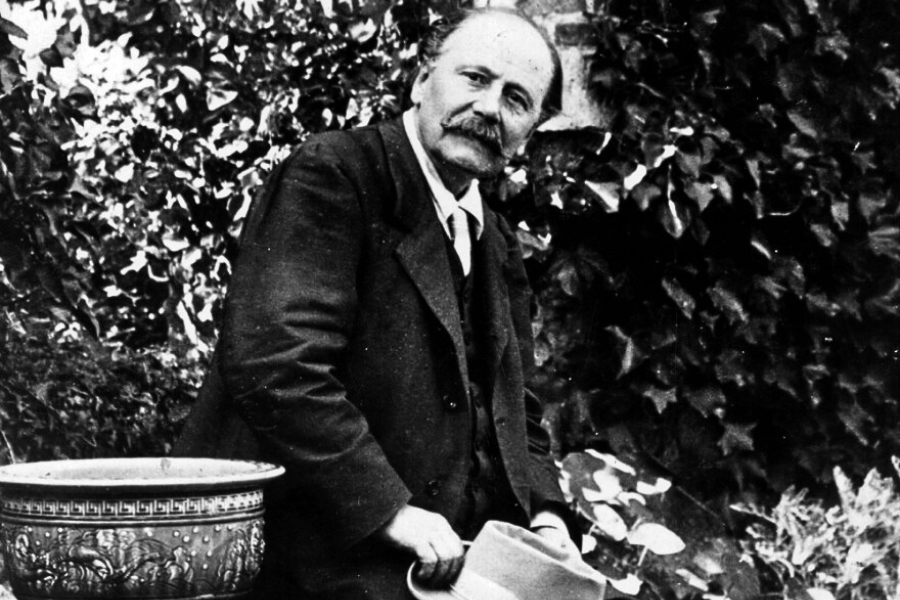
Portrait of Jules Massenet.
In the early 1880s, when Massenet was working on Hérodiade, he’d finally started to find his footing, operatically speaking. Although already successful with songs and orchestral music, his ascent to prominence in opera was hard-won. A graduate of the prestigious Paris Conservatoire and a gifted pianist, he’d initially struggled to make ends meet by giving private music lessons and playing percussion in opera orchestras. The latter proved the best move he could have made, introducing him to the world of professional opera, which would become his habitat for the rest of his professional life.
At 21, Massenet earned the ultimate “seal of approval” by winning the Prix de Rome, which gave him the freedom to do nothing but compose for two years at the Villa Medici. At the same time, he had ample opportunity to exude his unique charm, developing his matchless gift for meeting influential people. Seeing opera as the only path to true success, he tried his hand at it but eventually discarded the attempt: Esmeralda, which would have been his version of Victor Hugo’s Notre Dame de Paris.
Barely three months after he returned home, the still-young composer reached a career milestone when Paris’s Opéra-Comique presented the first Massenet opera ever staged, a one-act curtain-raiser entitled La Grand’Tante. Four other works would be premiered, none of them triumphantly, before Massenet’s medieval romantic tragedy, Le roi de Lahore (1877), turned his life around. In keeping with the grandiosity of the brand-new venue — the Palais Garnier, a.k.a. the Opéra de Paris — Massenet composed a massive, five-act grand opéra. It rapidly found favor in major houses outside France, including Europe’s two most venerable theaters, La Scala and Covent Garden.
At this point, in his mid-thirties, Massenet could now be legitimately viewed as the greatest hope among French opera composers. He was ready for what seemed a stupendous opportunity: writing a new opera to be introduced first at La Scala, then shortly thereafter at the Opéra. Massenet had received a scenario entitled Erodiade from Italian poet Angelo Zanardini. This was significantly revised to create a French-language libretto, prepared by the playwright Paul Milliet and (using a pseudonym,“Henri Grémont”) by Massenet’s publisher, Georges Hartmann.
It took the composer most of 1879 to complete a piano-vocal score and then eight more months for orchestration. After so much painstaking work, he was deeply shocked when informed that La Scala was no longer interested. To add insult to injury, the new director of the Opéra, Auguste Vaucorbeil (himself a composer, and not a notably successful one), rejected Hérodiade as well, apparently due to its dramatic content. Presumably he objected to what the late critic Rodney Milnes, a longtime champion of Massenet’s works, has described as the “discreet, semi-religious eroticism” of the opera’s duets for Jean and Salomé. It seems more likely, though, that Vaucorbeil’s negative response stemmed from resentment regarding Massenet’s burgeoning career.
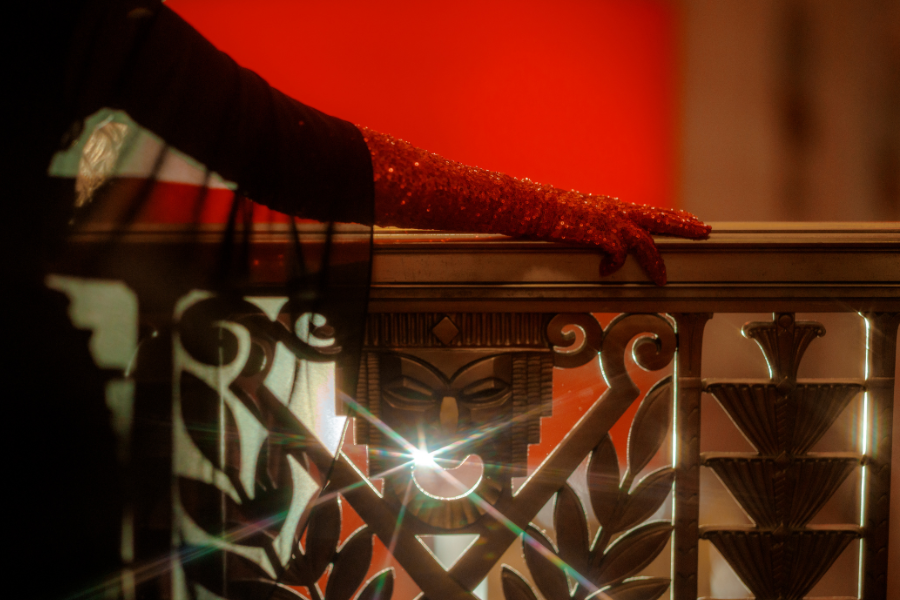
Clémentine Margaine as Federica Lombardi in Herodiade.
Finally, in early 1881, Brussels’s Théâtre de la Monnaie let Massenet know that they would willingly produce the premiere.
La Monnaie had a highly distinguished operatic tradition, and the first production of a new work there was big news. Not unexpectedly, the crème de la crème of Parisian critics and opera-lovers flocked to Brussels to welcome Hérodiade to the stage. A terrific success, it amassed 55 performances during its first Brussels season before rapidly triumphing worldwide. Its frequency in major theaters, however, lasted barely a half-century, and by the 1930s it was rarely produced outside France. There are very occasional sightings nowadays, but the work has never been heard at the Metropolitan Opera and hasn’t had a major American staging since that of San Francisco Opera in 1994.
Although it lacked the standard five-act structure of the usual French grand opéra (originally in three acts, Massenet revised it into four in 1884), Hérodiade had everything else that operagoers expected from that genre. It was large-scale in every sense, especially vocally: very seldom thereafter would Massenet write anything as grandiose for singers. Grand opéra also required a sizeable chorus and orchestra. Massenet reveled in both with Hérodiade, providing every possibility for variety of timbre and color. Absolutely de rigueur was ballet, and Hérodiade offered that, too, particularly in the last scene, with the five dances Hérode presents to commemorate the presence of the Roman proconsul. Above all, the overall ambience of this opera simply breathes grand opéra — that is, a larger-than-life quality, with every emotion expressed seemingly in primary colors, sometimes over the top yet always thrillingly vivid. Ultimately, Hérodiade consistently produces a genuinely physical response — a frisson, if you like — in its audience, which few French grand opéras have matched.
The libretto’s dramatic source is the atmospheric 1877 story of the same name by Gustave Flaubert, who looked to the brief Herodias/Salome/Herod episode found in both Mark 6:17-29 and Matthew 14:3-12. Flaubert’s tale is rather overwritten, the characters decidedly one-dimensional. In addition, his Salomé doesn’t even make her first appearance until the last of the story’s three parts. That leaves Hérodiade as Flaubert’s true protagonist, whereas in Massenet’s opera that label can’t really be applied to anyone (each of the four central characters has particular scenes in which they dominate). Further, Flaubert’s Salomé has no romantic feelings for Jean (John the Baptist); no doubt Massenet, keeping his audience’s predictable desires in mind, felt this would be expected and necessary. The marvelous result? Salomé’s two lovestruck, musically exquisite arias and her magnificent Act Four duet with Jean.
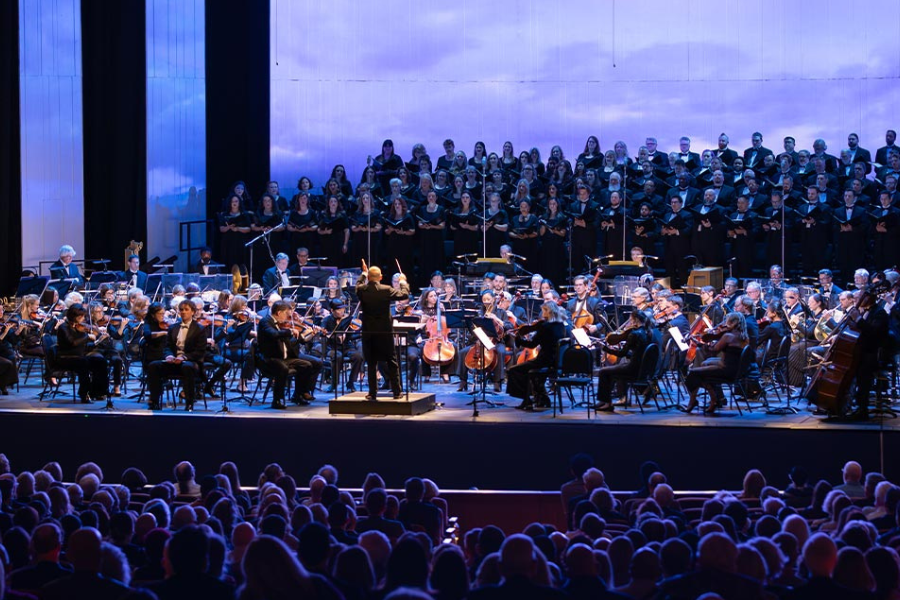
Enrique Mazzola conducts the Lyric Opera Chorus and Orchestra in Carmina Burana (2025).
Flaubert’s version of Hérodiade herself is almost witch-like in her sheer viciousness. Consistently vindictive and power-mad, she makes a genuinely alienating impression throughout the story. Massenet goes some distance to humanize her, as in the sublime Act One aria, “Ne me refuse pas.” When we first see Hérodiade, she’s on the warpath regarding Jean, ranting to her husband Hérode, “Avenge me for an outrageous offense!” But she then moves into the aria and turns much softer, beginning the seductive main theme with the words, “Don’t refuse me, my lord.” It’s there that she initially reveals how she abandoned her homeland and her child to marry Hérode. Her plea to him becomes almost touching — but of course, in the end we do lose any sympathy for her, given that it’s at her insistence that Jean is finally executed.
As for Hérode himself, he’s quite a weak human being (not at all a veritable force of nature like his wife), but his obsessive infatuation with Salomé does lead to the most passionate of all French baritone soliloquies: “Vision fugitive,” long a huge favorite of baritones everywhere. Here Massenet draws from Hérode an extraordinary intensity of longing that makes a surprisingly moving effect. But there’s the irony: as with Hérodiade’s aria, we’re drawn in that moment to sympathize with a character who, in the long run, definitely doesn’t deserve it.
Then there’s Jean, our leading tenor. Unlike his counterpart in Strauss’s Salome, he’s not just about unremitting fanaticism: there’s a good deal of expressive variety within the role, including many opportunities to “float” the voice sweetly in piano and pianissimo passages. Even though he resolutely refuses to let his relationship with Salomé become romantic, he does allow himself to confess love for her.
It’s not just the daunting choral, orchestral, and scenic requirements that have kept Hérodiade from the standard repertoire — it’s the vocal casting. Listening to this work, one senses the composer writing for “super-voices” — a distinction that applies not only to lead the quartet but also to the bass singing the astrologer Phanuel, who must effortlessly project formidable gravitas. At this point in his career, Massenet was still developing his understanding of what constituted vocally graceful, technically manageable operatic singing. It can’t be denied that the vocal line often lies quite exceptionally high. There are no florid demands, but in every other way the work is as demanding as anything in Verdi.
Lyric has assembled a rarity in our time: a truly outstanding Hérodiade cast, supported by the company’s stupendous chorus and orchestra under Music Director, Enrique Mazzola. In recent seasons Mazzola has become today’s most fervent advocate for neglected 19th-century French repertoire. He recorded this work several years ago with the Deutsche Oper Berlin and its presence here is proof of what we can count on — breathtakingly beautiful, dazzlingly dramatic music, just what grand opéra ultimately is about.