
November 13, 2026
Get to know: Hérodiade
Hérodiade, an opulent grand opera by Jules Massenet (1842-1912), is a work of considerable ambition, combining biblical drama, spectacle, sensual orchestral color, and intensely lyrical vocal writing. Although it has never achieved the repertory status of the composer’s Manon, Hérodiade remains one of the most glittering gems of the Belle Époque.
Its story of John the Baptist, Herod, Herodias, and Salome also gives it a particularly fascinating place beside Richard Strauss’s later Salome. Where Strauss turns the biblical story into a feverish psychological nightmare, Massenet treats it as a grand Romantic tragedy, rich in melody, atmosphere, religious feeling, and conflicts between love, desire, political power, and spiritual conviction.
The opera derives originally from Gustave Flaubert’s 1877 novella Hérodias. Massenet began working on the project in the late 1870s, with a libretto principally by Paul Milliet and Georges Hartmann, who used the pseudonym Henri Grémont. The subject was ideally suited to the grand-opera tradition: ancient Jerusalem, Roman authority, religious prophecy, spectacular crowds, passionate lovers, and a doomed ruler. Yet the director of the Paris Opéra rejected it, objecting to aspects of the libretto. The Théâtre de la Monnaie in Brussels offered to produce the opera, and Hérodiade received its premiere there on December 19, 1881. It was an immediate success, running for 55 performances. Massenet later revised the work substantially, expanding it from three acts to four; the definitive French version was settled near the turn of the century.
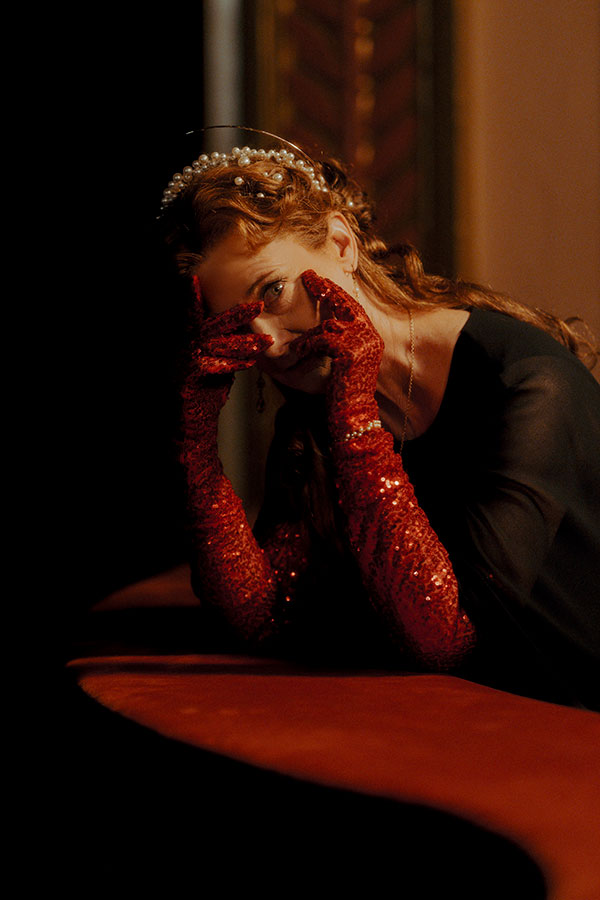
The plot unfolds in Jerusalem around the year 30. Salomé has fallen passionately in love with Jean, the prophet John the Baptist. Jean, however, is devoted to his religious mission and does not return her love in romantic terms. At the same time, Hérode, ruler of Galilee, is infatuated with the mysterious Salomé. The situation becomes still more complicated because Salomé is, unbeknownst to her, Hérode’s stepdaughter and Hérodiade’s daughter. Hérodiade is consumed by resentment toward Jean, who has publicly condemned her.
The central tragedy develops through these overlapping passions. When Hérode attempts to have Jean arrested, the prophet refuses to submit. Eventually Hérode orders Jean’s execution, and Salomé is reunited with him only in death. The final catastrophe is particularly brutal: Salomé attempts to kill Hérodiade, only to discover that Hérodiade is her mother. Hérodiade then reveals her identity, and Salomé, horrified by what she has learned and by the destruction around her, takes her own life.
One of the most striking features of Hérodiade is the way Massenet balances sweeping spectacle with intimate psychological expression. The score contains large choruses, ceremonial scenes, dances, processions, and vividly colored orchestral passages, but its greatest pleasures often come from the characters’ lyrical monologues and duets. Salomé receives some of the opera’s most memorable music, particularly “Il est doux, il est bon,” in which her love for Jean is expressed with extraordinary tenderness. Hérode has the famous “Vision fugitive,” a melody of yearning and sensual melancholy that has become one of the work’s best-known showpieces. All the roles require vocal strength and dramatic intensity.

The orchestration is marked by an exoticized sound world, an evocation of the opera’s ancient Near Eastern setting achieved with colorful instrumental combinations, including saxophones, harps, extensive percussion, and unusual offstage instruments.
Lyric Music Director Enrique Mazzola is especially well-versed in grand French repertoire, and indeed he recorded Hérodiade with the Deutsche Oper Berlin in 2024 for the Naxos label. He will lead bravura concert performances of the work at Lyric Opera of Chicago on February 23, 25, and 28, featuring a stellar leading quartet of Clémentine Margaine (Hérodiade), Federica Lombardi (Salomé), Piero Pretti in his Lyric debut as Jean, and Brian Mulligan (Hérode).
