October 23, 2026
Spreading her wings
With this Donizetti role debut, Ying Fang continues her stellar career in bravura style.
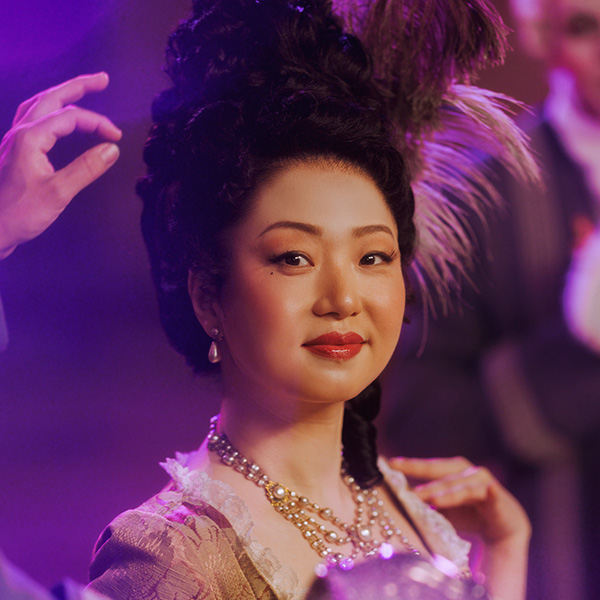
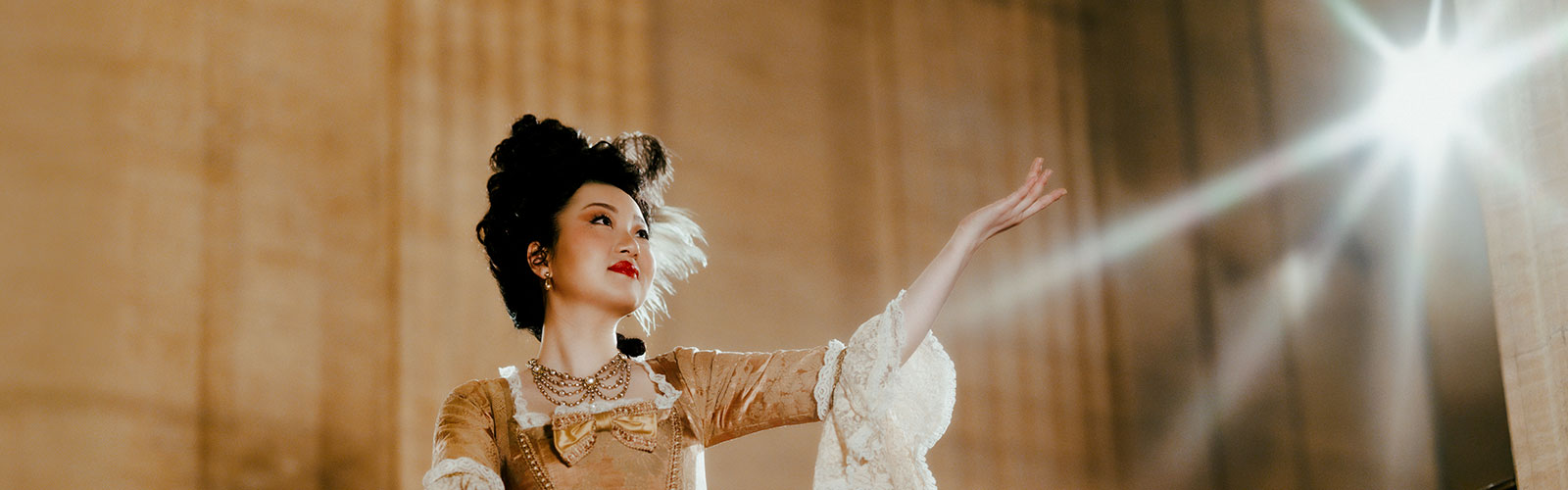
When Chinese soprano Ying Fang takes the stage to sing Norina, the clever young widow who powers the action of Donizetti’s Don Pasquale, it will mark the latest important role debut in a career that only continues to soar. It’s also a rare comic opportunity for Fang, whose exquisitely poised voice is most often heard in the operas of Handel and Mozart. (Indeed, her luminous previous appearances at Lyric are Mozart’s Susanna (The Marriage of Figaro, 2024/25), Pamina (The Magic Flute, 2021/22), and Zerlina (Don Giovanni, 2019/20)). Fang still loves that set of heroines, but she’s more than ready to take on a slightly racier character.
“You can still meet a Norina nowadays, right? She’s human — you can understand her. And she’s super fun to play,” she says. “Don Pasquale is opera buffa — a really funny comedy, and so different from opera seria, which I’ve been doing recently. Works like Idomeneo are about princes and these kinds of high, perfect characters. The characters in Don Pasquale are flesh-and-blood.”
When Fang describes the role, it’s not hard to see the appeal she holds for this exciting performer. “Norina is very special — one of the most spicy characters I have encountered,” Fang notes. “She’s apparently very smart, and a very good actress, and she’s quite independent for her time. We understand that she is financially independent, because she lives by herself. She is a widow, of course, and she knows what she wants in her life. Norina makes a very sharp turn from pretending to be a convent girl, who says, ‘Oh, I’m so afraid. I’m so good.’ And then, immediately after the marriage contract with Don Pasquale is signed, she turns into this scary, extravagant monster.”
There is other new territory here. To date, Fang has sung relatively little bel canto repertoire. “I have done some Rossini — the Contessa de Folleville in Il viaggio a Reims at Wolf Trap and Elvira in L ’italiana in Algeri at the Met. And Donizetti’s Elisir — Adina at Juilliard and Giannetta at the Met. But Don Pasquale is a great expansion of my repertoire as a singer and as an actress. It is a great role, written so beautifully by Donizetti.”
Donizetti devised show-stopping moments for all the characters in Don Pasquale, but he was particularly generous to Norina, whose dazzling Act I aria with cabaletta, “Quel guardo il cavaliere...so anch’io la virtù magica,” requires a virtuoso, a soprano who can command crisp trills, rapid-fire staccati, and a solid high C. While no one would consider Mozart roles simple to bring to the stage, Norina brings a particular set of requirements. “Musically, it’s so different from what I’ve been doing. This is fully bel canto — those works are all about the voice, and about the singer,” Fang adds. “The composer gives freedom to the individual — you can do what fits you the best in a cabaletta, or in ornamentation, or in how long you want to hold a note. Donizetti gives a singer the freedom to show off her voice!”
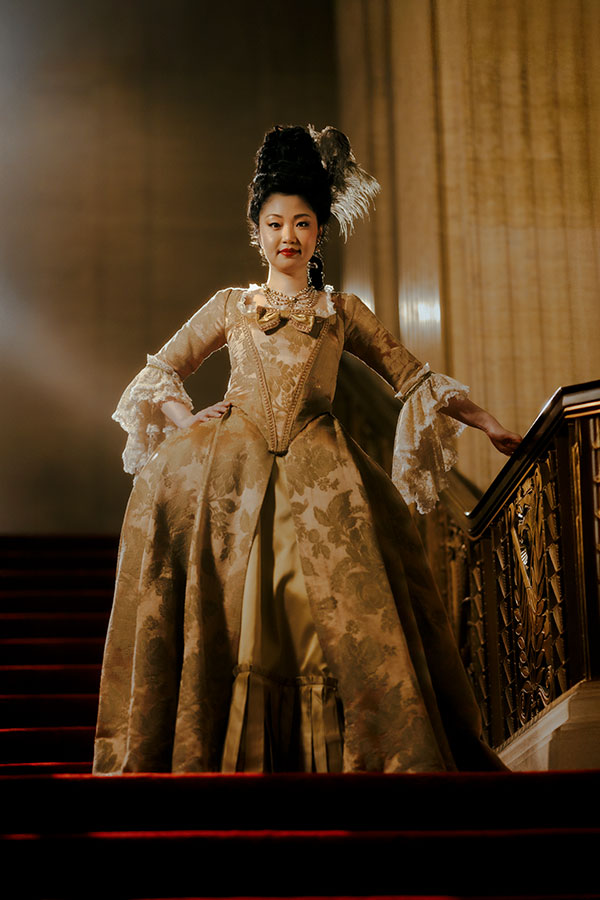
Fang’s hometown is Ningbo, in southeastern China. She attended Shanghai Conservatory before earning her master’s degree at Juilliard and entering the Metropolitan Opera’s Lindemann Young Artist Development Program. Fang remembers a big shift in learning style when she started at Juilliard. “My training [at Shanghai Conservatory] was not as specific as it is in the U.S. conservatories,” she remembers. “In the U.S. they tell you, ‘You should sing this because you’re going to do this in five years.’ In China, school was not as much about the career as it was about discovering the potential of the voice. At Juilliard, because it’s a much more systematic way of thinking and learning, you start to think, ‘Ah. My voice is good for this and such and such, and Baroque and Mozart, and then you start to kind of plan what’s next.”
Fang demonstrated her versatility early in her career, when she took on three contrasting roles in a 2014 Met + Juilliard “Concert of Comic Operas,” in which she sang full-scene excerpts from Die Entführung aus dem Serail, Benvenuto Cellini, and L’elisir d’amore, conducted by James Levine. She credits her success in that concert to “...encouragement from Maestro Levine, for sure, because it was very ambitious to do three very different characters by three composers in one night. Back then, I thought, ‘I don’t think I can sing this Constanze aria!’ And Maestro Levine said, ‘No, it’s in your voice. It’s beautiful. Just do it.’ It’s difficult to put into words, but Maestro Levine would hear someone for the first time, and he could hear the future of the voice. For him, it was always about what was next — that was what made his conducting so exciting.”
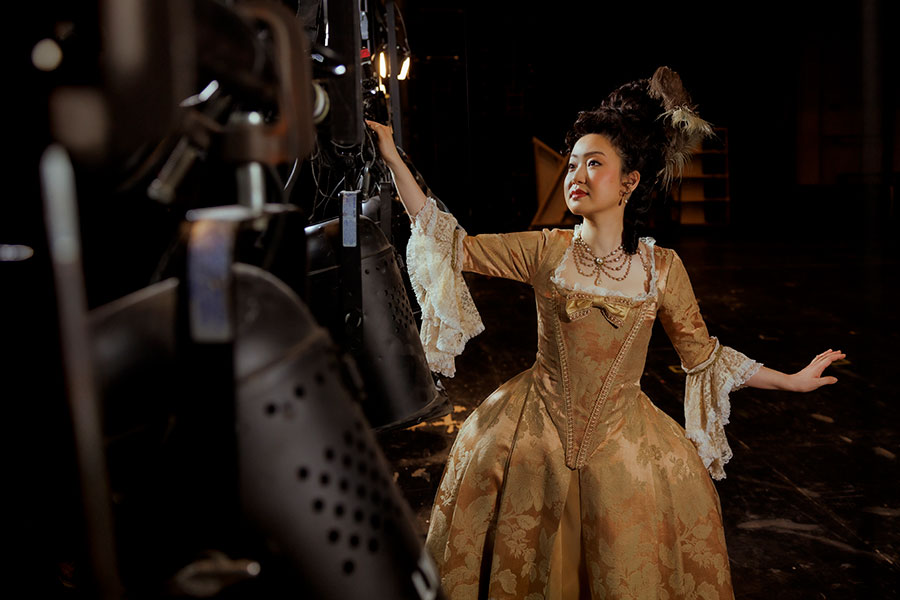
It’s fascinating to learn also that Fang almost took on Norina more than a decade ago. “When I was a young artist, the opportunity came for me to sing Norina at the Met. It was very last minute. And I went to Maestro Levine, and I said, ‘Maestro, should I take this?’ And he said, ‘No, absolutely not! Not now — wait until you are ready.’ And he was right. It’s a difficult thing, I think, to know when you’re truly ready for something. But I’m glad I listened to him. To wait was the smart thing. Now, years later, I feel truly ready.”