June 22, 2026
Where the nation sings: American opera at Lyric
In its earliest decades, Lyric Opera of Chicago — the improbable 1954 brainchild of 28-year-old Carol Fox and two initial partners — was known as a house for Italian classics. The reputation was neither pejorative nor inaccurate; in the 1958 Season, for instance, there were short runs of 12 different operas: five from Verdi, three Puccini, and one each from Rossini and Leoncavallo, with a Boris Godunov and a Tristan to round out the set.
But even in Lyric’s first shining, optimistic year, American-born opera had a place, with performances of The Taming of the Shrew, by Philadelphia-born conductor and composer Vittorio Giannini, in its first Chicago performances.
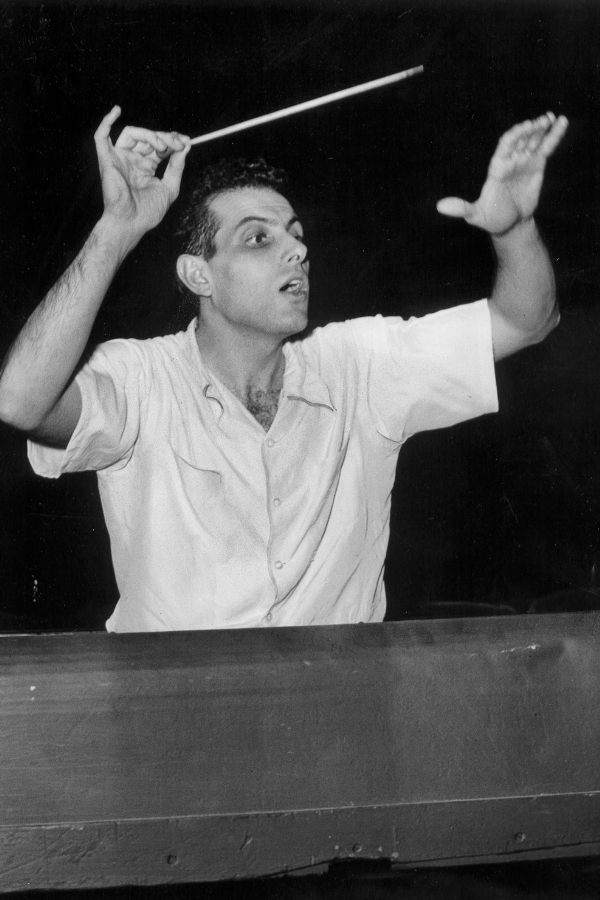
Conductor and Lyric Opera co-founder Nicola Rescigno did double duty in November 1954 conducting Bellini's Norma and Giannini's The Taming of the Shrew during Lyric's first season.
The story originated with a British playwright, and the two-performance run was overshadowed by playing in repertoire with Bellini’s Norma (featuring the triumphant U.S. debut of Maria Meneghini-Callas), but opera in English, created on the North American continent, was part of the company’s DNA right from the start.
Originally composed in 1950, this Shakespearean adaptation would prove to be the most successful of Giannini's operatic works, becoming one of three finalists for the 1953 Pulitzer Prize in Music. At Lyric, under the baton of Nicola Rescigno (one of Fox’s co-founders, Lyric’s artistic director in the company’s first two years, and also the conductor for Norma), it received its first full-scale staging (the same year, in New York, it became the first opera to be broadcast in color on television).
Giannini was a prolific and important figure in mid-century American music. He studied first at the Milan Conservatory, then completed graduate work at Juilliard, where he would eventually teach. There and elsewhere, his students included such varied titans as John Corigliano, Adolphus Hailstork, and even Herbie Hancock. In 1937 he wrote an opera based on Nathaniel Hawthorne's iconic American novel The Scarlet Letter.
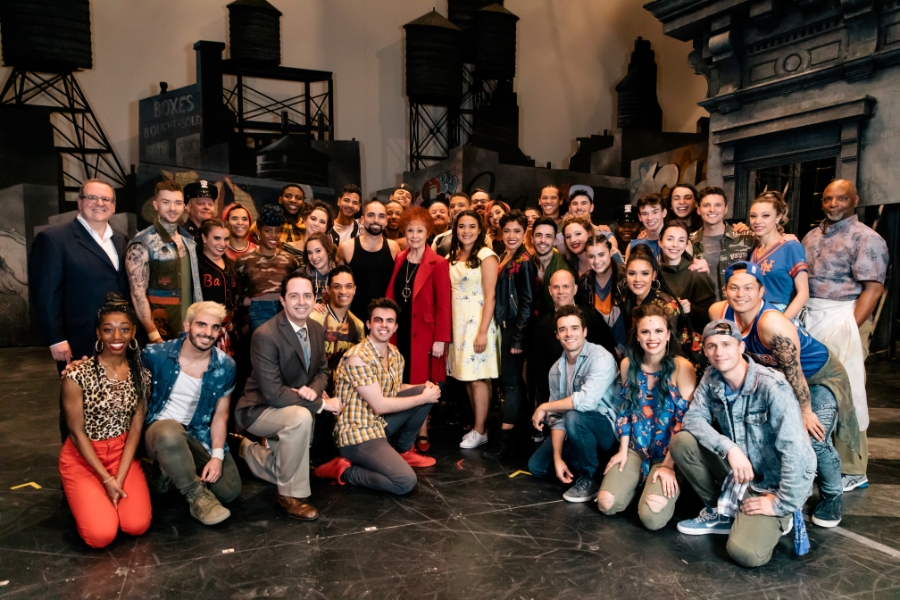
Perhaps best known for her role as Maria in West Side Story, Carol Lawrence returned to Lyric in 2019 to visit the cast during the musical's Lyric premiere.
The second of the three American operas presented during Lyric's first quarter-century was the Chicago premiere of Lord Byron’s Love Letter, in a new production. Calling it “American” is a stretch; the title, alas, references another great English poet, and the composer, Raffaello de Banfield, was an Italian born in England (he did spend a great deal of time in the United States during his artistic career). More important to counting this work into the American trio is the setting — New Orleans in the latter part of the 19th century — and the librettist — the great Tennessee Williams, in full Southern Gothic mode.
Rescigno conducted. Choreography was by the legendary Ruth Page, who would work on more than 40 subsequent Lyric productions. Her male soloist was the dashing and prolific Kenneth Johnson. The female soloist, Carol Lawrence, would go on to great acclaim originating the role of Maria in the 1957 Broadway premiere of West Side Story. She was nominated for a Tony for that performance, losing to Barbara Cook in The Music Man, but is just as widely known for her extensive television career (including a two-year run on General Hospital) and her long marriage to Robert Goulet.
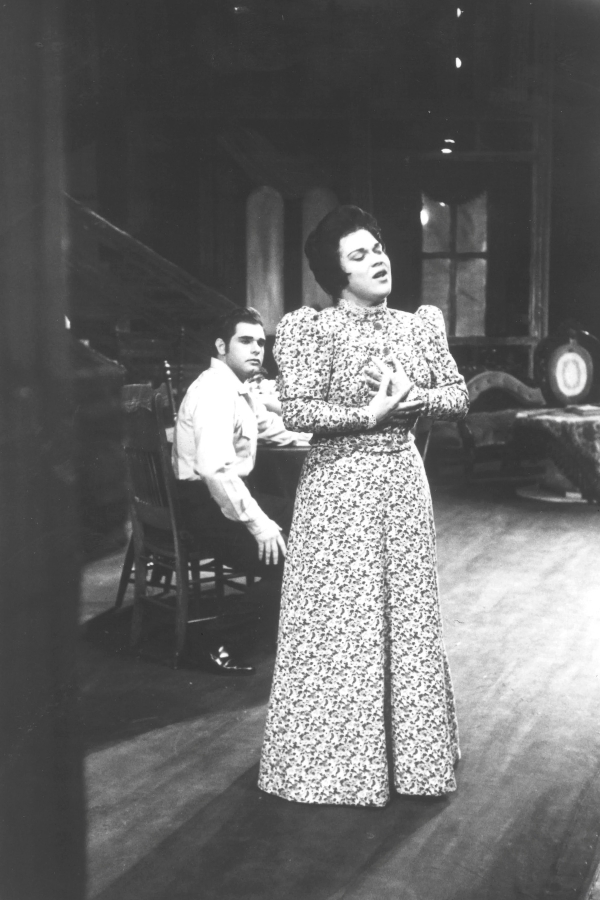
Barry Morell as Mark and Marilyn Horne as Lora in the 1961 world premiere of The Harvest at Lyric Opera of Chicago.
The 1961 Season brought another work by Giannini, The Harvest, in its world premiere — the first production at Lyric supported by the Ford Foundation. His co-librettist was Karl Flaster. Giannini conducted a cast that included Geraint Evans and William Wildermann, who became stalwarts at the company through the 1960s and 70s, as well as a 20-something Marilyn Horne, making her Lyric debut.
The story follows a tense American farming family coming to terms with a changing world and the financial burdens of their way of life. The volatile group dynamic boils over when family members and lovers cross each other, ultimately culminating in a tragic, blood-soaked climax.
Reviewing the production in The New York Times, longtime critic Harold C. Schonberg made no particular mention of Horne, but appreciated the freshness of the work. It was, he wrote, “as close to American verismo as anything done to date.”
In the 2026/27 Season, Lyric Opera of Chicago will bring more American stories to life. Don’t miss Rhiannon Giddens and Michael Abels’ Pulitzer Prize-winning Omar (October 23-28), Carlisle Floyd’s Susannah (April 11-23) — returning after more than 20 years — and Frank Loesser’s beloved Broadway musical Guys and Dolls (June 4-20).