September 15, 2026
Taking his seat
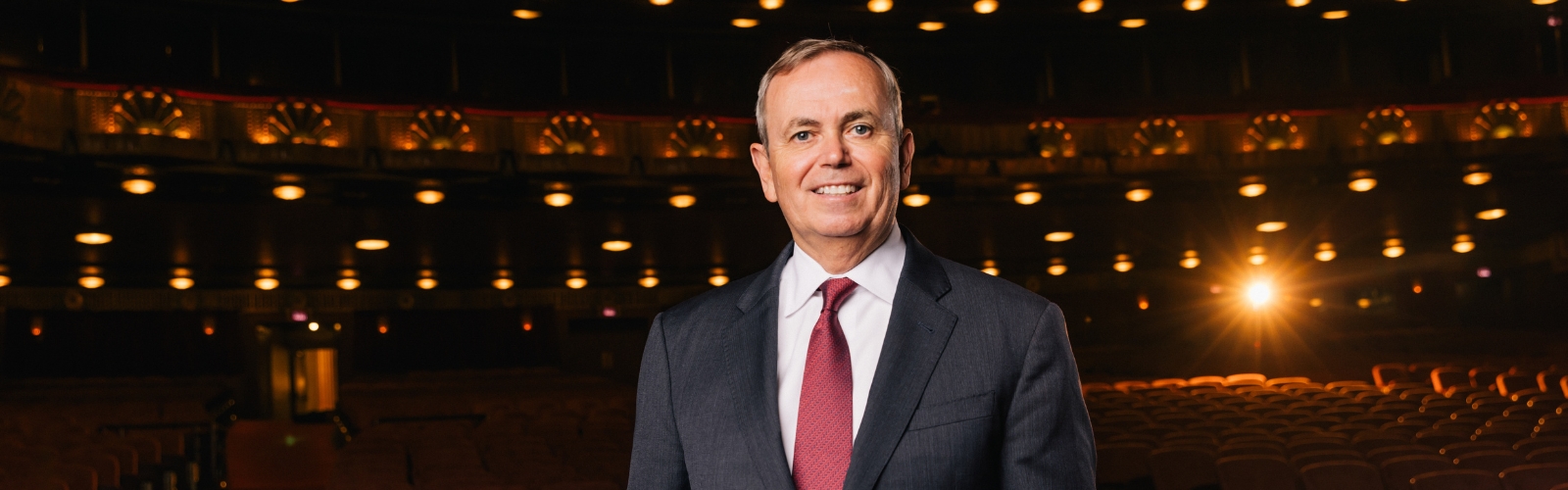
This past June, Craig C. Martin was named Chair of the Board at Lyric Opera of Chicago, his latest service to the company after two decades on the Board. Here, the Chairman, Americas of Willkie Farr & Gallagher reflects on civic duty, the upcoming Ring cycle, and Lyric’s place in the firmament of the world’s leading opera companies.
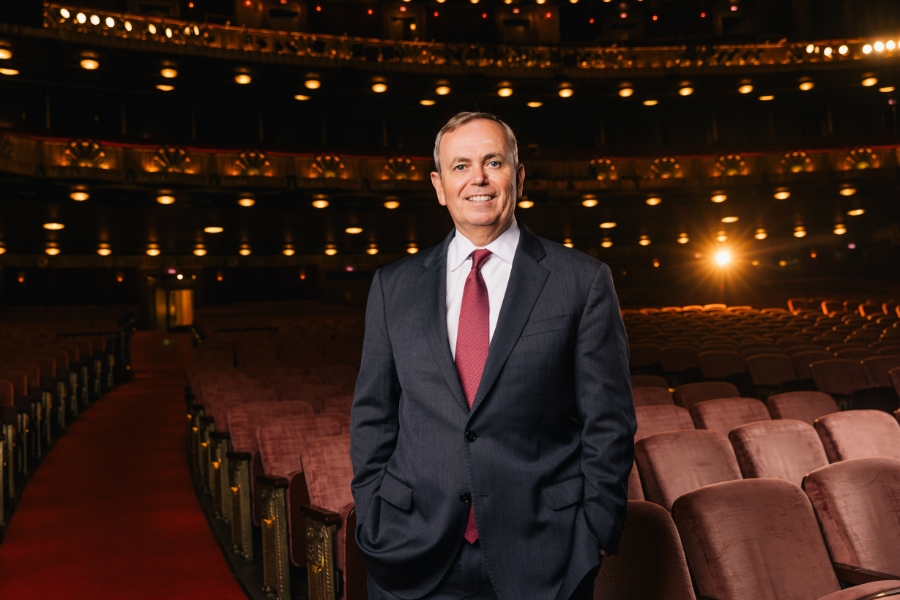
Craig C. Martin becomes board chair as the company approaches its 75th anniversary.
How did you first become involved in opera?
My opera story is not the same as a lot of other lovers of the art form. My parents didn’t drag me to La Bohème; they dragged me to Denver Broncos football games. The first opera I saw was in Boston — Aida, on a date night with my wife, who was not my wife at the time. And it stuck with me because the music was beautiful, the setting was beautiful. And now we’ve seen it at Lyric, and in Verona, in the Roman amphitheater outdoors, with all the animals and the entire parade. So if I have to name a favorite, that’s the one.
You have helped provide a great deal of pro bono work to Lyric over the years. How did that that arrangement come about?
It’s worth telling a story, actually. Sometime after I joined the Board, and probably after I had joined the Executive Committee, I started looking more closely at Lyric’s financials. I noticed a significant amount being spent each year on legal fees and asked why a nonprofit organization was paying so much for outside counsel. I was told that the firm was giving Lyric a discount. And I said, “That’s not good enough.”
Lawyers have a responsibility to give back to their communities, and I felt that some of this work — particularly at a large law firm — could and should be done pro bono. Everyone looked at me and said, “Well, that’s fine, but what are you going to do?” And I said, “Look, we’ll do it.”
That commitment has since resulted in a great deal of valuable work for Lyric, while also creating an opportunity for the legal community to give back to an institution that means so much to Chicago.
Surely not everyone approaches things in this way.
I’ve been in law firm leadership for a while now, and if you are committed to the community and to the profession and you believe in statements like, “To whom much is given, much is required,” then you want to pay it forward. We live in the city, we work in the city. And Lyric is a core cultural institution, part of what makes Chicago a global city. My own sense is that we have a duty to support those types of institutions — and that’s not just Lyric and the arts, it’s health and human services, and the educational environment.
That’s a very ambitious view of what a firm can do.
We bring civil and constitutional cases all the time, including matters involving immigrant rights. People sometimes assume there aren’t many opportunities for meaningful pro bono work in a corporate legal environment, but I’ve found quite the opposite. There are countless ways to put our expertise to work for organizations that are making a difference in their communities.
Lyric is a great example. Our lawyers have been able to contribute their expertise in a variety of ways that support the company and its mission. It’s truly a win-win: we have the opportunity to give back to the community, and Lyric gains access to expertise that helps support the work it does onstage and throughout the organization.
What’s your assessment of the health of the company?
Lyric is doing very well. We have not only survived things like the pandemic, but we have tilted toward the future. We are focused on planning, and on fiscal responsibility and sustainability — but above all we’re focused on greatness. On presenting this art form at a level befitting one of, if not the, leading opera company in the country. I think there’s no question about that stature — and if you look at the innovation going on, we are future-looking, audience-expanding, inclusive of everyone in the community.
What notable things come to mind?
I met Billy Corgan during A Night of Mellon Collie and Infinite Sadness, and I said, ‘I saw you last at a live show at Metro in the ‘90s. And I liked your performance at Lyric more.’ He laughed. And look — that production was groundbreaking. Ground-shifting. It’s a nod toward the future, but it’s not a signal that that’s the only future. Mellon Collie brought in about 80% new audience — an incredible number. Fire Shut Up in My Bones, maybe 50% new audience. These productions don’t indicate ignorance of the past. It’s embracing the future of what you can do with a great opera company. We are going to continue to be what you would think of as a traditional great opera company, but certainly we’re going to be innovative.
You are very much forward-looking.
We’re not trying to replicate what Lyric looked like in 1987. We’re trying to move to what Lyric looks like in 2040. We know that what happened in the past was great, but we also know that the future is not going to be the past. So we’re focused on moving in that direction and doing it at the highest levels. Great performances of Mozart and Mellon Collie, which you can’t see anywhere else — and other innovations in the experience. The new David W. and Orit K. Carpenter concert shell [which will debut in November], for instance, will allow all kinds of visual effects.
Have you had many special experiences at Lyric?
Oh, yes. I did Explore your Lyric day with Justice Ruth Bader Ginsburg. In 2011, I was running the American Bar Association meeting in Chicago and we did a program with her on opera. She wanted a tour of Lyric — but not the conventional tour. She saw the Grand Foyer, the theater, and the stage — but she also wanted to go up into the rafters, way up those metal stairs where they have all the pulleys and weights. Anthony Freud and I walked Justice Ginsburg up those stairs with a federal marshal leading us and a federal marshal following us. She had on her white gloves.
Lyric's financials when compared with its peer group are remarkably strong.
We look great, but there’s work to do, right? You always have to focus on your knitting. We are working on executing a strategy to create an opera company sustainable for the next 100 years. The core issues are making sure that it’s fiscally responsible, that the art form maintains the highest level, and that the interest level in it is as it should be. And I believe it will benefit not just the people who attend the opera, but the entire community.
What’s our biggest headwind?
I don’t know that I’d describe it as a headwind. I would say that what we need to do is define that which we are. That’s first to be a successful world-class opera company, with traditional and innovative stagings and productions. And we have to lean into the other parts of the tapestry as well — how we present the talents of Lyric to the community and to the wider world. We must be open and welcoming to all. In anything worthwhile, there’s never a time when you can’t talk about why something is difficult. So I’d rather focus on what we want to be famous for. What makes us great.
We announced your chairmanship at the same time we announced the return of our interrupted Ring cycle. Does that challenge have special appeal?
We need to foster our own productions, and to me the Ring cycle is, in the opera world, maybe the ultimate accomplishment. It’s a pinnacle. I think it dovetails very nicely with our 75th anniversary, approaching in 2029, along with the 100th anniversary of the opera house itself. It’s a nod toward the prominence of Lyric Opera of Chicago in the country and, quite honestly, in the world.
Is there a source for your energy and your philanthropic sensibility?
I was the first generation to go to college. I did not come from a poor family, but I didn’t come from a family of wealth. There was a question in my life about whether we could pay for college. There was a real question with regard to law school. I started with nothing. I will die with nothing. I mean that in a very theological way. And while you are here, you have a fundamental duty not only to your family, but to your community and those all around you. You have to give back. You don’t just get to take.
It’s heartening that you see Lyric Opera of Chicago as one vehicle to do that.
Lyric is a wonderful institution. It is an institution that should be for everyone, not for a few. You go to a Lyric production, and I don’t care who you are or where you come from, you’ll leave inspired to say, ‘My goodness, I saw one of the greatest events in our human culture.’ It should elevate you.