August 27, 2026
Mozart without barriers
What does it mean to make opera truly accessible?
At Lyric Opera of Chicago, it means continuing to ask that question — and finding new ways to welcome more people into the experience.
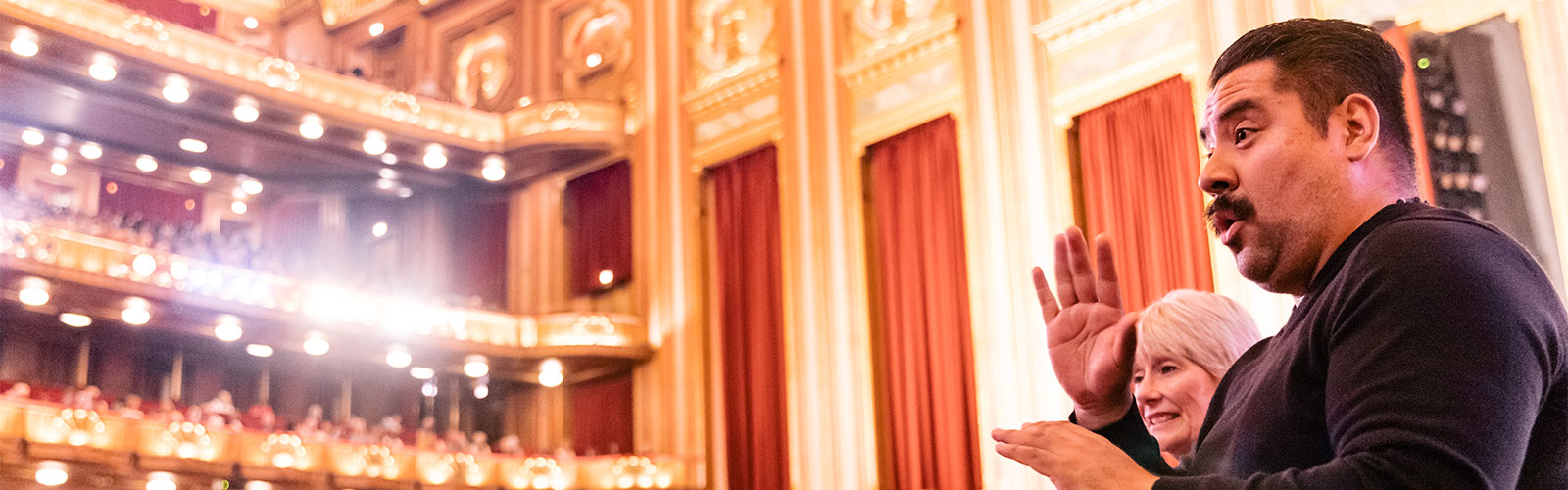
This fall, that commitment takes a historic step forward. On Sunday, October 18, during the 2:00 p.m. matinee of Mozart’s Don Giovanni, Lyric will become the first major American opera company to present a foreign-language opera with live American Sign Language (ASL) interpretation.
For Deaf and hard-of-hearing audiences, the performance will offer a new way to experience Mozart’s music and Lorenzo Da Ponte’s libretto: not through subtitles alone, but through live interpretation that unfolds alongside the singers and orchestra in real time.
Acclaimed Certified Deaf Interpreters Crom Saunders and Veramarie Baldoza will interpret the performance, bringing the drama, emotion, character, and language of Don Giovanni to life through ASL.
“Don Giovanni gives us a chance to showcase the extraordinary artistry of this company — not only our singers, orchestra members, and the artisans who bring the sets, costumes, and lighting to our stage, but also the expertise of our ASL interpreters who bring the music and drama to life in an entirely new means of expression,” says Lyric General Director John Mangum.
“Being the first major American opera company to offer live ASL interpretation of a foreign-language opera is a milestone we’re proud of, but it’s really just the latest step in work Lyric is always doing to evolve how we welcome audiences into the opera house. Accessibility isn’t a single initiative for us — it’s an ongoing commitment. Everyone should be able to experience the power of this art form, and we’ll keep finding new ways to make that happen.”
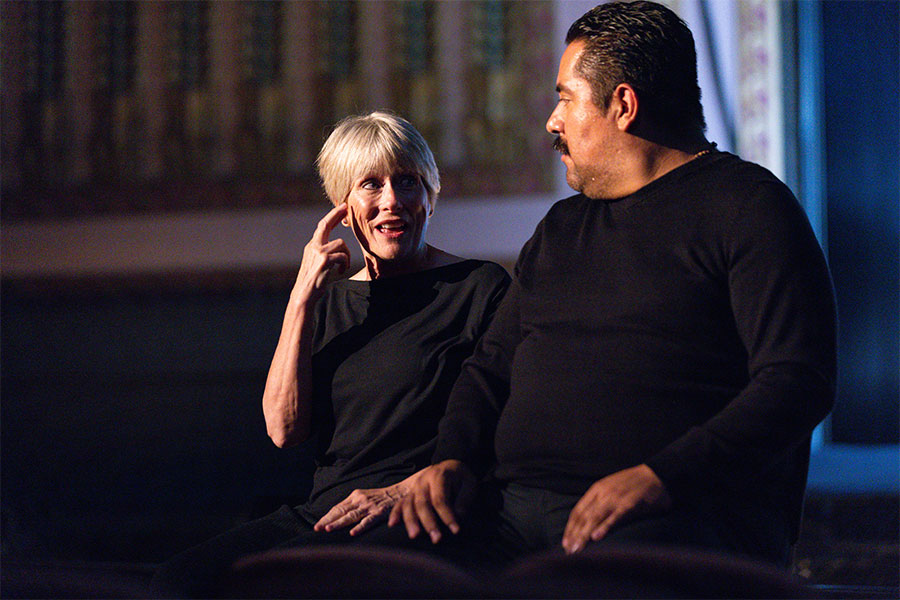
Lyric breaks barriers as the first major American opera company to offer ASL interpretation of a foreign-language opera
An afternoon designed with access in mind
The October 18 performance is more than a single accessibility milestone. It is part of a full afternoon of programming designed to give audiences different ways to connect with the world of Don Giovanni.
Before the performance, at noon, Lyric will offer a Touch Tour, giving patrons who are blind or have low vision — and anyone else interested in participating — an opportunity to explore elements of the production through touch. Participants can experience costumes, props, musical instruments, and aspects of the stage environment before seeing them come to life during the performance. No RSVP is required.
During the opera, audio description will provide concise narration of scenes, settings, costumes, and action for patrons who are blind or have low vision. Renowned Chicago audio describer Martin Wilde will deliver the description through headphones and, with Lyric’s new technology, through Auracast.
And for audiences interested in experiencing the physical sensation of music, SoundShirts will once again be available. The innovative wearable technology uses touch sensation across the upper body to allow wearers to feel the music in real time, synchronized with the singers and orchestra.
Lyric was the first opera company in the world to offer SoundShirts, and the technology remains one example of how the company is exploring what it can mean to experience an opera beyond simply hearing and seeing it.
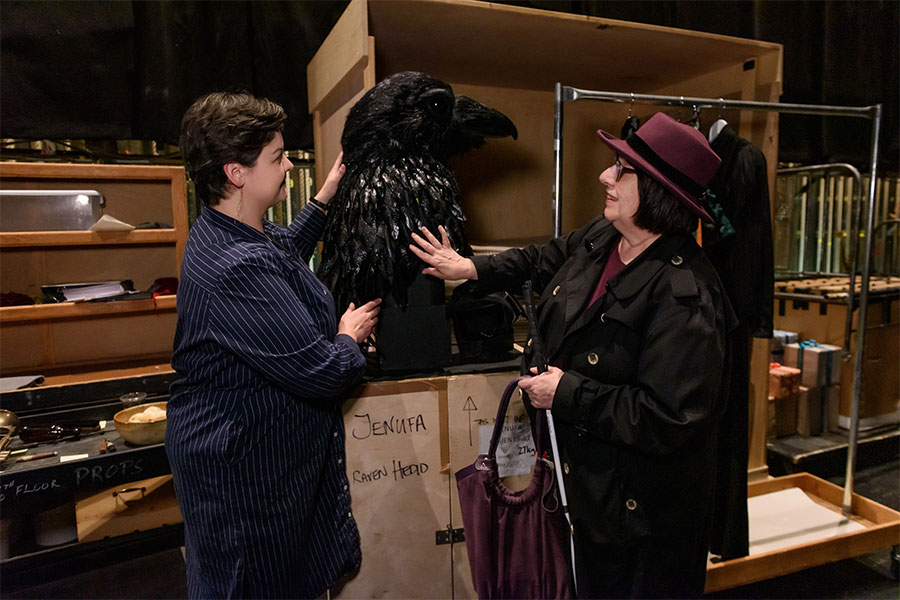
Lyric Costume Director Kim Buetzow and operagoer Sally Cooper on a Lyric touch tour before Janáček’s Jenůfa (2023/24 Season)
A clearer way to hear the opera
Accessibility is also about making the sound itself more accessible.
Beginning with Don Giovanni, Lyric is introducing Auracast assistive listening technology throughout the production’s eight-performance run and continuing into the new season.
Auracast is built on Bluetooth Low Energy audio and allows a sound source to broadcast directly to compatible hearing aids, cochlear implants, and earbuds. Rather than relying on a traditional receiver to pick up sound from across the theater, the technology sends the audio directly to the listener’s device.
The result can be a cleaner, more direct listening experience, with less of the background noise and interference that can affect traditional assistive listening systems.
Many newer Android smartphones support Auracast natively, allowing patrons to connect to Lyric’s audio stream much like they would connect to a Wi-Fi network. Patrons using iPhones can access Auracast through compatible hearing aids or headphones paired with a manufacturer’s app, as Apple has not yet added native Auracast support to iOS.
And because accessibility should not depend on whether someone owns the latest technology, Lyric will continue to offer loaner assistive listening devices at no charge for patrons who prefer them or whose personal devices are not yet Auracast-compatible. Neckloops are also available for patrons with T-coil-enabled hearing instruments.
Braille and large-print programs, high-powered opera glasses, and booster seats will also continue to be available at the Steiner Parquet coat checks at every performance.
SoundShirt is an innovative way for audiences who are deaf or hard of hearing to experience live opera, using touch sensation to provide wearers with the ability to feel music on their upper body in real time
Accessibility is part of the experience — not an add-on
The October 18 Don Giovanni performance brings together many of these efforts in one afternoon, but the larger goal extends far beyond a single performance.
Opera combines music, language, theater, visual art, movement, design, and storytelling. There is no single way to experience it — and there should not be a single way to access it.
For Lyric, that means continuing to look at the entire experience of attending the opera and asking where new possibilities exist.
Sometimes that means translating a performance into ASL.
Sometimes it means describing what is happening onstage for someone who cannot see it.
Sometimes it means allowing an audience member to physically feel Mozart’s music.
And sometimes it means making the sound clearer and more direct.
Each approach opens another door into the same extraordinary art form.
With Don Giovanni, Lyric is not simply marking a historic first. It is continuing a broader effort to make the opera house a place where more people can experience the full power of opera — and where accessibility is understood not as a separate offering, but as an essential part of the experience.
Lyric’s accessibility services are available throughout the season, with additional offerings varying by performance. Learn more about accessibility and plan your visit at lyricopera.org/accessibility.