September 15, 2026
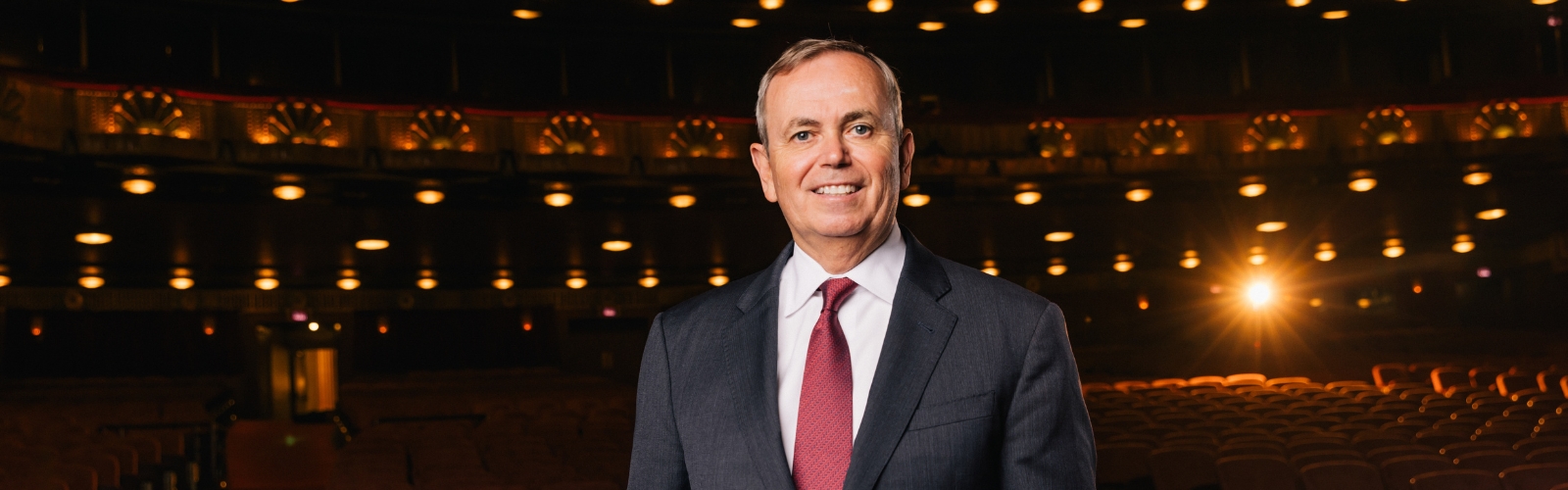
Meet Craig C. Martin, Lyric’s new board Chair
Lyric’s new board Chair arrives at an exciting moment for the company — and he has an equally exciting vision for the future.
Craig C. Martin came to opera by way of the Denver Broncos.
“My opera story is not the same as a lot of other lovers of the art form,” he says. His parents did not drag him to La Bohème. “They dragged me to Denver Broncos football games.”
Opera arrived later, in Boston, on a date with the woman who would become his wife. The opera was Aida, and something about the combination of music, drama, and spectacle took hold. The couple has since seen Aida at Lyric Opera of Chicago and in Verona, in the Roman amphitheater, complete with animals, procession, and all the grandeur Verdi could reasonably inspire.
“So, if I have to name a favorite,” Martin says, “Aida is the one.”
It is an appropriately personal beginning for someone who, this past June, became Chair of Lyric’s Board of Directors after two decades of service to the company. Martin, the Chairman, Americas of Willkie Farr & Gallagher LLP, an elite global law firm, is widely recognized as one of the country’s top lawyers. He arrives in his Lyric role not simply as an admirer of opera, but as someone with firm ideas about what great institutions mean to a city, what those institutions owe the future, and what the people fortunate enough to lead them owe in return.
For Martin, Lyric belongs in the first rank of the institutions that make Chicago. “We live in the city, we raised our children in the city, we work in the city,” he says. “Lyric is a core cultural institution, part of what makes Chicago a global city.”
That conviction has had practical consequences.
After joining Lyric’s board, Martin looked at the significant annual expenditure on outside legal counsel. He asked why a nonprofit was spending so much on lawyers and was told Lyric was receiving a discount.
His response was characteristically economical. “That’s not good enough.” Martin believed that lawyers, particularly those at large firms, had a responsibility to give their expertise as well as their money. When the inevitable question came back, what was he prepared to do about it? Martin had an answer.
“Look, we’ll do it pro bono.”
And they did. The commitment grew into substantial pro bono legal support for Lyric, connecting Martin’s professional life with a conviction that has animated his civic life for years.
“To whom much is given, much is required,” he says.
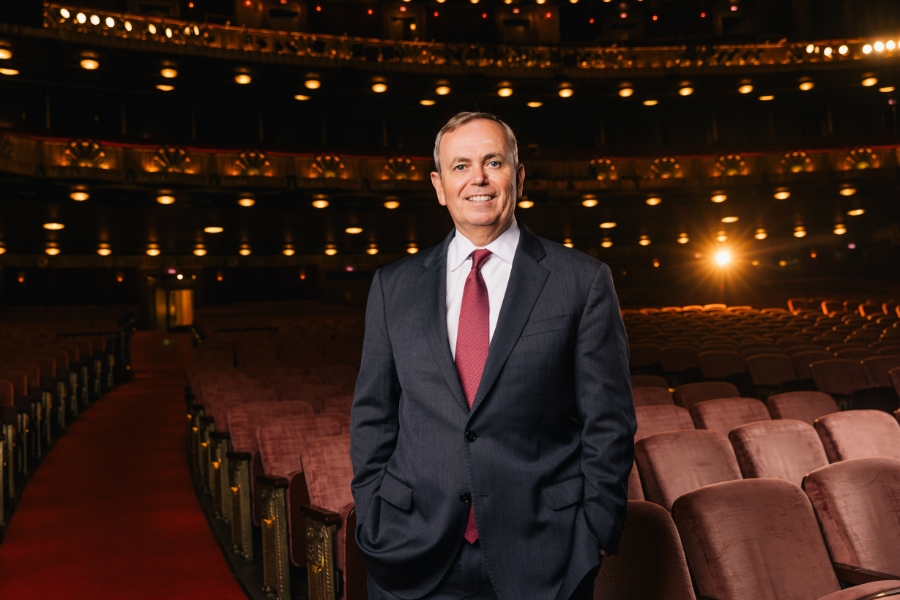
Craig C. Martin becomes board chair as the company approaches its 75th anniversary.
There is biography behind that belief. Martin was the first generation in his family to attend college. His family was not poor, but it was not wealthy either, and paying for college and law school was not a given.
“I started with nothing. I will die with nothing,” he says, meaning it, as he is quick to explain, in a theological sense. “While you are here, you have a fundamental duty not only to your family, but to your community and those all around you. You have to give it back. You don’t just get to take.”
For Martin, Lyric is one particularly glorious way of doing that.
He assumes the chairmanship at an intriguing moment. Lyric has come through the disruption of the pandemic in strong financial condition and with large ambitions. Martin speaks with obvious respect for the company’s history, but nostalgia is not much of a governing philosophy for him.
“We’re not trying to replicate what Lyric looked like in 1987,” he says. “We’re trying to move to what Lyric looks like in 2040, 2050, and beyond.”
The line captures something essential about the way Martin sees the institution. The question is not whether Lyric should choose between tradition and innovation. It is how a great opera company can embrace both, at the highest level of artistic achievement.
That means Mozart. It means Wagner. It also means being willing to test the boundaries of what belongs on the Lyric stage. Martin points to A Night of Mellon Collie and Infinite Sadness, the Lyric presentation built around the Smashing Pumpkins album. It brought a dramatically new audience into the opera house. For Martin, who had last seen Billy Corgan perform at Metro in the 1990s, it also produced an irresistible encounter.
“I saw you last at a live show at Metro in the ’90s,” Martin remembers telling Corgan. “And I liked your performance at Lyric more.”
Corgan laughed.
Martin calls the production “groundbreaking,” but he is equally clear about what it did not mean. Innovation is not a repudiation of opera’s inheritance. Lyric can welcome people through new doors without closing the old ones.
“We are going to continue to be what you would think of as a traditional great opera company,” he says, “but certainly we’re going to be innovative.”
The stakes, in Martin’s view, extend beyond programming. He talks about creating an opera company
sustainable for the next 100 years: fiscally responsible, artistically uncompromising, and capable of inspiring the interest that the art form deserves. He wants Lyric to reach outward, to be welcoming, and to make the extraordinary talent inside the opera house matter to the wider city.
And rather than dwell on the difficulties confronting opera, Martin prefers a more interesting pair of questions: “What do we want to be famous for? What makes us great?”
One answer is already taking shape. Martin’s chairmanship comes as Lyric prepares for the return of its interrupted Ring cycle, an undertaking whose scale seems perfectly matched to his ambitions for the company.
“In the opera world, maybe the ultimate accomplishment is the Ring cycle,” he says. “It’s a pinnacle.”
Its return carries particular resonance as Lyric approaches its 75th anniversary in 2029, as well as the 100th anniversary of the opera house itself. To Martin, the Ring is more than an artistic feat. It is a declaration of confidence in Lyric’s place in Chicago, in American opera, and on the international stage.
He wants the person who enters the opera house, regardless of who they are or where they come from, to walk out astonished by what human beings can create together.
“Amazing, I saw one of the greatest events in our human culture,” is how Martin imagines the reaction. “It should elevate you.”
That sense of wonder may also explain one of his favorite Lyric memories.
In 2011, Martin was running the American Bar Association meeting in Chicago and participated in a program about opera with Justice Ruth Bader Ginsburg, whose devotion to the art form was legendary. Ginsburg wanted to see Lyric.
But she did not want the standard tour.
The Grand Foyer, the theater, and the stage were not enough. Justice Ginsburg wanted to see the rafters.
And so, Craig Martin, then-General Director Anthony Freud, and a Justice of the United States Supreme Court began climbing the metal stairs high above the stage, into the realm of pulleys, weights, and backstage machinery. A federal marshal led the procession. Another followed behind.
And Justice Ginsburg made the trip in her white gloves.
“Truly,” Martin says, “an ‘only at Lyric’ moment.”
For a man who believes a great opera company should honor its past without being confined by it, perhaps there is something fitting in the image: Ruth Bader Ginsburg, gloves and all, leaving the conventional tour behind and climbing higher to see how the whole magnificent thing works.