July 14, 2026
Get to know: Verdi's "La Traviata"
Giuseppe Verdi’s La traviata, one of the most beloved operas in the repertory, is admired for its emotional realism, exciting and memorable music, and tragic heroine. Composed in the early 1850s, the opera is based on the novel and play La Dame aux Camélias by Alexandre Dumas. The opera tells the story of Violetta Valéry, a Parisian courtesan who sacrifices her own happiness for the man she loves. Though initially received poorly, the opera eventually became one of the greatest triumphs in operatic history and remains a cornerstone of the international repertoire.
The composition history of La traviata reflects Verdi’s desire to move beyond historical or political subjects and instead portray contemporary human emotions. After seeing a performance of the Dumas play, he engaged his longtime librettist Francesco Maria Piave to adapt the drama into Italian. The resulting work’s realism was unusual, even controversial for 19th-century opera audiences. The music itself closely reflects the emotional development of the characters, especially Violetta. Her music ranges from dazzling coloratura passages in the first act to deeply lyrical and tragic melodies in the later acts, mirroring her transformation from carefree socialite to self-sacrificing lover. Verdi also experimented with orchestration and dramatic pacing, creating scenes of remarkable intimacy and psychological depth. The work’s premiere at La Fenice on March 6, 1853, was considered a failure, but a slightly revised version in 1854 was highly successful, and public opinion soon changed dramatically.
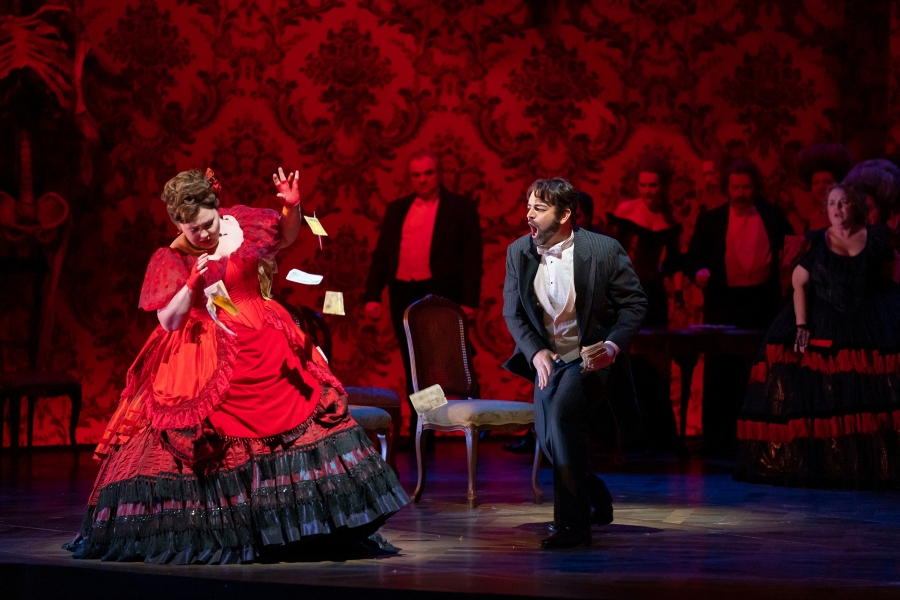
Alfredo (Giorgio Berrugi) angrily throws money at Violetta (Albina Shagimuratova) in Lyric's 2018/19 production of Verdi's La traviata.
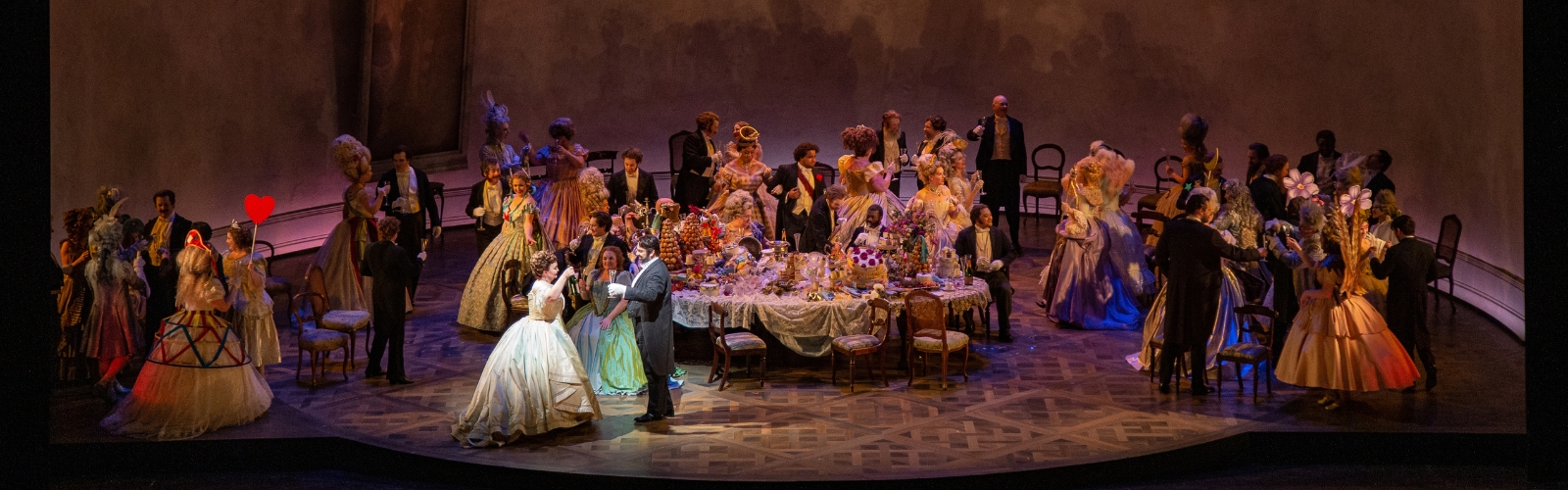
The plot centers on Violetta Valéry, a celebrated courtesan living in Paris. At a lavish party, she meets Alfredo Germont, a young man who has long admired her. Alfredo confesses his love in the famous duet “Un dì, felice, eterea,” and although Violetta initially dismisses romance as impossible, she begins to fall in love with him. The act ends with her celebrated aria “Sempre libera,” in which she struggles between the desire for freedom and the possibility of genuine affection.
In the second act, Violetta and Alfredo are living happily together in the countryside. Their happiness is interrupted when Alfredo’s father, Giorgio Germont, visits Violetta. He begs her to leave Alfredo because their relationship threatens his own daughter’s chances of making a respectable marriage. Although devastated, Violetta agrees to sacrifice herself for Alfredo’s family. She leaves him without explaining the true reason, causing Alfredo to believe she has betrayed him.
The tragedy deepens when Alfredo confronts Violetta at a party and publicly humiliates her. Giorgio Germont later rebukes his son for his cruelty, and Alfredo realizes too late how deeply Violetta has suffered for him. In the final act, Violetta is dying of tuberculosis and living in poverty. Alfredo returns after learning the truth, and the lovers briefly reunite, dreaming of a future together. Yet their reconciliation comes too late.
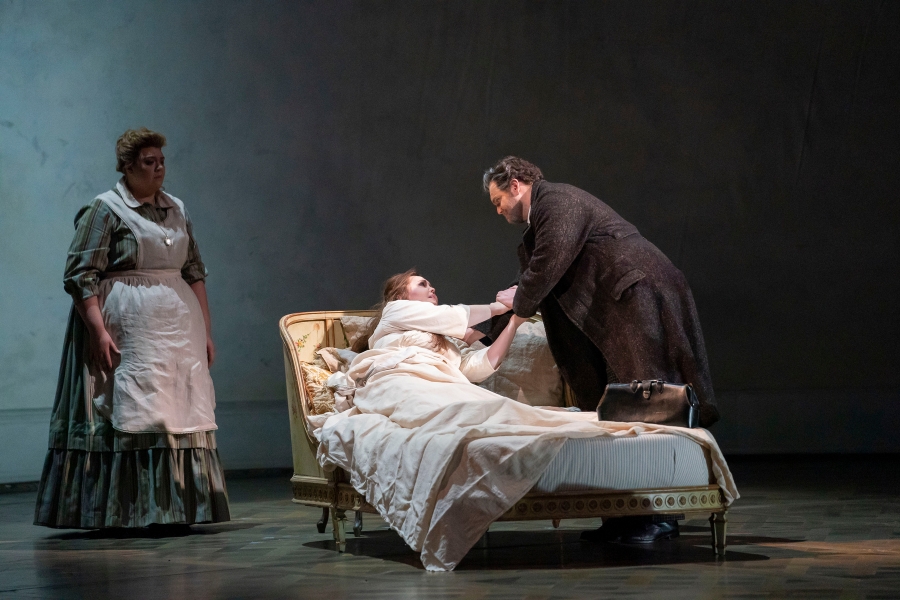
Violetta Valéry (Albina Shagimuratova, 2018/19 Season) recieves bad news from the doctor in the final act of Verdi's La traviata.
This classic, beloved Lyric Opera of Chicago production sets Verdi’s sumptuous music against the florid glamour of 19th-century France, bringing these captivating characters and their tragic tale to life. In their Lyric debuts, a dazzling trio of international stars — Yaritza Véliz as Violetta Valéry, Liparit Avetisyan as Alfredo Germont, and Amartuvshin Enkhbat as Giorgio Germont — takes the stage under the baton of Music Director Enrique Mazzola, March 24-April 25.