November 10, 2026
Get to know: Haydn’s The Creation
Franz Joseph Haydn’s The Creation (Die Schöpfung) stands as a monumental peak of the late Classical era, containing some of the period’s most innovative and descriptive music. Completed in 1798 after two years of work, the oratorio celebrates the genesis of the universe, weaving together profound theological themes, Enlightenment philosophy, and an unprecedented level of orchestral word-painting.
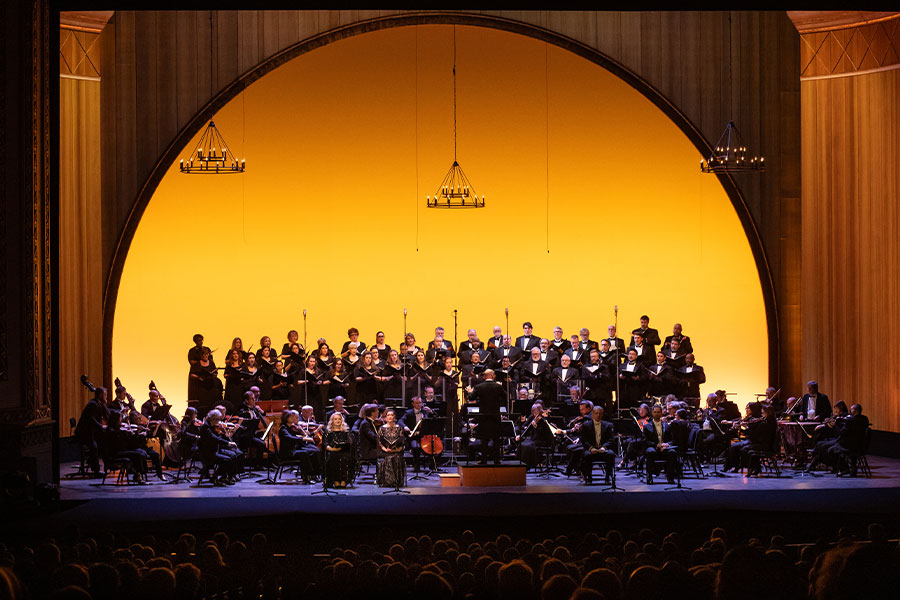
The Lyric Opera Orchestra performing in Lyric's 2024 performance of Mozart's Requiem
The impetus for the work came during the composer’s visits to London between 1791 and 1795, where he experienced the colossal scale of George Frideric Handel’s oratorios. Haydn’s manager in London gave him an anonymous libretto in English, titled The Creation of the World and originally intended for use by Handel. Upon his return to Austria, Haydn gave the text to Baron Gottfried van Swieten, a friend and patron also to Mozart, C.P. E. Bach and, later, to Beethoven. Van Swieten translated the libretto into German, and to this day the piece may be performed in either language.
The oratorio is structured into three distinct parts, guided by three archangels — Gabriel (soprano), Uriel (tenor), and Raphael (bass) — who narrate and comment on the cosmic events. Part I (Days 1 to 4) chronicles the transition from formless chaos to a structured universe, detailing the creation of light, the separation of land and sea, the formation of weather elements, and the birth of the sun, moon, and stars. In Part II (Days 5 and 6), the narrative shifts toward sentient life. Raphael and Gabriel describe the creation of birds, sea creatures, cattle, and insects. Part II culminates in the creation of humankind, ending with the triumphant chorus "Achieved is the glorious work." The final section, Part III (The Garden of Eden) comes down to earth, focusing on Adam and Eve, a celebration of human love, and gratitude toward the Creator, concluding with a massive, multi-layered chorus of praise.
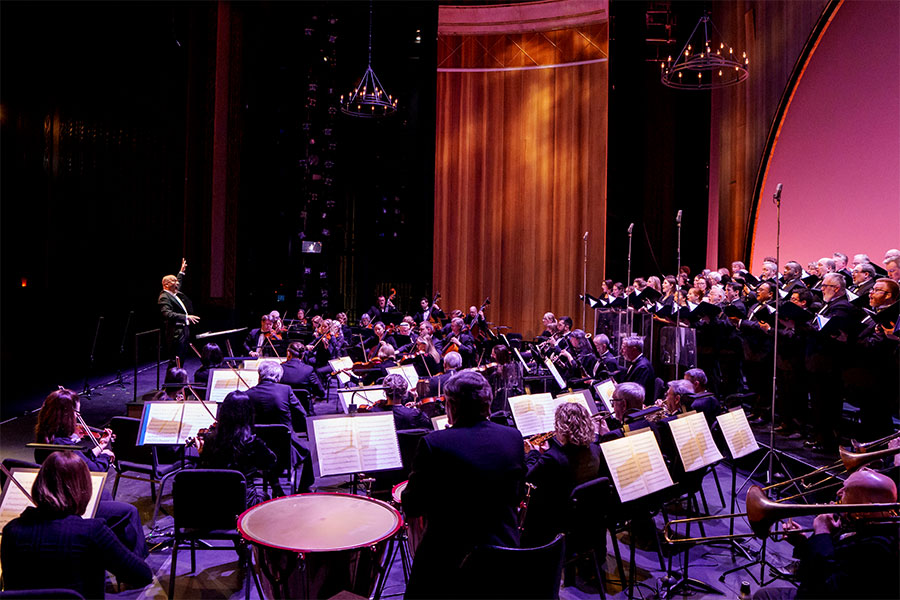
The Lyric Opera Orchestra performing in Lyric's 2024 performance of Mozart's Requiem
The Creation features vivid pictorial writing in its orchestration. The initial passages — the Vorschmack or "Representation of Chaos" — represent some of the most radical music of the 18th century, as Haydn avoids clear melodic resolution and uses muted strings, shifting harmonies, and unresolved dissonances to evoke a formless, shifting void. Perhaps most famously, the chaos resolves into a powerful illumination: As the chorus softly sings, "And God said: Let there be light," the texture drops to a whisper on the words "and there was..." — whereupon, on the word "LIGHT,” the entire orchestra and chorus erupt into a fortissimo C major chord.
Today, The Creation maintains a firm position in the choral repertoire. It stands alongside Handel's Messiah and Bach's St. Matthew Passion as one of the ultimate achievements of sacred vocal music, beloved for its joyful descriptions of living things. As the piece progresses, flutes sound like birds, woodwinds depict cattle and lions, and even whales are given musical moments. It is a celebratory oratorio of great variety, a true passion project for the composer. “I was never so devout as when I was at work on The Creation,” he said. “I fell on my knees each day and begged God to give me the strength to accomplish this work successfully."
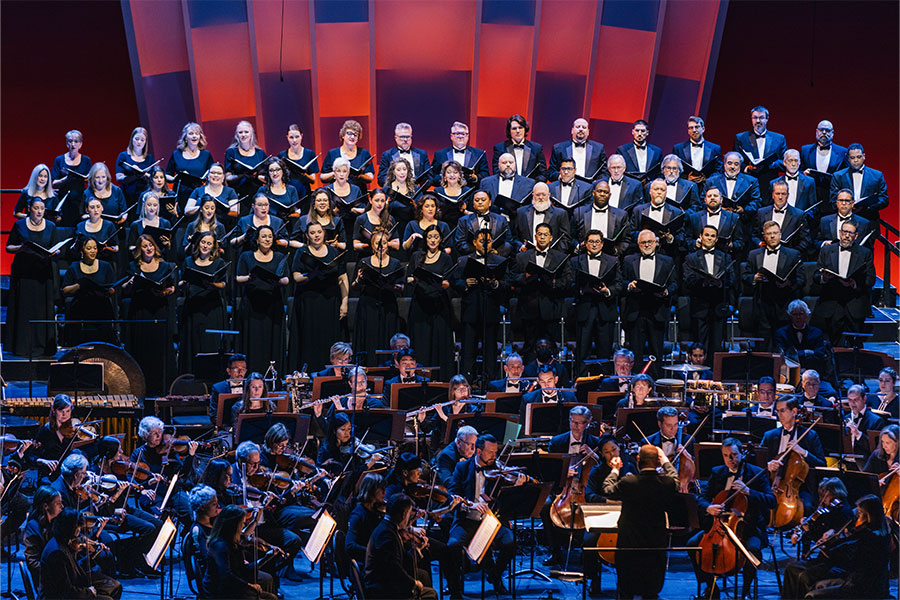
The Lyric Opera Orchestra in Lyric's 2025 performance of A Wondrous Sound
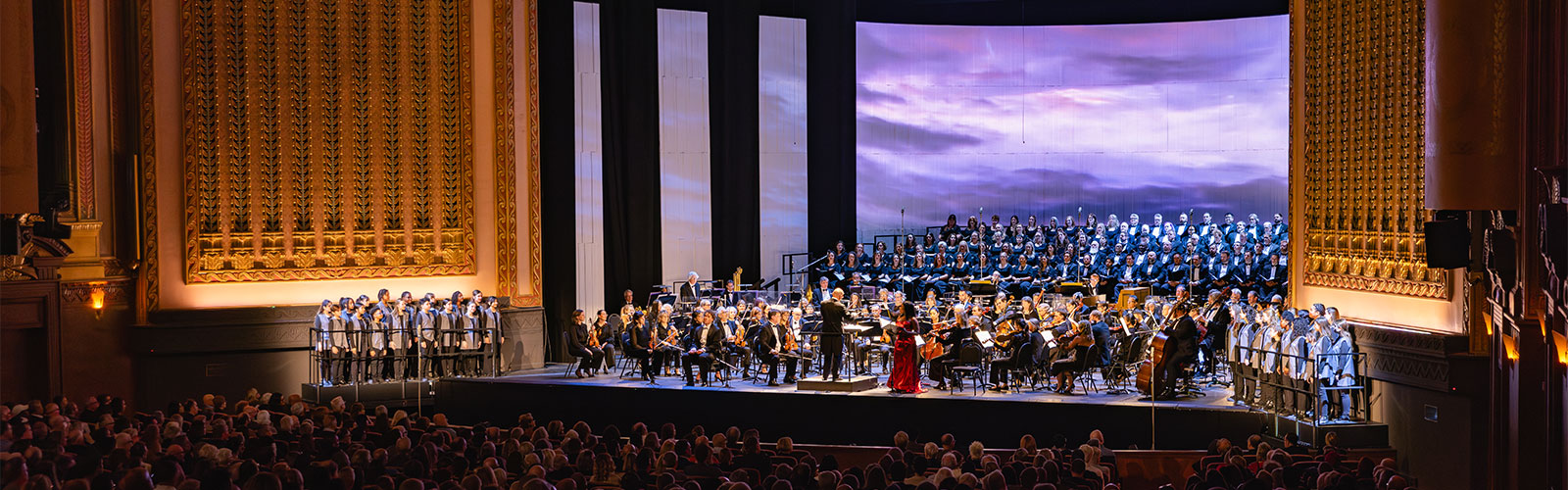
At Lyric Opera of Chicago, the piece will come to life onstage on January 22 and 23, with the orchestra, chorus, and soloists bolstered by the new David W. and Orit K. Carpenter Concert Shell. Music Director Enrique Mazzola leads the performance, to be sung in English with projected English titles. Soprano Erin Morley makes her Lyric debut as Gabriel; Ryan Opera Center alum David Portillo returns as Uriel, and Michael Sumuel sings Raphael.
