July 14, 2026
Get to know: "Amadeus"
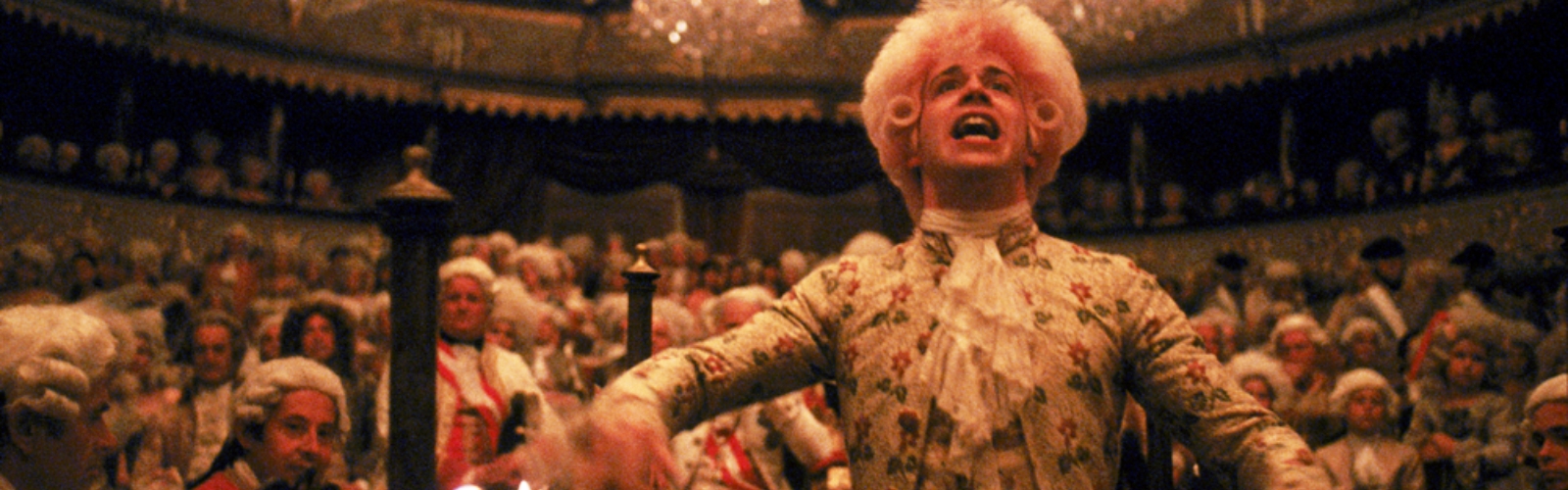
Amadeus (1984) is a visually sumptuous, landmark film that blends historical drama with psychological intensity as it tells the story of the life of Wolfgang Amadeus Mozart through the eyes of his rival, Antonio Salieri. Directed by Miloš Forman and written by Peter Shaffer, who adapted his own stage play, the celebrated work offers a dramatic exploration of mediocrity confronting genius — all with a memorable soundtrack composed largely of Mozart works.
Shaffer had been inspired by the persistent though unverified rumors that Salieri harbored deep jealousy toward Mozart and may have even contributed to his death. The film’s plot is structured as a confession by the elderly Salieri, who resides in an asylum after a failed suicide attempt. He recounts his life story to a priest, revealing his early devotion to God and his desire to become a great composer. When Mozart arrives in Vienna, Salieri initially anticipates meeting a refined prodigy. Instead, he encounters a crude young man whose extraordinary musical gifts seem to flow effortlessly. This contrast devastates Salieri, who cannot reconcile Mozart’s vulgar personality with the divine beauty of his compositions.
As the story unfolds, Salieri becomes increasingly consumed by jealousy and resentment. He perceives Mozart’s talent as a cruel joke by God — bestowing genius on someone unworthy while leaving him, a devout and disciplined musician, in mediocrity. Though he outwardly maintains a facade of friendship and support, Salieri secretly works to undermine Mozart’s career. Meanwhile, Mozart struggles financially and professionally, despite his brilliance, and his health deteriorates. The film builds to a dramatic climax as a disguised Salieri commissions Mozart to compose a Requiem mass. Mozart collapses before completing the work, and Salieri is left with the crushing realization that he can never truly possess or replicate Mozart’s genius.
F. Murray Abraham won the Academy Award for Best Actor for his performance as Salieri, portraying him as both villain and tragic figure — and taking the prize from his fellow nominee Tom Hulce, who plays Mozart. Hulce’s performance captures the vulnerability and unpredictability of Mozart, making his eventual downfall deeply affecting. Supporting performances, including Elizabeth Berridge as Mozart’s wife Constanze, add emotional depth to the story.
Rather than relying on a traditional score, Amadeus incorporates Mozart’s compositions directly into the narrative. The music is not merely background; it becomes a storytelling device that reveals character and emotion. Scenes often juxtapose Mozart’s sublime compositions with Salieri’s internal anguish, highlighting the central theme of divine inspiration versus human limitation.
Amadeus won eight Academy Awards. And while it takes liberties with the facts, the film is a masterful exploration of the complexities of art and the human condition, enveloped in the gorgeous surroundings of 18th century Vienna.
Lyric Opera of Chicago will start 2027 with another Movie Nights at Lyric event: Amadeus LIVE on January 15 and 16, 2027, with the film accompanied live by the Lyric Opera Orchestra and Chorus — the first time the full Chorus participates in Movie Nights at Lyric.