December 19, 2025
Mozart’s "Così fan tutte": The perfect romantic comedy. Really.
If Così fan tutte were released today, it wouldn’t be marketed as a musically brilliant but controversial look at infidelity. It would be a romantic comedy — maybe an indie one, clever and a little sharp around the edges, the kind that knows laughter and heartbreak are rarely far apart. The score would be praised as dazzling, the ensemble scenes compared to The Family Stone, the premise likened to 10 Things I Hate About You, and the ending debated endlessly on Reddit. Does love survive the deception? Should it?
Mozart and his librettist Lorenzo Da Ponte understood something that rom-com screenwriters still wrestle with: love is funny because it is fragile, and it is romantic precisely because it survives humiliation, confusion, and betrayal — often against one’s better judgment. Così fan tutte is not an outlier in the romantic comedy tradition. It is one of its earliest and most sophisticated examples.
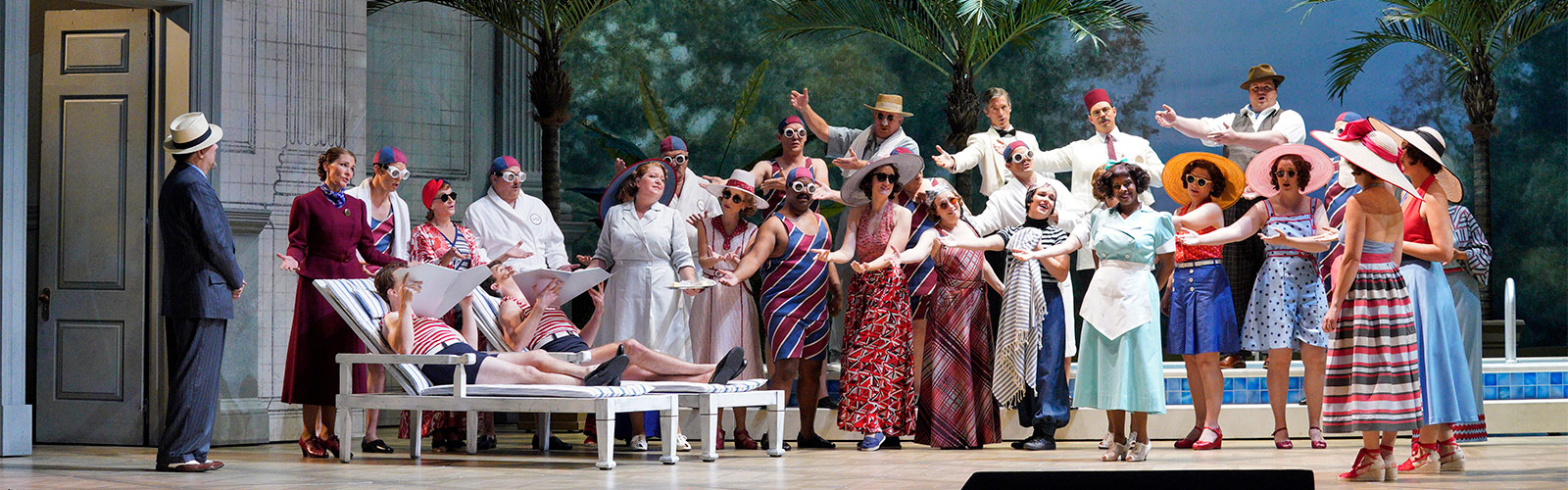
At its core, Così is about a dating bet that goes catastrophically wrong. Two couples, two sisters, a cynical instigator, elaborate disguises, and the slow, devastating realization that attraction is not as rational or loyal as anyone would like to believe. Replace the original setting of Naples with a seaside country club, swap the harpsichord for an indie soundtrack, and you have a movie.

The setup: A bet, a boast, and the illusion of certainty
Every romantic comedy needs an inciting incident, and Così fan tutte wastes no time. Ferrando and Guglielmo are smugly confident in their fiancées, the sisters Fiordiligi and Dorabella. Their friend Don Alfonso — older, world-weary, and more than a little amused by their certainty, proposes a bet: women are not as faithful as you think. Prove him wrong.
This is the rom-com equivalent of the opening scene in Cruel Intentions, when Kathryn and Sebastian decide to manipulate love itself for sport, or the barroom bravado that kicks off How to Lose a Guy in 10 Days. Someone claims immunity to emotional chaos. Someone else calls their bluff.
Dating bets are irresistible because they combine arrogance with vulnerability. The bettors assume control; the audience knows better. In She’s All That, the wager is whether a girl can be transformed into prom royalty. In 10 Things I Hate About You, it’s whether a famously un-dateable woman can be coaxed into romance. In Così fan tutte, the bet is more existential: Can love be trusted at all? The answer, of course, is no — but not in the way Don Alfonso expects.
Disguises and deception
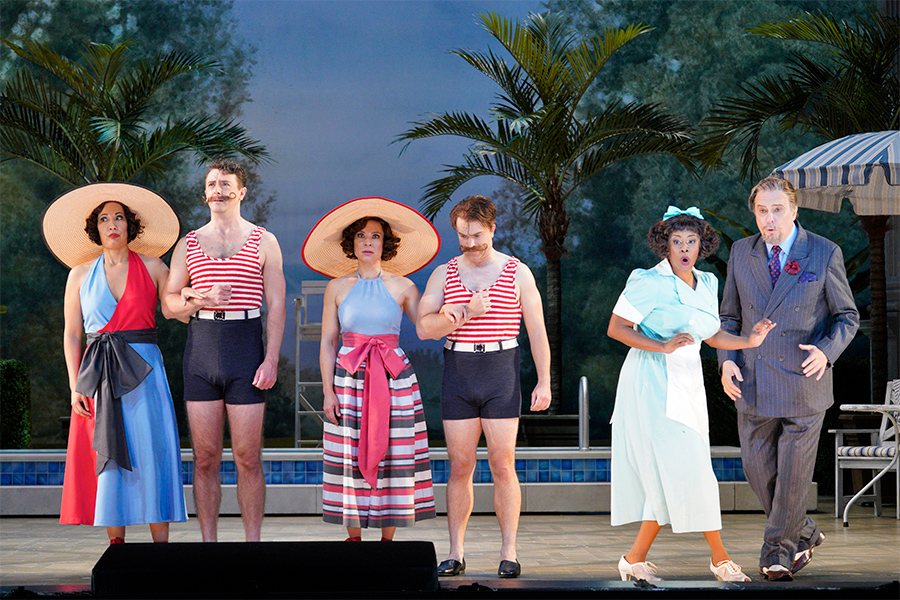
To carry out the bet, Ferrando and Guglielmo disguise themselves as exotic strangers, complete with fake mustaches, accents, and theatrical flair. They will attempt to seduce each other’s fiancées while pretending to have been called away to war.
This is classic farce. Shakespeare does it in A Midsummer Night’s Dream, where disguises, magic, and mistaken identities cause lovers to fall for the wrong people (not to mention Twelfth Night!). Modern rom-coms use the same device: in She’s the Man, Amanda Bynes’ character Viola dons a wig, sideburns, and a soccer uniform to swap places with her brother Sebastian, creating romantic chaos that feels funny until it suddenly isn’t.
Disguise is never just about clothes. It’s about permission. When someone is “not themselves,” they are allowed to want what they shouldn’t. That’s the uncomfortable truth at the heart of Così fan tutte. The men, disguised, are free to pursue forbidden desire. The women, believing their lovers gone, are free — at least in theory — to explore temptation.
The audience, meanwhile, sits in a deliciously painful position. We know the truth. We know who is deceiving whom. We know that every flirtation is a ticking bomb. Romantic comedy thrives on this imbalance of knowledge. Who is in the dark? Who will be hurt when the truth comes out? Così stretches this tension to its breaking point.
Sisters, swapped lovers, and the family factor
One of the most unsettling — and fascinating — elements of Così fan tutte is that the swapped love interests are not strangers. They are siblings’ partners. Fiordiligi and Dorabella fall, respectively, for the men engaged to their sister.
This trope shows up more often than we like to admit. The Family Stone hinges on romantic realignment within a family unit, where emotional intimacy blurs lines and forces uncomfortable truths into the open. I Want You Back plays with the idea of two people scheming to reclaim their exes, only to fall for each other instead. While more of a straightforward drama, the Oscar and Golden Globe-nominated film Closer makes this dynamic brutally explicit, showing how desire circulates among a small group until everyone is implicated.
There is something uniquely destabilizing about falling for someone your sister — or brother — loves. It raises the stakes. Love is no longer just romantic; it is ethical, familial, and deeply personal. Così fan tutte understands this intuitively. The betrayal cuts in multiple directions. When the truth comes out, it won’t just be lovers who are hurt — it will be sisters. This is where the opera’s comedy begins to darken. The laughter catches in the throat. We can enjoy the absurdity of the disguises, but the emotional consequences are real.
The women in the dark
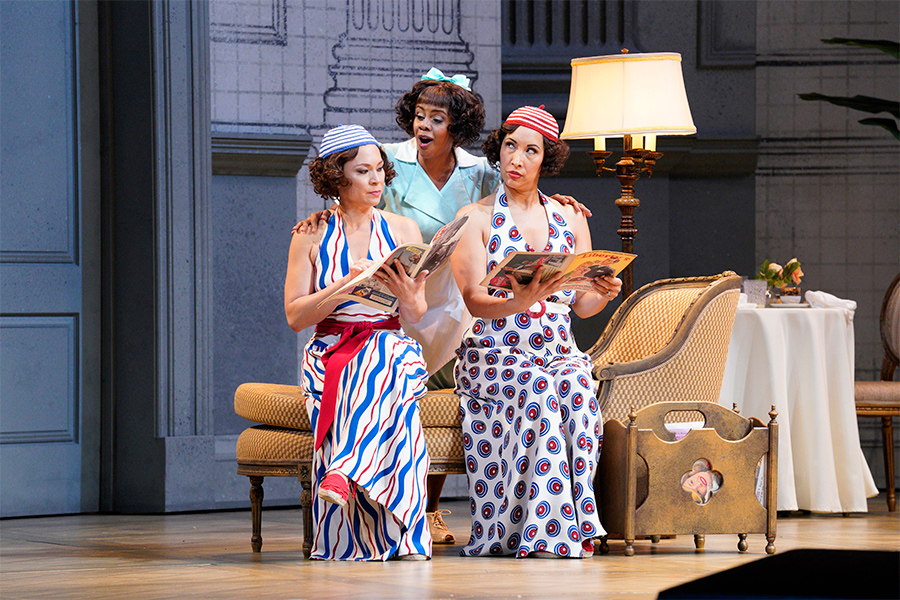
Depending on a director’s vision, Fiordiligi and Dorabella spend much of Così fan tutte in the dark. They believe their lovers have left. They believe the new men are strangers. They do not know they are being tested, manipulated, and observed.
This is where modern audiences sometimes recoil. The deception feels cruel. And it is. But romantic comedies often rely on exactly this asymmetry. In She’s All That, Laney is unaware she’s the subject of a bet. In How to Lose a Guy in 10 Days, both leads are manipulating each other without knowing it. In Dangerous Liaisons, the deception is lethal.
What Così does differently is linger on the women’s emotional process. Fiordiligi resists fiercely, clinging to ideals of constancy. Dorabella yields more easily, curious and conflicted rather than villainous. Neither is mocked for her response. Mozart gives them music of extraordinary empathy, allowing us to feel the pull of desire and the weight of guilt simultaneously. The comedy never erases the cost of being deceived. We laugh, but we also ache.
Falling in love with the “wrong” person
One of the great ironies of Così fan tutte is that the men, disguised, often seem more appealing than they do as themselves. Freed from the rigidity of their original roles, they become more attentive, more emotionally expressive. The women are not falling for impostors so much as alternate versions of the men they already love.
This is a familiar rom-com insight. In She’s the Man, Olivia falls for Viola-as-Sebastian because “he” listens, understands, and offers emotional intimacy. The question Così poses is unsettling: if you fall in love with someone because of how they treat you, does it matter who they “really” are? Or does the performance reveal a deeper truth? This ambiguity is why the opera resists easy moral judgment. Everyone is wrong. Everyone is human.
When the truth comes out
Dating bets never end well. In most productions of Così fan tutte, the revelation scene is not triumphant, it is awkward, painful, and unresolved. Masks come off. Identities are revealed. Hearts are exposed.
Who is hurt the most? The women, who realize their lovers doubted them enough to orchestrate the entire scheme. The men, who discover that their confidence was misplaced — and that they themselves were capable of betrayal. This mirrors the endings of many modern romantic comedies. In She’s All That, the truth about the bet nearly destroys the relationship. In 10 Things I Hate About You, Patrick’s deception wounds Kat deeply, and reconciliation requires genuine reckoning. The audience expects pain before resolution.
Così fan tutte famously ends with the couples paired as they began, but the question lingers: can things ever truly go back to the way they were? Rom-com logic suggests that if a couple is strong enough, they survive the lie. They emerge wiser, humbler, and more honest. Così fan tutte leaves this open-ended, which is one reason it feels so modern.
The opera does not insist on a fairy-tale ending. It suggests something more realistic: love continues, but innocence does not. Trust must be rebuilt. Desire is unpredictable. Fidelity is a choice, not a given.
This is why Così endures. It doesn’t punish its characters for wanting. It allows them to be foolish, selfish, sincere, and wounded. It recognizes that comedy and romance are not opposites, but partners — like the lovers themselves — circling each other, sometimes in harmony, sometimes in discord. In the end, Così fan tutte is the perfect romantic comedy because it understands the genre’s central truth: love is funniest when it hurts, and most beautiful when it survives.