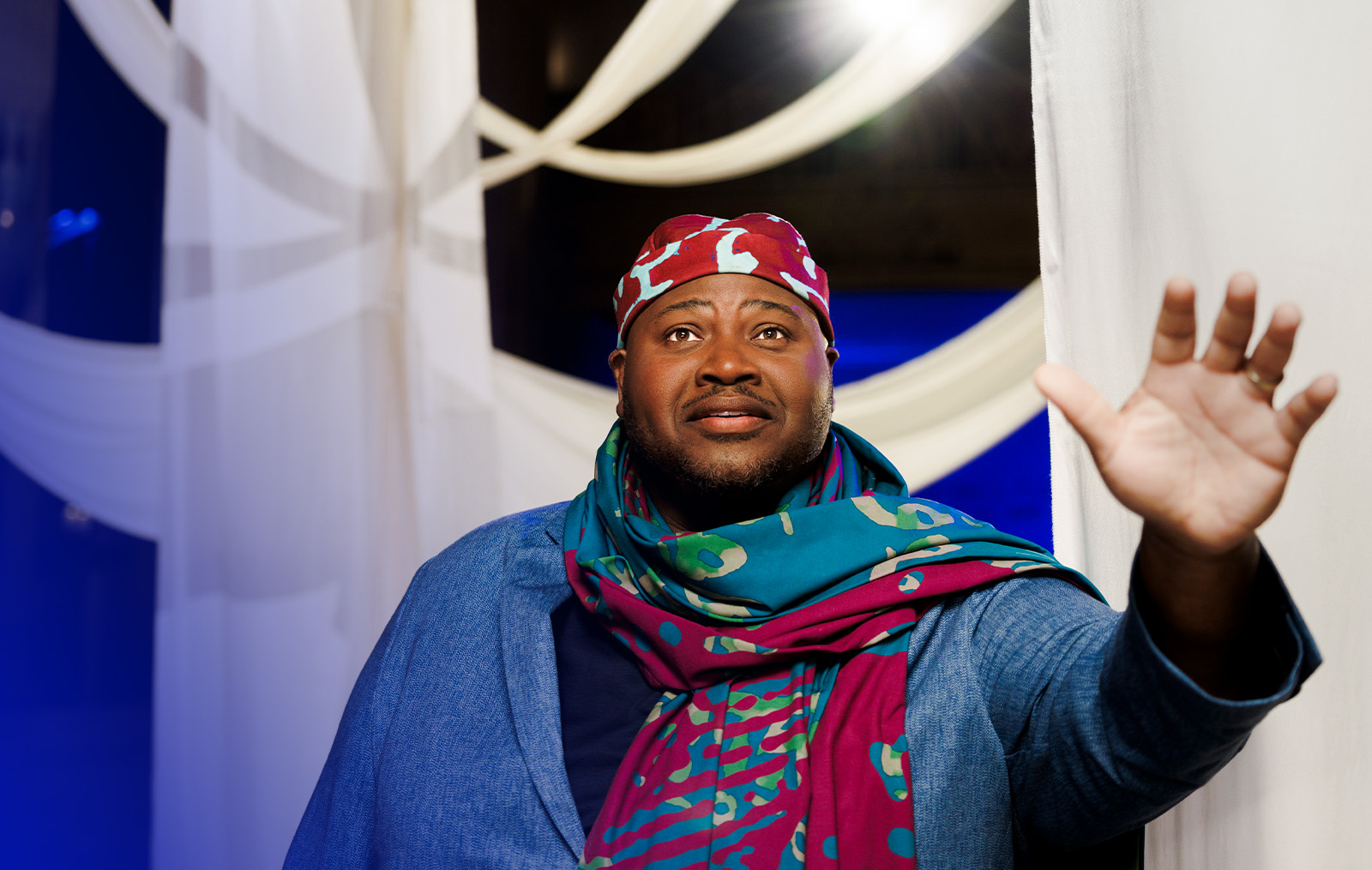
CHICAGO (10/6/2026) — Libraries, museums, universities, and community organizations across Chicago are joining Lyric Opera of Chicago for Chicago Reads Omar, a citywide initiative inviting Chicagoans to discover the extraordinary story of Omar ibn Said, a Muslim scholar from West Africa whose autobiography — written by hand in Arabic in 1831 while he was enslaved in North Carolina — has survived nearly 200 years. Omar’s story is brought to life in the Pulitzer Prize-winning opera Omar, coming to Lyric later this month.
Presented in connection with America250, the national commemoration of the 250th anniversary of the United States, Chicago Reads Omar brings together institutions across the city to encourage Chicagoans to spend approximately 20 minutes learning about Omar’s life, legacy, and place in American history.
Participating organizations include the Library of Congress, Newberry Library, Chicago Public Schools Arts Education, Chicago History Museum, DuSable Black History Museum and Education Center, University of Chicago Division of the Arts & Humanities, and DePaul University’s Social Transformation Research Collaborative (STRC), among others.
“There is something powerful about a city coming together to help its residents discover a story that is an essential part of the American experience. I am deeply grateful to the leaders of these institutions for recognizing the importance of Omar ibn Said’s story and for making it possible for more Chicagoans to encounter his words, his history, and his legacy. Their commitment to sharing this remarkable story reflects the very best of Chicago — a city where our cultural, educational, and civic institutions can come together to help us see our history from new perspectives,” says Lyric General Director John Mangum. “Omar’s story reminds us that American history is richer, more complicated, and more human when we make space for voices that have too often been left out of the narrative.”
Leading voices from Chicago’s cultural, arts and educational community on Chicago Reads Omar
Sana Mirza, PhD, Head of the African Section
Library of Congress
“Omar ibn Said’s autobiography is an extraordinary historical document, offering a rare first-person account of an enslaved West African Muslim scholar and a window into the intellectual, religious and cultural traditions he carried with him. We are honored to preserve his original Arabic manuscript and the broader collection of related materials, making these resources accessible to researchers and the public. Through initiatives like Chicago Reads Omar, more people can engage directly with Omar’s words and their significance in American history, and to also see the opera Omar.
We also invite the public to join us on October 8 for a special Library of Congress online and in-person program exploring Omar ibn Said and the Arabic writings of enslaved African Muslim scholars, with scholars discussing these important texts and their historical context.”
Leading voices from Chicago’s cultural, arts and educational community on Chicago Reads Omar
Astrida Orle Tantillo, President and Librarian
The Newberry Library
"We are proud to partner on this initiative to inform the public of Omar ibn Said's incredible life and long-lasting legacy. This is especially important to us as an organization that celebrates human achievement and stories that have too often been overlooked. Our collection includes first-person accounts by enslaved people and other materials related to the effort to abolish slavery in the United States and the United Kingdom."
Michael Anderson, President & CEO
Chicago History Museum
"At the Chicago History Museum, we believe that preserving and sharing stories helps us better understand our shared history as a city and as a nation. Omar ibn Said's story offers an important perspective on the many voices and experiences that make up our shared history, particularly those that have too often been overlooked. We commend Lyric for bringing his story to life and creating an accessible and meaningful opportunity for Chicagoans to engage with it."
Francesca T. Royster, PhD, Director, Center for Black Diaspora Studies and Co-Director, Social Transformation Research Collaborative
DePaul University
“With the opera Omar, co-creators Rhiannon Giddens and Michael Abels open our ears to American history's multivalent sounds and stories. Based on the life narrative of enslaved Koranic scholar Omar ibn Said — the only American slave narrative that we have written entirely in Arabic, Omar weaves a layered story of determination and faith, supported by a resonant soundtrack of American music, including blues, gospel, and bluegrass.”
About the challenge: A 20-minute journey through American history
Chicago Reads Omar invites Chicagoans to explore Omar’s story through four simple steps: Read. Watch. Learn. Experience.
The challenge can be completed in approximately 20 minutes — either all at once or one step at a time, between now and Lyric’s October presentation of Omar.
Read (10 minutes)
Start with Omar’s own words. In 1831, Omar ibn Said wrote an account of his life in Arabic while enslaved in North Carolina. His 15-page handwritten autobiography offers a rare firsthand perspective on slavery, faith, education, identity, and freedom in America.
The Library of Congress holds Omar ibn Said’s original manuscripts and makes an English translation of his autobiography available to read free online.
Watch (3 minutes)
A short Library of Congress video tells the story of Omar’s life and the preservation of his remarkable manuscript.
Learn (5 minutes)
Lyric’s Get to Know: Omar guide explores the music, history, and ideas behind the opera, including how creators Rhiannon Giddens and Michael Abels drew from Omar’s autobiography to bring his story to the stage.
Experience — The next step
For those who want to go further, Lyric invites Chicagoans to experience Omar, the Pulitzer Prize-winning opera coming to Lyric for three performances on October 23, 25, and 28.
Why Omar ibn Said’s story matters
Omar ibn Said’s autobiography offers a rare opportunity to encounter American history through the words of a person who lived it. Written in Arabic while Omar was enslaved, the manuscript provides evidence of the education, literacy, faith, and intellectual traditions that enslaved Africans brought with them to America.
Nearly two centuries after Omar wrote his story, his voice continues to reach new audiences.
Chicago Reads Omar creates an opportunity for Chicagoans to encounter that history together — and to consider what Omar’s story can teach us about America today.
From page to stage
Omar’s story has inspired a major work of contemporary American opera. Created by Rhiannon Giddens and Michael Abels, Omar the opera transforms his autobiography into a sweeping story of faith, freedom, memory, and the search for home.
The Chicago Reads Omar challenge begins before the curtain rises. Chicagoans can read Omar’s words, watch and listen to scholars and historians, then learn how his story became an opera, and experience that story onstage.
Take the Chicago Reads Omar Challenge
Read. Watch. Learn. Experience Omar.
Take one step or take all four. Either way, Chicago Reads Omar invites you to discover Omar ibn Said’s story and join a citywide effort to explore the history, culture, and ideas that continue to shape America.
To take the Chicago Reads Omar challenge and explore the resources, visit lyricopera.org/chicagoreadsomar.