January 16, 2026
Princesses of the past
By: F. Paul Driscoll
The title role in Salome is demanding in every respect — and since the work’s premiere, she has been sung by legendary sopranos, including many incandescent performances at Lyric.
For more than a century, sopranos (and music critics) have been haunted by Strauss’s seemingly impossible combination of requirements for his ideal Salome: “A sixteen-year-old princess with the voice of Isolde.” The Salome libretto, devised by Strauss from a German translation of Oscar Wilde’s extravagantly flowery French text, immediately establishes the girl’s youth and loveliness with Narraboth’s opening exclamation, “Wie schön ist die Prinzessin Salome heute Nacht!”
Unlike Wilde’s play, the opera libretto omits specific reference to the figurative loss of Salome’s virginity, but the implications of Strauss’s violently colored score are inescapable as the composer charts Salome’s life-changing journey from an innocent to a woman consumed by titanic lust. Strauss expresses the complicated inner life of Salome with vocal requirements as challenging as any in the repertoire.
In order to achieve the full impact of the opera’s punishing final scene, Salome must sound fresh, eager, and uncalculating as she meets the crashing, demonic power of Strauss’s orchestra: If Salome snarls her way through the scene, in the manner of a villainous schemer, the opera’s macabre spell is broken.
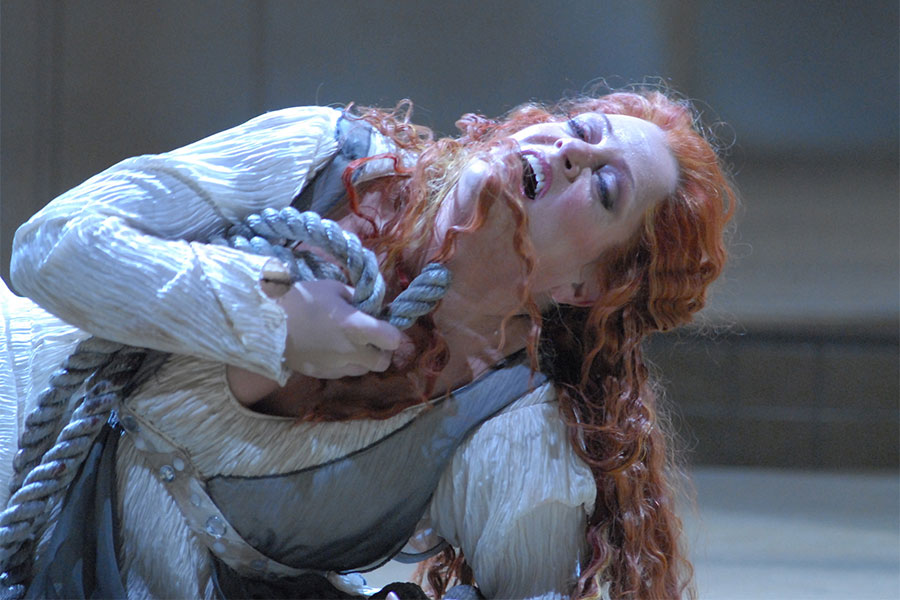
Deborah Voigt’s performance in the 2006/07 Season at Lyric was a legendary success.
Lyric’s first Salome, in 1956, was Inge Borkh, a ravishing German soprano whose experience included training as an actress and a dancer as well as Sieglinde in Bayreuth, Beethoven’s Leonore in Edinburgh, and Elektra in San Francisco. Borkh’s glamorous, athletic, full-voiced Salome established the Lyric tradition of casting singers who meet the dramatic as well as the vocal demands of the role. American soprano Felicia Weathers, whose Salome opened Lyric’s 1968 season, told local broadcaster Studs Terkel that she had sung the role in more than a dozen productions before her Chicago performances, averring that whatever the Salome production scheme, she maintained her basic idea for the character — to be convincing as a young girl who “showed her youth and absolute innocence [while] she is a part of this corrupt society.”
Weathers was succeeded as Salome at Lyric by four of 20th-century opera’s most celebrated singing actresses — Anja Silja (1971), Grace Bumbry (1978), Maria Ewing (1988/89), and Catherine Malfitano (1996/97). Lyric’s most recent exponent of Salome, Deborah Voigt, had what the New York Times’s Anthony Tommasini called “a personal and artistic triumph” in Francesca Zambello’s striking new 2006 production. In her staged role debut as Salome, Voigt capped her reputation as one of the greatest Strauss interpreters of her era.
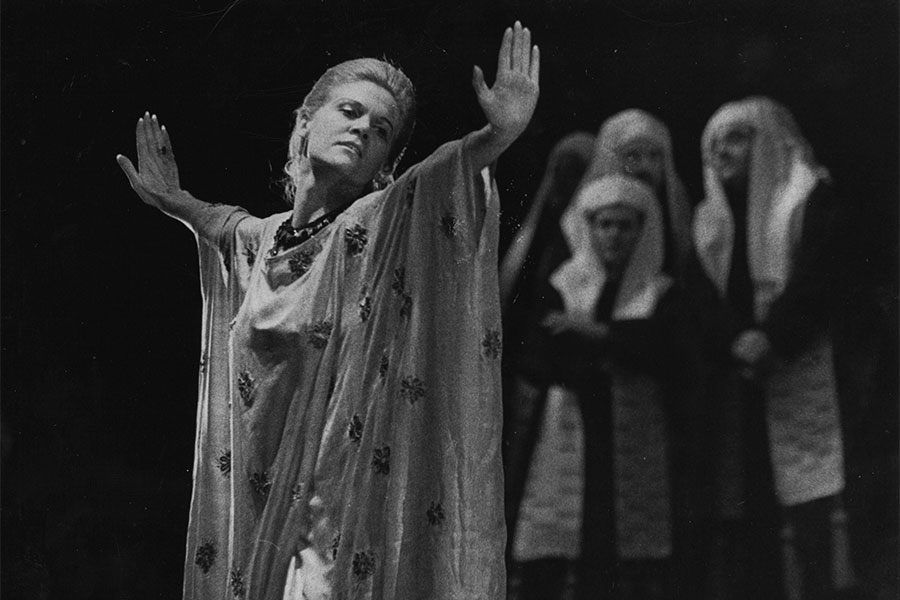
Formidable diva Anja Silja sang Salome at Lyric in 1971 — and would return in the work as Herodias in 1996/97; Jennifer Holloway as Salome at Altanta Opera.
The Salome at the work’s premiere, Marie Wittich, was 37 and at the peak of her vocal prowess when she created the title role at Dresden’s Konigliches Opernhaus. Already a veteran member of the Dresden ensemble at the time, Wittich counted several Wagner heroines among her successes there. Her vocal suitability for Salome was never seriously questioned, but Strauss was considerably less enthusiastic about the soprano’s stage presence. Wittich was a handsome woman, and a vibrant, intelligent singer, but she was neither slim nor lithe, much to the annoyance of Strauss, who referred to his Salome as “Tante” (Auntie). Wittich also opted not to perform Salome’s “Dance of the Seven Veils,” which was taken on by a ballerina from the Dresden company. This odd double-casting practice was also used when Salome had its 1907 U.S. premiere, at the Metropolitan Opera, which cast the magnificent Swedish-American diva Olive Fremstad, another formidable Wagnerian, as the princess and drafted company ballerina Bianca Froelich for the dance.
The city of Chicago’s first Salome was the beautiful Scots prima donna Mary Garden, who made her debut in the role for Oscar Hammerstein’s Manhattan Opera Company in 1909. Garden was a charismatic performer who gave full play to the opera’s dramatic possibilities, although critic James Gibbons Huneker termed her voice “a serious mirage.” Garden chose to perform Salome in French, executed the dance herself and — according to The New York Sun’s critic W. J. Henderson — “deliberately spoke” rather than sang, several of Salome’s more taxing lines.
When Garden’s Salome reached the Auditorium Theatre in Chicago in 1910, she caused a full-out scandal. The president of the Chicago Law and Order League wrote a furious (and well–publicized) letter to the Chief of Police, saying, “Miss Garden wallowed around like a cat in a bed of catnip…I would not call it immoral. I would say it is disgusting.” The opera’s scheduled third performance in Chicago was moved out of town to Milwaukee in an attempt to quiet the local controversy.
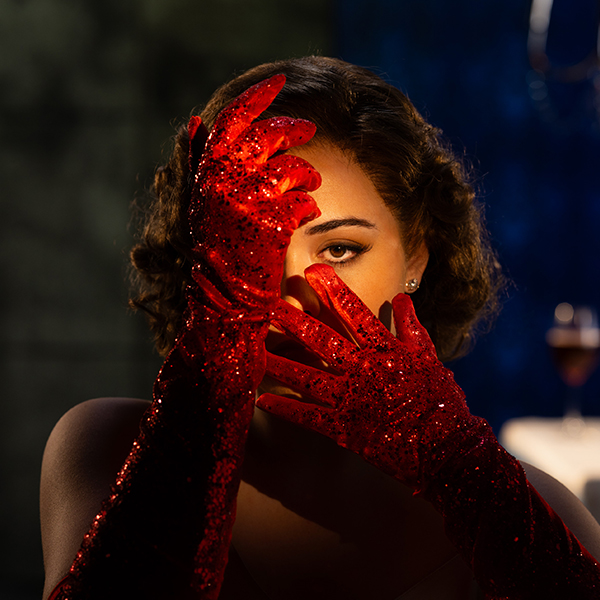
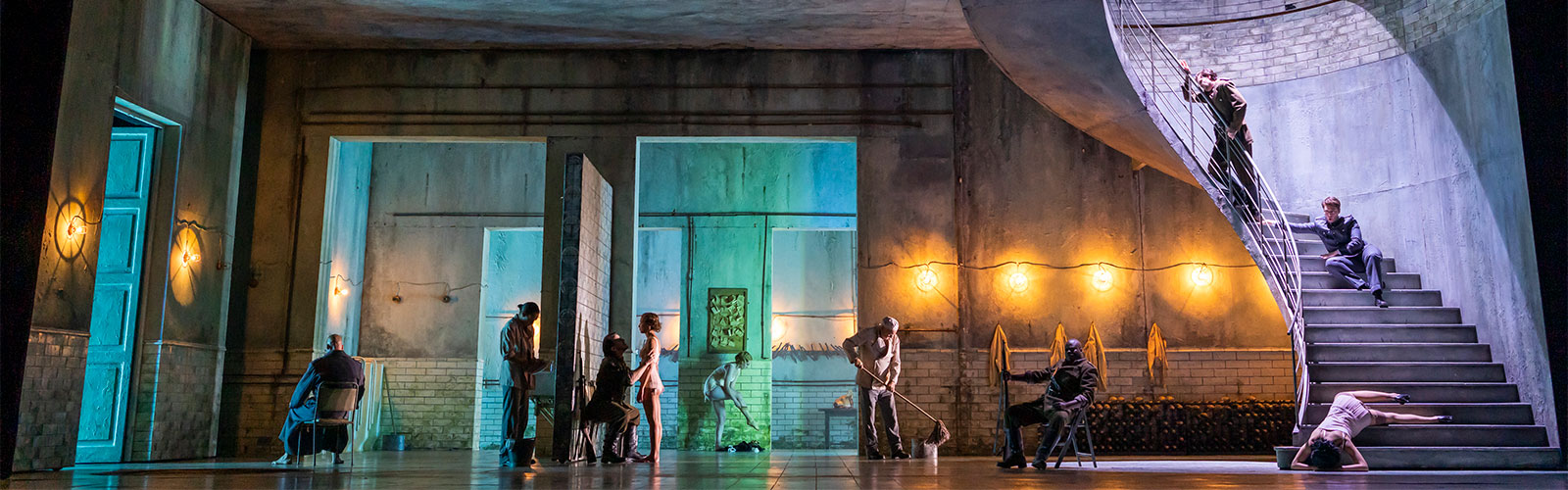
Now, with considerable excitement, and for a less censorious public, Lyric Opera of Chicago welcomes Jennifer Holloway as the latest troubled princess in the royal line of Salomes who have dazzled the city. Salome is an opera with a great tradition at what was first known as the Civic Opera House; Holloway’s vocal prowess and dramatic imagination make her a worthy successor to the legendary artists who have preceded her.
F. Paul Driscoll is the former editor of OPERA NEWS.