- by Giuseppe Verdi
- In Italian with projected English texts.
- Total running time: 2h 30m
This is a world where murder’s a sport and debauchery’s a way of life.
At its rotten core reigns the Duke of Mantua, a serial seducer who’s out to conquer anyone in skirts—from servant girls to the wives and daughters of his noblemen friends. Aiding his boss in the game and cheering him on when he scores is Rigoletto, the despised court jester. Only one person brings him joy—his innocent daughter Gilda, whom he keeps behind locked doors and guards with his life.
But no one’s safe in this godless place—and massive emotional devastation is just around the corner. The Duke is hunting again—and this time he’s got Gilda in his sights!
The Duke’s ode to women’s fickleness, “La donna è mobile,” is just one of Rigoletto’s world-famous tunes.
Lyric Opera production originally made possible by the NIB Foundation and Jim and Vicki Mills/Jon and Lois Mills. Revival generously made possible by Jim and Kay Mabie, Sylvia Neil and Daniel Fischel, and Helen and Sam Zell.
Starring
-
Rigoletto
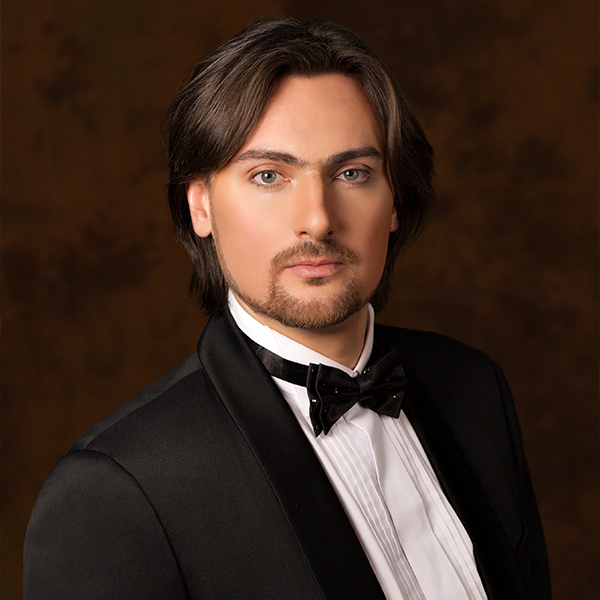
Andrzej Dobber
Feb 25-Mar 10, Lyric debut
A favorite at La Scala, the grand baritone of Andrzej Dobber will capture all of Rigoletto’s rage and pathos. “He can be both refined and rawly expressive…a fascinating artist.” The Independent, London
-
Rigoletto
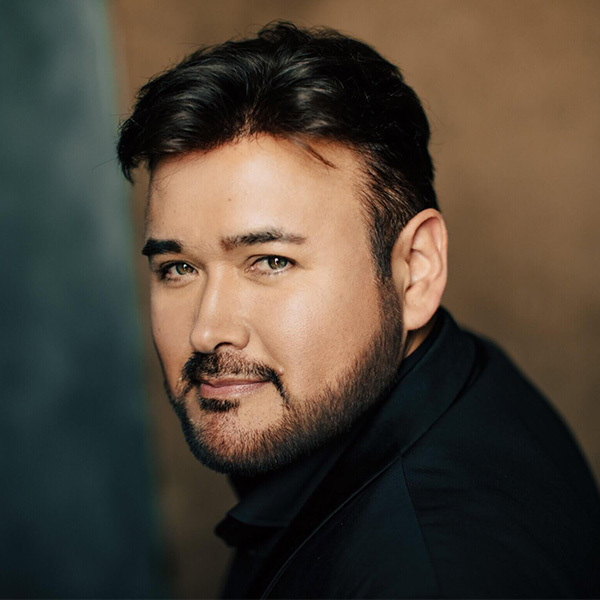
Željko Lučić
March 14-30, Lyric debut
Željko Lučić: This Serbian baritone is a major force in the international Verdi pantheon. Whatever the role, he “brings gravity and sonorous force in towering performances.” Bloomberg News
-
Gilda
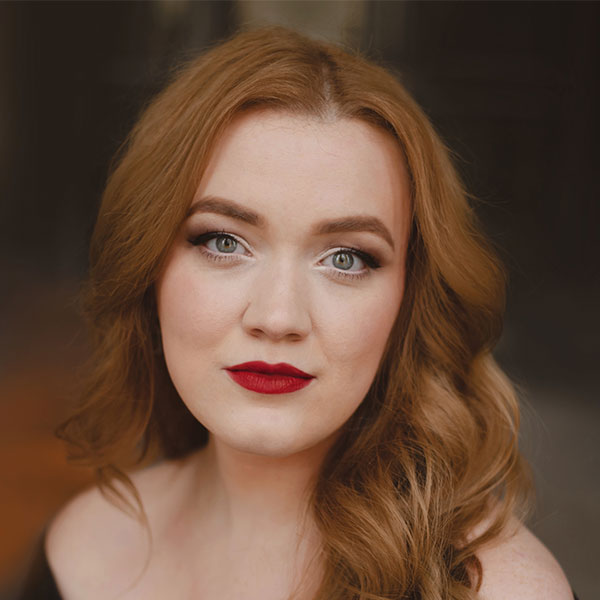
Albina Shagimuratova
Lyric debut
Albina Shagimuratova: This Russian soprano racks up rave reviews from Hamburg to Houston. “Her Gilda is a triumph…combining vocal splendor with extraordinary dramatic conviction.” Houston Chronicle
-
Duke
Giuseppe Filianoti
Giuseppe Filianoti broke our hearts as the lovelorn Edgardo in Lyric’s Lucia. Now he’s the heartbreaker as the predatory Duke: With his clarion top notes, “he is nothing short of spectacular.” Financial Times
|
Rigoletto Andrzej Dobber*
Feb 25-Mar 10
|
|
Rigoletto Željko Lučić*
March 14-30
|
|
Gilda Albina Shagimuratova*
|
|
Duke Giuseppe Filianoti
|
|
Sparafucile Andrea Silvestrelli
|
|
Maddalena Nicole Piccolomini*
|
|
Monterone Todd Thomas*
|
|
Conductor Evan Rogister*
|
|
Director Stephen Barlow*
|
|
Set Designer Robert Innes Hopkins
|
|
Costume Designer Jane Greenwood
|
|
Lighting Designer Duane Schuler
|
|
Guest Chorus Master Ian Robertson
|
*Lyric Debut
† current member, Ryan Opera Center
† † alumnus/ alumna, Ryan Opera Center
Rigoletto—The Story of the Opera
ACT ONE
Scene 1. In his palace, the Duke of Mantua
tells a courtier, Borsa, about his newest
love. The girl has enchanted the Duke,
but ultimately it makes no difference to
him whether he pursues one woman or the
other – they’re all the same (Ballata: Questa
o quella). The Duke flirts with Countess
Ceprano, as Rigoletto cruelly mocks her
husband. Another courtier, Marullo,
excitedly tells his friends of his surprising
discovery: Rigoletto has a mistress.
Rigoletto suggests several unscrupulous
methods of disposing of superfluous
husbands. Realizing that he is the object
of Rigoletto’s sarcasm, Count Ceprano
arranges for a midnight meeting with some
the courtiers to obtain vengeance.
Another nobleman, Monterone, storms
in to denounce the Duke for dishonoring
his daughter. He curses the Duke, and
when mocked viciously by Rigoletto,
Monterone turns on Rigoletto and curses
him as well.
Scene 2. Brooding over Monterone’s curse,
Rigoletto returns to the secluded house
where he shields his daughter, Gilda, away
from the licentiousness of the Duke’s
court. He is confronted by Sparafucile,
a professional assassin (Duet: Va! Non
ho niente), who offers his services should
Rigoletto ever wish to rid himself of an
enemy. Rigoletto sends the man away. He
muses on the similarity of their professions
(Monologue: Pari siamo) – Rigoletto
constantly wounding others with his wit,
while Sparafucile uses a knife.
Gilda greets her father (Duet: Figlia!
Mio padre!). She asks him about her
mother, but he replies only that his wife
was an angel who loved him. He refuses
to divulge his real name and repeats his
command that Gilda not leave their home,
except to attend church. When her father
asks if she has talked to any strangers,
she evades his question. While Rigoletto
is warning Giovanna, his housekeeper, to
admit no one, the Duke steals in and hides.
He is astonished to hear Rigoletto call
Gilda his daughter. Father and daughter
bid each other farewell, and Rigoletto
departs.
Gilda confesses to Giovanna that she
is in love with a young man who has been
following her home every day after church.
The Duke now appears and declares his
love for Gilda (Duet: È il sol dell’anima).
He identifies himself as Gualtier Maldè, a
penniless student. Hearing footsteps, he
rushes off, leaving Gilda thinking lovingly
of his name (Aria: Caro nome).
The courtiers appear, masked, ready
to abduct Rigoletto’s supposed mistress.
Rigoletto surprises them by returning,
but Marullo convinces him that they are
planning to abduct the wife of Count
Ceprano, who lives nearby. Rigoletto falls
into their trap, permitting himself to be
blindfolded and masked. Unknowingly,
he assists the conspirators (Chorus: Zitti,
zitti). Gilda cries out desperately to her
father as she is carried off. Becoming
suspicious, Rigoletto tears off the blindfold,
realizes Gilda is gone, and cries, “Ah, the
curse!”
ACT TWO
The Duke laments the loss of Gilda
(Recitative and Aria: Ella mi fu rapita!…
Parmi veder le lagrime). After the courtiers
tell him of the abduction (Chorus:
Scorrendo uniti remota via), he rejoices
that the girl is now in the palace (Cabaletta:
Possente amor).
When Rigoletto appears, he feigns
nonchalance. Once it becomes clear to him
that Gilda must be with the Duke, he tries
to reach her, but the courtiers hold him
back. His denunciation of their treachery
dissolves into a bereft father’s pleading
(Aria: Cortigiani, vil razza dannata). Left
alone with Rigoletto, Gilda confesses that
she is in love with the Duke (Duet: Tutte le
feste al tempio…Piangi, fanciulla) and begs
her father to forgive him. As Monterone
appears on his way to prison, Rigoletto
swears that they both will be avenged.
ACT THREE
Rigoletto has brought Gilda to Sparafucile’s
inn to prove her lover’s faithlessness. As they
lurk in the darkness, the Duke swaggers
in. After proclaiming the fickleness of
women (Canzone: La donna è mobile),
he showers attentions on Maddalena, the
assassin’s attractive sister. As the flirtation
progresses, Rigoletto tries to comfort his
despairing daughter (Quartet: Un dì, se
ben rammentomi…Bella figlia dell’amore).
He orders her to return home, disguise
herself as a boy, and meet him in Verona.
He strikes a bargain with Sparafucile for the
Duke’s murder and then departs.
Gilda overhears Maddalena begging her
brother to spare the handsome stranger’s
life. Sparafucile agrees to deceive Rigoletto
by substituting the corpse of the next
person who appears at the inn. Having
returned to the inn determined to sacrifice
herself so the Duke may live, Gilda becomes
Sparafucile’s next victim.
At the stroke of midnight, Rigoletto
pays the assassin. Sparafucile offers to
dispose of the body, but Rigoletto reserves
for himself the satisfaction of throwing the
sack containing his enemy’s corpse into
the river. Suddenly he hears the Duke’s
voice. Rigoletto frantically cuts open the
sack and finds his dying daughter (Duet:
V’ho ingannato…Lassù in cielo). Begging
her father’s forgiveness, she dies. The
despairing Rigoletto cries out once more,
“Ah, the curse!”
Role of a Lifetime
Rigoletto
By Magda Krance
Andrzej Dobber and Željko Lučić have triumphed at many of the world's top opera houses is a veritable catalog of Verdi's greatest male roles.
In the world of Verdi baritones, fewsingers are more highly prized than the twowho will debut in the title role of Rigoletto at Lyric late this winter. Now Lyric audiences will have the chance to experience their interpretations of what each considers the jester-capped glory of the Verdi repertoire.
Of course, the treacherous, tragic triangle at Rigoletto’s core also requires a heartrending soprano and a dashing, heartthrob tenor of the highest order, and Lyric has both: Albina Shagimuratova (debut) and Giuseppe Filianoti (Edgardo/Lucia di Lammermoor and Nemorino/The Elixir of Love at Lyric in recent seasons).
“Rigoletto” isn’t the literal Italian translation of Schadenfreude (pleasure derived from the misfortune of others), but it could be. The name sounds like merry laughter, but Verdi’s title-role character, the Duke of Mantua’s detested jester, cruelly mocks the misery of noblemen whose wives and daughters are seduced or ravished by his boss. Monterone, one nobleman, wants revenge for his daughter’s dishonor; as he’s dragged to prison he furiously curses Rigoletto and the duke. The other noblemen trick Rigoletto and kidnap his daughter Gilda, assuming she’s his mistress, as a prize for the duke. Earlier, the girl had fallen head over heels for a penniless student who in fact was the duke in disguise. Sheclings to his declarations of ardor until her father forces her to watch her loverseducing another girl – Maddalena, the sister of the assassin Sparafucile, hired by Rigoletto to kill the duke. Maddalena persuades her brother to spare the duke and instead kill the next stranger who comes through the door. Devastated but still in love, Gilda disguises herself as a boy and enters the inn knowing her fate. Rigoletto is ready for the last laugh when Sparafucile delivers a bagged body, but the Schadenfreude table turns terribly on the jester when he discovers the dying Gilda inside. The curtain falls on a father crushed by the loss of his beloved child.
Adapting a play by Victor Hugo, Le roi s’amuse, with librettist Francesco Maria Piave, Verdi imbued this woeful tale with extraordinary music that vividly conveys the duke’s strutting sexuality, Gilda’s starry-eyed longing for love and freedom, and, most of all, Rigoletto’s bitterness, tenderness, and utter despair. Among the finest of the composer’s 28 operas, Rigoletto makes a perfect early birthday “gift” with which Verdi lovers here can mark his bicentennial.
Lyric’s sumptuous traditional production was first seen in 2005-06, with set designs by Robert Innes Hopkins, costumes by Jane Greenwood, and lighting by Duane Schuler. Evan Rogister (debut) will conduct and stage director Stephen Barlow (debut) will create a new staging for these performances.
Andrzej Dobber (AHN-zhay DOHburr) has portrayed Rigoletto at La Scala and on tour to Japan (under Riccardo Muti), at the Opéra National de ParisBastille, in Santiago, Hamburg, Leipzig, Dresden, Graz; and in Warsaw, Wrocław, PoznaĔ, and Kraków in his native Poland. Dobber considers this his hardest role “because this part, similar to Germont in La traviata, demands vocal qualities from lirico and spinto up to dramatic baritone. One can bring this psychologically pained and physically deformed character to life onstage not by acting, but rather, by being the character. I am the proud father of four children – that is of the most basic significance for this role!” Dobber adds that “the scene that demands the maximum from me is the great scene in Act Three,” after Gilda has been abducted and Rigoletto realizes she’s been brought to the duke’s bedchamber. In the aria “Cortigiani” he pleads desperately for her release and in “Sì, vendetta” he swears to avenge the wrong the duke has done his daughter, even as she professes love for her fickle seducer.
Regarding the many Rigoletto productions in which he has starred, Dobber declares, “For me there is no ‘modern’ and no ‘tradition’ – I don’t make judgments regarding these categories. There are only good and bad productions. The story simply needs to be presented in an understandable way to the audience.” Dobber has also triumphed internationally as Verdi’s Macbeth, Simon Boccanegra, Germont, Amonasro/Aida, Renato/Un ballo in maschera, Iago/Otello, Miller/Luisa Miller, Don Carlo/La forza del destino, and Stankar/Stiffelio with major companies including the Metropolitan Opera, Brussels’s Théâtre Royal de la Monnaie, the Vienna Staatsoper, the Deutsche Oper Berlin, Munich’s Bayerische Staatsoper, the Hamburg Staatsoper, Royal Opera House-Covent Garden, Glyndebourne Festival Opera, and the Netherlands Opera, among others.
“Verdi remains the preferred composer for my voice,” Dobber notes. “Nevertheless, I don’t want to limit myself exclusively to his music. My voice is developing further, and I am following that development in that my current repertoire is expanding to new challenges – for example, recently Jochanaan [Salome] and Amfortas [Parsifal] in Hamburg,” where Dobber and his family live.
“This will be my first visit to Chicago, and I’m wildly excited about getting to know the city,” which has the largest Polish population outside of Warsaw. Dobber will sing the first five Rigoletto performances, Feb. 25 through Mar. 10.
Since Željko Lučić (ZHEL-koh LOO-chich) sang his first Rigoletto in Bergen four years ago he’s repeated the role “almost everywhere,” including the Metropolitan Opera, Opéra National de Paris, Cologne Opera, Teatro Real deMadrid, and Dresden Semperoper (DVD), with upcoming portrayals in Los Angeles, San Francisco, at La Scala, the Met, and Chicago. “Every performance is something new – the audience is new, the people in the audience want to hear the best they can, and my job is to be fresh as I can every time – even after [a run of] ten performances! I always try to sing like it’s the first time.
“I am not acting – when I sing Rigoletto I am Rigoletto,” the Serbian baritone maintains. “I am a parent as well, with two sons, 19 and 16. My natural reactions, how I would react if I would see something like that – I am not acting, it’s real life onstage. That’s why it’s so hard to bring Rigoletto to the end – I am so full of emotion, my heart is pounding, I’m full of tears.” For baritones, Lučić considers Rigoletto “the crown of our career.”
An unabashed traditionalist, Lučić calls the singers of the midcentury “my idols and role models. My teacher, who turned 89 recently, sang with all the greats. We wonder why the singers of the ’50s and ’60s sang so well – the live recordings sound like studio recordings! If you watch DVDs you see people standing and singing – no running, no jumping, no Harley Davidsons or whatever on the stage. Everything you can say, singing Verdi, you can do with your voice – with a little movement of your head or your arms or your face, but mainly with your voice.” Now living in Frankfurt, he adds that in German opera houses, “nothing can surprise me but I’m still very traditional, and I will argue with a director if he wants me to do something strange. The directors are usually willing to discuss; we’re always trying to find a compromise.”
Lučić is pleased to reunite with two of his Lyric costars: “I did Macbeth with Giuseppe Filianoti [the duke] under Muti in Salzburg last summer, and also we did Rigoletto at the Met. Andrea Silvestrelli [Sparafucile] and I met in Berlin when I was doing Iago.” He looks forward to meeting and working with his Gilda, Albina Shagimuratova, who will also make her company debut.
His Lyric engagement “will be my very first visit to Chicago,” which he notes has the largest Serbian population outside of his homeland. LuþLü will sing the final five performances of Rigoletto, Mar. 14-30.
Lučić has 20 Verdi operas in his repertoire. The rest he hasn’t sung “because nobody is doing them! Especially singing Verdi – everything is quite clear. All you have to do is sing and follow the music, and listen. Let the music do the talking and the walking!”
On the Record
Roger Pines, dramaturg at Lyric Opera, recommends these performances.
On CD
Milnes, Sutherland, Pavarotti, Tourangeau, Talvela; London Symphony Orchestra, cond. Bonynge (Decca – CD)
Fischer-Dieskau, Scotto, Bergonzi, Cossotto, Vinco; La Scala, cond. Kubelik (DG)
Agache, Vaduva, Leech, Larmore, Ramey; Welsh National Opera, cond. Rizzi (Warner Classics)
Sung in English
Rawnsley, Field, Davies, Rigby, Tomlinson; English National Opera, cond. Elder (Chandos)
Of special historical interest
Gobbi, Callas, di Stefano, Lazzarini, Zaccaria; La Scala, cond. Serafin (EMI Classics)
Warren, Berger, Peerce, Merriman, Moscona; RCA Victor Orchestra, cond. Cellini (Myto)
Taddei, Pagliughi, Tagliavini, Colasanti, Neri; RAI Turin, cond. Questa (Preiser)
On DVD
Lučic, Damrau, Flórez, Mayer, Zeppenfeld; Dresden State Opera, cond. Luisi, dir. Lehnhoff (Virgin Classics)
Gavanelli, Schäfer, Alvarez, Araya, Halfvarson; Royal Opera House, Covent Garden, cond. Downes, dir. McVicar (Opus Arte)
Sung in English
Rawnsley, McLaughlin, Davies, Rigby, Tomlinson; English National Opera, cond. Elder, dir. Miller (Kulbur)
Suggestions for Further Reading
Aspects of Verdi
by George Martin, Limelight Editions, 1993.
An enjoyable general book that reads like a series of cozy barroom conversations with the author.
The Cambridge Companion to Verdi
, edited by Scott A. Balthazar, Cambridge University Press, 2004.
Essays by distinguished Verdi scholars that provide a broad range of understanding for contextualizing the composer’s works.
The Complete Operas of Verdi
by Charles Osborne, Knopf, 1969.
A longtime favorite by one of opera’s master scholars.
Divas and Scholars
by Philip Gossett, University of Chicago Press, 2006.
An immensely illuminating summary of a life-time of work on nineteenth-century Italian opera from the perspective of scholarship and performance.
The Life of Verdi
by John Rosselli, Cambridge University Press, 2000.
An excellent, concise account of Verdi’s life.
The Operas of Verdi
by Julian Budden, Clarendon Press of Oxford University Press, 1992.
The standard reference work on Verdi’s operas in three comprehensive volumes.
Verdi
by Julian Budden, Schirmer, 1996.
Distills the essence of the author’s incomparable three-volume study into a single, affordable book and includes insights on Verdi’s non-operatic works.
Verdi: A Biography
by Mary Jane Phillips-Matz, Oxford University Press, 1996.
The most complete, authoritative biographical resource on Verdi in English.
Verdi: A Life in the Theatre
by Charles Osborne, Fromm International, 1989.
A biography based primarily on letters to and from the composer.
The Verdi Companion
, edited by Martin Chusid and William Weaver, W. W. Norton & Co., 1988.
An examination of Verdi’s life and works written by scholars but intended for the general public. Includes a rigorously documented chronology.
Verdi: His Music, Life, and Times
by George Martin, Second Limelight Editions, 2001. Provides social and political context for biographical events in the composer’s life. Hard for a Verdi lover to put down.
Rigoletto
Rigoletto
by Giuseppe Verdi
© 2012/13 Lyric Opera Commentaries 2012 Lyric Opera of Chicago
Original sound recordings of musical excerpts used by permission of EMI Classics, courtesy of Angel Records, a division of Capitol Records. All rights reserved. Produced by Mark Travis. Daniel Goldberg, Associate Producer.
Rigoletto Audio Preview
Sir Andrew Davis previews
Rigoletto
Download (right click and "Save Target As" / "Save Link As")
Rigoletto Discovery Series
| One of Verdi's defining operas, Rigoletto is a fountain of memorable melodies, while its suject matter involves moral depravity, licentiousness, and plenty of emotional devastation. Be there when Giuseppe Filianoti (the Duke of Mantua), conductor Evan Rogister, and director Stephen Barlow delve into this Verdi favorite |
Download (right click and "Save Target As" / "Save Link As")