Lyric Opera of Chicago Season 2008/2009 Subscribe Now

LYRIC OPERA OF CHICAGO

HISTORICAL OVERVIEW

Civic Opera House StageLyric Opera of Chicago is recognized internationally as one of the great opera companies of our time. Its artistic standards are universally admired. The company's financial solvency and massive subscription audience are envied throughout the field. Its administrative and artistic leadership is longstanding and rock solid. William Mason is general director.

The company, originally known as The Lyric Theatre of Chicago, was founded in 1954 by Carol Fox, Lawrence V. Kelly (both 28 at the time), and conductor Nicola Rescigno, to fill Chicago's operatic void of nearly a decade. The latter two founders withdrew after the 1955 season, and the company was renamed Lyric Opera of Chicago prior to the beginning of the 1956 season. Carol Fox served as general manager (1954-80) of the world-class company. She died in 1981.

Ardis Krainik served as Lyric's general director from January 1981 until her death in January 1997. She is widely recognized for saving the company from financial peril while enhancing its world-class status. Previously Krainik worked as the company's artistic administrator since 1975, and before that as assistant manager since 1960. She joined the company as a clerk-typist and mezzo-soprano in 1954. From 1955 through 1959, Krainik sang comprimaria roles in Il tabarro, Rigoletto, Die Walküre, La traviata, La forza del destino, Andrea Chénier, Adriana Lecouvreur, Lucia di Lammermoor, Simon Boccanegra, Jenůfa, and Thaïs.

Following an extensive international search, William Mason was chosen to succeed Ardis Krainik as general director of Lyric Opera in early 1997. Mason began working backstage in 1962 while pursuing a bachelor's degree in voice from Roosevelt University's Chicago Musical College. Since then has been associated with the company for all but three seasons. In 1971 Mason was assistant to the music administrator at the New York City Opera, in 1972 he was production stage manager of Cincinnati Opera, and in 1979-80 he was artistic administrator of the San Francisco Opera. He returned to Lyric Opera in 1980 as director of productions and in 1981 he assumed the position of director of operations, artistic and production. Mason was first associated with Lyric as a boy soprano, singing the Young Shepherd in Lyric's 1954, 1956, and 1957 productions of Tosca, which starred, respectively, Eleanor Steber, Giuseppe Di Stefano and Tito Gobbi; and Renata Tebaldi, Jussi Björling, and Tito Gobbi.

Sir Andrew Davis has served as Lyric Opera's music director and principal conductor since 2000, and as artistic advisor of the Pittsburgh Symphony Orchestra since 2005. Over the course of his extensive career the internationally renowned symphonic and operatic conductor has led all of the major orchestras of the world from the Chicago Symphony to the Berlin Philharmonic and the Royal Concertgebouw, and has conducted at opera houses throughout the world including the Metropolitan Opera, La Scala, and the Bayreuth Festspielhaus. He continues to maintain a full guest-conducting and recording schedule internationally. A prolific recording artist with more than a hundred recordings and numerous awards to his credit, Sir Andrew has recorded for Decca, Deutsche Grammophon, Warner Classics International, Capriccio, EMI, and CBS.

At Lyric Opera, Davis has conducted 26 productions from 1987 through March 2007. During the company's 53rd season in 2007/08, he leads a new production of Richard Strauss's Die Frau ohne Schatten; revivals of Verdi's La traviata (January) and Falstaff, and Puccini's La bohème; and the Metropolitan Opera production of Eugene Onegin. Also during the 2007/08 season, he conducts concert performances of Thaïs starring Renée Fleming at The Royal Opera House, Covent Garden; and at the Gran Teatre del Liceu, Barcelona. Orchestral engagements include numerous concerts with the Pittsburgh Symphony Orchestra as well as the Cleveland Orchestra, Leipzig Gewandhaus, Toronto Symphony Orchestra, Royal Philharmonic orchestra, BBC Symphony Orchestra, London Philharmonia, Orchestre de Paris, Rotterdam Philharmonic, Detroit Symphony, and Boston Symphony Orchestra at Tanglewood.

Davis was music director of Glyndebourne Festival Opera (1988-2000) and chief conductor of the BBC Symphony Orchestra (1989-2000); he is the latter's first-ever conductor laureate. He is also conductor laureate of the Toronto Symphony, where he served as music director (1975-88).

Maestro Bruno Bartoletti, artistic director emeritus, celebrated his 50th anniversary with Lyric during the 2006/07 season, conducting a new production of Il trovatore, the opera that marked his U.S. debut in Chicago. In 2007/08, he conducts the season-opening performances of La traviata in September and October. Bartoletti served as Lyric's artistic director from 1964 until his retirement in 1999. He has been associated with the company since 1956, and has conducted more than 600 performances here. He is celebrated internationally for his enormous repertoire, including several world premieres and numerous recordings.

Matthew A. Epstein served as artistic director from mid-1999 through April 2005. Previously he was the company's artistic adviser beginning in 1980. Epstein was instrumental in the development of Lyric's "Toward the 21st Century" artistic initiative, and during his tenure brought many important new artists to the company.

Lyric Opera of Chicago sold 95.4% of its capacity in the 83-performance 2006/07 season — generating $27 million in box-office revenues — and exceeded its $15.6-million fundraising goal. The company sold more than 277,000 tickets for the season. Half of the performances sold at the 100% level. From 1988 through 2001 Lyric exceeded 100% of capacity, and is also distinguished for having operated in the black for 19 of the past 20 years. The company boasts more than 32,000 subscribers for its six-month season, which offers 79 performances of eight operas in 2007/08.

After a four-year absence, Lyric performances returned to the radio airwaves in the fall of 2006 thanks to The Bucksbaum Family Lyric Opera Broadcasts, made possible by the Matthew and John Bucksbaum Families and General Growth Properties, with matching funds provided by The Crown Family, The Andrew W. Mellon Foundation, and Richard P. and Susan Kiphart. (Mr. Kiphart is president and CEO of Lyric's board of directors.) Approximately 25 million listeners locally, regionally, nationally, and internationally (Canada and Europe) are expected to hear the broadcasts each year - live on opening nights during the season in the Chicago area, and locally, nationally, and internationally during an eight-week spring rebroadcast period.

In March of 1996, Lyric Opera of Chicago presented Wagner's Ring cycle for the first time in its entirety. The three Ring cycles sold out months in advance to 10,500 subscribers. The 1996 Ring cycles had a total economic impact of $34.7 million on the Chicago metropolitan area, according to a study conducted by the Regional Economic Applications Laboratory.

Three complete cycles of Lyric's Ring were remounted following the 2004/05 season, to mark the company's 50th anniversary. The cast included James Morris, Jane Eaglen, Plácido Domingo, and John Treleaven. The 2005 Ring cycles sold out completely.

Over the course of the company's 53-year history, Lyric Opera of Chicago has consistently offered its patrons a world-class roster of singers, conductors, directors, designers, choreographers, and dancers in a wide-ranging repertoire.

The singers include Theo Adam, Alexandru Agache, Roberto Alagna, Carlos Álvarez, Sir Thomas Allen, June Anderson, Roberto Aronica  Gabriel Bacquier, Agnes Baltsa, Ettore Bastianini, Kathleen Battle, Isabel Bayrakdarian, Kim Begley, Carlo Bergonzi, Walter Berry, Jussi Björling, Rockwell Blake, Johan Botha, Inge Borkh, Olga Borodina, Gré Brouwenstijn, Sesto Bruscantini, Renato Bruson, Oleg Bryjak, Grace Bumbry    Montserrat Caballé, Nicole Cabell, Maria Callas, Joseph Calleja, David Cangelosi, Piero Cappuccilli, José Carreras, Anita Cerquetti, Vladimir Chernov, Judith Christin, Boris Christoff, Vinson Cole, Alessandro Corbelli, Franco Corelli, Fernando Corena, Fiorenza Cossotto, Ileana Cotrubas, Régine Crespin, Dwayne Croft, José Cura   Barbara Daniels, David Daniels, Ildebrando D'Arcangelo, Mark Delavan, Lisa Della Casa, Mario Del Monaco, Natalie Dessay, Daniela Dessì, Cristina Deutekom, Mariella Devia, Michelle DeYoung, Larissa Diadkova, Giuseppe di Stefano, Plácido Domingo, Mark S. Doss   Jane Eaglen, Kallen Esperian, Sir Geraint Evans, Maria Ewing   Serena Farnocchia, Eileen Farrell, Lauren Flanigan, Renée Fleming, Gerald Finley, Juan Diego Flórez, Bruce Ford, Mirella Freni, Elizabeth Futral   Lucio Gallo, Vladimir Galouzine, Leyla Gencer, Nicolai Ghiaurov, Angela Gheorghiu, Rodney Gilfry, Marcello Giordani, Tito Gobbi, Susan Graham, Denyce Graves, Reri Grist, Jill Grove, Paul Groves, Andrea Gruber, Edita Gruberova, Franz Grundheber, Maria Guleghina, Nathan Gunn, Nancy Gustafson   Jerry Hadley, Håkan Hagegård, Eric Halfvarson, Thomas Hampson, Kathryn Harries, Franz Hawlata, Alan Held, Ben Heppner, Marilyn Horne, Hans Hotter, Dmitri Hvorostovsky   Siegfried Jerusalem, Gwyn Hughes Jones, Kim Josephson   Vesselina Kasarova, Jonas Kaufmann, Quinn Kelsey, James King, Dorothy Kirsten, Alfredo Kraus, Dina Kuznetsova, Mariusz Kwiecien   Jean-Philippe Lafont, Vincenzo La Scola, Kevin Langan, Jennifer Larmore, Evelyn Lear, Richard Leech, Sergei Leiferkus, Salvatore Licitra, Marjana Lipovšek, Frank Lopardo, Pilar Lorengar, Dame Felicity Lott, Christa Ludwig   Catherine Malfitano, Cornell MacNeil, Richard Margison, Eva Marton, Peter Mattei, Karita Mattila, Johanna Meier, Susanne Mentzer, Robert Merrill, Chris Merritt, Aprile Millo, Sherrill Milnes, Anna Moffo, Kurt Moll, James Morris   Birgit Nilsson, Timothy Nolen, Jessye Norman   Felicity Palmer, René Pape, Luciano Pavarotti, Marlis Petersen, Paul Plishka, Matthew Polenzani, Leontyne Price, Dame Margaret Price   Florence Quivar   Patricia Racette, Sondra Radvanovsky, Ruggiero Raimondi, Samuel Ramey, Margherita Rinaldi, Gianna Rolandi, Jan-Hendrik Rootering, Dorothea Röschmann, Peter Rose, Nicola Rossi-Lemeni, Andrea Rost, Leonie Rysanek   Giuseppe Sabbatini, Matti Salminen, Bidú Sayão, Michael Schade, Paul Schoeffler, Gabriele Schnaut, Anne Schwanewilms, Elisabeth Schwarzkopf, Renata Scotto, Franz-Josef Selig, Neil Shicoff, Anja Silja, Giulietta Simionato, Léopold Simoneau, Bo Skovhus, Elena Souliotis, Eleanor Steber, Thomas Stewart, Ebe Stignani, Richard Stilwell, Kurt Streit, Dame Joan Sutherland, Ruth Ann Swenson   Giuseppe Taddei, Italo Tajo, Martti Talvela, Stacey Tappan, Renata Tebaldi, Dame Kiri Te Kanawa, Bryn Terfel, Indra Thomas, Anna Tomowa-Sintow, John Treleaven, Tatiana Troyanos, Richard Tucker   Theodor Uppman    Leontina Vaduva, Sylvie Valayre, Carol Vaness, Astrid Varnay, Shirley Verrett, Jon Vickers, Veronica Villarroel, Ramon Vinay, Viktoria Vizin, Deborah Voigt, Alexandra von der Weth, Anne Sofie von Otter, Frederica von Stade   Eberhard Waechter, Erin Wall, Felicia Weathers, Ruth Welting, Ingvar Wixell, Gösta Winbergh, Ekkehard Wlaschiha  Thomas Young   Dolora Zajick, Teresa Zylis-Gara.

Among Lyric's guest conductors have been Yves Abel, Harry Bicket, Richard Bonynge, Richard Buckley, Semyon Bychkov, Riccardo Chailly, James Conlon, Dennis Russell Davies, Sir Andrew Davis, Christoph von Dohnányi, Mark Elder, Christoph Eschenbach, Asher Fisch, Daniele Gatti, Gianandrea Gavazzeni, Paul Gemignani, Marek Janowski, Eugen Jochum, Christopher Keene, Jiři Kout, Josef Krips, Louis Langrée, Ferdinand Leitner, Fabio Luisi, Jesús López Cobos, Sir Charles Mackerras, John Mauceri, Zubin Mehta, Dimitri Mitropoulos, John Nelson, Antonio Pappano, Christoph Perick, Michel Plasson, Sir John Pritchard, Georges Prêtre, Nicola Rescigno, Carlo Rizzi, Artur Rodzinski, Julius Rudel, Nino Sanzogno, Tullio Serafin, Leonard Slatkin, Sir Georg Solti, Robert Spano, Christian Thielemann, Michael Tilson Thomas, Emmanuel Villaume, Antonino Votto.

Stage directors at Lyric have included David Alden, Christopher Alden, Robert Altman, Neil Armfield, Grischa Asagaroff, Luc Bondy, Garnett Bruce, Robert Carsen, Giulio Chazalettes, Liviu Ciulei, John Copley, Frank Corsaro, John Cox, Willy Decker, Giorgio De Lullo, John Dexter, Bruce Donnell, August Everding, Robert Falls, Jürgen Flimm, Götz Friedrich, Sonja Frisell, Frank Galati, Herbert Graf, Tito Gobbi, Colin Graham, Sir Peter Hall, Nicholas Hytner, Nicolas Joël, Richard Jones, Ian Judge, Herbert Kellner, Nikolaus Lehnhoff, Yuri Ljubimov, Lotfi Mansouri, David McVicar, Nathaniel Merrill, Elijah Moshinsky, Francisco Negrin, Charles Newell, Jean-Pierre Ponnelle, David Pountney, Harold Prince, Virginio Puecher, Chas Rader-Shieber, Peter Sellars, Andrei Serban, Peter Stein, Olivier Tambosi, Graham Vick, Stefano Vizioli, Robert Wilson, Stein Winge, George C. Wolfe, Francesca Zambello.

Set and costume designers whose work has been seen at Lyric include Raimund Bauer, Nicola Benois, Moidele Bickel, Paul Brown, Zack Brown, John Bury, Alison Chitty, John Conklin, William Dudley, Charles Edwards, Ezio Frigerio, Tim Goodchild, Dona Granata, Jane Greenwood, John Gunter, Pet Halmen, Desmond Heeley, David Hockney, Tobias Hoheisel, Robert Innes Hopkins, Richard Hudson, Robert Israel, Robert Jones, Ming Cho Lee, Michael Levine, Adrianne Lobel, Tatyana Noginova, Robert Perdziola, Pier Luigi Pizzi, Jean-Pierre Ponnelle, Dunya Ramicova, Brigitte Reiffenstuel, Pier Luigi Samaritani, Ulisse Santicchi, Frank Philipp Schlössmann, Andrea Schmidt-Fütterer, Gunther Schneider-Siemssen, Brian Thomson, Carl Toms, George Tsypin, Robin Wagner, Tony Walton, Michael Yeargan, Franco Zeffirelli, and David Zinn.

Lighting designers for Lyric productions have included Ken Billington, Christine Binder, Robert Carsen, Rory Dempster, Gilbert V. Hemsley Jr., James F. Ingalls, Jean Kalman, Nigel Levings, Duane Schuler (resident lighting designer 1977-2001), Jennifer Tipton, Peter van Praet, Gil Wechsler.

Choreographers and dancers include Sonia Arova, George Balanchine, Ray Barra, Patricia Birch, Debra Brown, Erik Bruhn, Lucinda Childs, Carla Fracci, Antonio Gades, Andrew George, Philippe Giraudeau, Kenneth von Heidecke, Dame Alicia Markova, Wayne McGregor, Kitty McNamee, Rudolf Nureyev, Ruth Page, Daniel Pelzig, Denni Sayers, Maria Tallchief, and Vera Zorina.

Lyric's chorus masters have been John Halloran (1954, "calling card" performances, Don Giovanni), Michael Lepore (1954-74), Herbert Handt (1975), Douglas Robinson (1976), Giulio Favario (1977-86), Robert Page (1978, Paradise Lost), Philip Morehead (1986-91), and Donald Palumbo (1991-2007). Donald Nally's tenure as Lyric's chorus master began in May 2007.

In 1989 Lyric Opera of Chicago launched its Toward the 21st Century artistic initiative — the most important artistic initiative the company had undertaken to date, and one with far-reaching impact on American opera in North America as well as in the international opera community. Throughout the 1990s Lyric produced one 20th-century European and one American opera each season as part of the regular series. Within this initiative Lyric commissioned three new works. The first, McTeague, composed by Pulitzer Prize-winner William Bolcom and directed by renowned filmmaker Robert Altman, premiered during the 1992/93 season to great critical and popular acclaim. The next, Anthony Davis's Amistad, premiered during the 1997/98 season. The final commission of the "Toward the 21st Century" artistic initiative, William Bolcom's A View from the Bridge, based on the Arthur Miller play, was triumphantly received in its world premiere during the 1999/2000 season, and was subsequently remounted at the Metropolitan Opera (2002).

In December of 1999, Lyric Opera of Chicago's general director William Mason, music director-designate Sir Andrew Davis, and then-artistic director Matthew A. Epstein announced major artistic plans for the new decade, including two new initiatives. The Renaissance Project calls for a rejuvenation of several productions in the standard repertoire; and American Horizons continues to make American opera integral in Lyric's long-range programming.

Composer William Bolcom's third large-scale opera, A Wedding - based on the 1978 Robert Altman film of the same name, and directed by Altman - premiered during Lyric's 50th-anniversary season in 2004/05. Existing operas presented under "American Horizons" include Harbison's The Great Gatsby (2000-01), Weill's Street Scene (2001/02), Floyd's Susannah and Sondheim's Sweeney Todd (2002-03), and Blitzstein's Regina (2003/04). John Adams's Dr. Atomic (a Lyric co-production with San Francisco Opera) is scheduled for 2007/08.

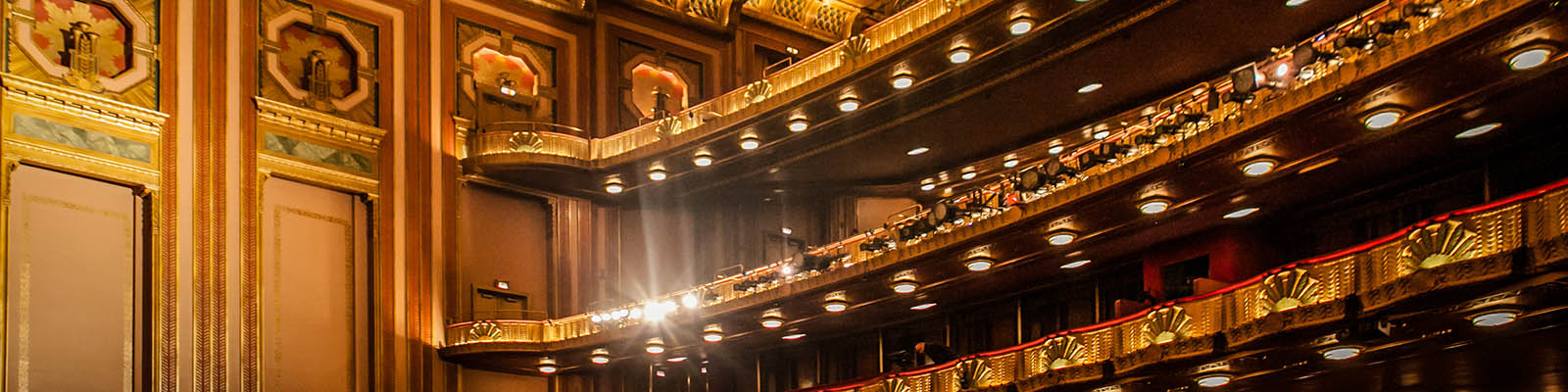
The Civic Opera Building, at 20 North Wacker Drive on the east bank of the Chicago River between Washington and Madison streets, is the permanent home of Lyric Opera of Chicago. The 3,563-seat capacity of the theater makes it the second-largest opera auditorium in North America.

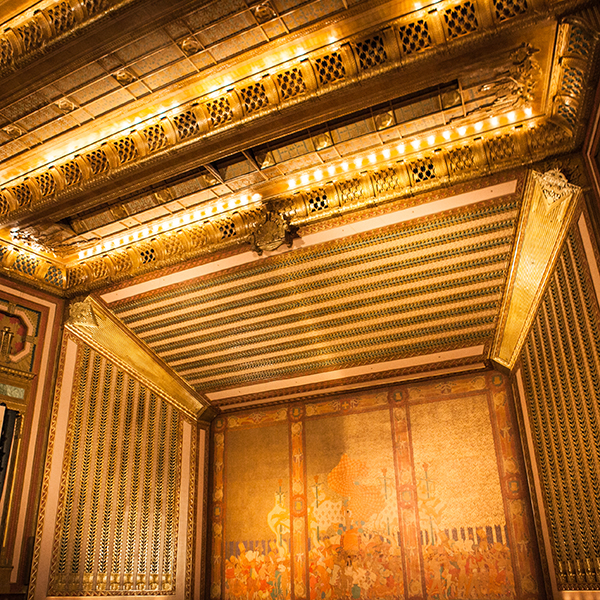
Lyric Opera purchased the Civic Opera House and adjacent backstage spaces from the building's owner in 1993, the first time in the history of the opera house (built in 1929) that the resident opera company has actually owned the space. Lyric simultaneously launched a $100-million capital campaign: Building on Greatness...An Opera House for the 21st Century, to finance the purchase and renovation of the art-deco house. The renovation was completed in time for the 1996/97 season. In 1996 the Civic Opera House auditorium was named the Ardis Krainik Theatre.

Major Events at Lyric Opera of Chicago

1954:

  • Two "calling-card" performances of Don Giovanni presented in February. Guests of honor include retired star soprano Rosa Raisa (creator of the title role of Turandot), who had interpreted the title role of Aida for the November 4, 1929, opening of the Civic Opera House.
  • Lyric Theatre of Chicago's first official season runs Nov. 1–20, with eight operas presented (two performances each), thus ending an eight–year resident opera drought in Chicago, following Chicago Opera Company's closing after its 1946 season.
  • Maria Callas's American debut season (Norma, La traviata, Lucia di Lammermoor)

1955:

  • A dozen productions presented Oct. 31–Dec. 3 (25 performances), including two triple bills. World's first opera production "lend–lease" plan initiated; stage settings borrowed from and exchanged with other major U.S. and foreign companies.
  • Maria Callas's first and only staged performances of Madama Butterfly

1956:

  • Lyric Theatre becomes Lyric Opera of Chicago.
  • Lawrence Kelly and Nicola Rescigno leave to found Dallas Civic Opera.
  • Maestro Bruno Bartoletti makes American debut conducting Il trovatore.
  • Lyric Opera Women's Board created.
  • Eleven operas presented Oct. 10–Nov. 17 (24 performances)
  • Lyric's November Gala Concert recorded by London Records.

1957:

  • 13 productions presented Oct. 11–Nov. 30, including one double bill (29 performances)

1958:

  • Pino Donati named musical assistant to the general manager.
  • Eleven productions presented Oct. 10–Nov. 29, including one double bill (29 performances)
  • First Lyric radio broadcast, on WBBM AM & FM: opening night, Falstaff.
  • Italian government awards $16,000 grant to Lyric Opera, first of its kind ever for a U.S. company. This foreign financial support causes a sensation, as there were no U.S. governmental subsidies for the arts at that time.

1959:

  • Sets for Jenůfa (first American production in English), on loan from the Royal Opera House/Covent Garden, comprise the first theatrical cargo to reach Chicago via the St. Lawrence Seaway.
  • Ten productions presented Oct. 12–Nov. 28 (28 performances)

1960:

  • In the spring, Lyric Opera presents New York City Opera productions in the Civic Opera House: The Ballad of Baby Doe, Susannah, and Street Scene.
  • Ten productions presented Oct. 14–Dec. 3 (29 performances)

1961:

  • World premiere of Vittorio Giannini's The Harvest, the first Lyric production under a Ford Foundation program for the promotion of American opera.
  • Nine productions presented Oct. 14–Dec. 1 (28 performances)

1962:

  • Dancer Rudolf Nureyev's American opera debut in Prince Igor, plus three works in a gala ballet performance.
  • Nine productions (including the gala ballet performance) presented Oct. 12–Nov. 30 (29 performances)

1963:

  • Eight productions presented Oct. 4–Nov. 29 (33 performances)

1964:

  • Maestro Bruno Bartoletti and Pino Donati named co–artistic directors.
  • Nine productions presented Oct. 9–Dec, 5 (28 performances)

1965:

  • Nine productions (including a double bill with first Chicago performances of Carmina Burana) Oct. 8–Dec. 8 (33 performances)

1966:

  • Nine productions Oct. 7–Dec. 15 (39 performances).
  • Lyric Opera sponsors Italian Flood Benefit Concert, to aid victims of the Arno River flood in Florence.

1967:

  • The season was cancelled because of the failure of management and the musicians' union to reach an agreement.

1968:

  • Eight productions (including Stravinsky double bill) Sept. 27–Dec. 14 (39 performances)

1969:

  • Lyric Opera tour to Ames, Iowa, at the behest of J.W. Fisher of the Gramma Fisher Foundation of Marshalltown, Iowa. The company transports full cast, orchestra, chorus, stagehands, and sets for a single performance of Madama Butterfly, paid for entirely by the Fisher Foundation.
  • Eight productions (including double bill) Sept. 26– Dec. 13 (45 performances)

1970:

  • Eight productions (including double bill and American professional stage premiere of Billy Budd) Sept. 25–Dec. 12 (45 performances)

1971:

  • Lyric Opera's first Ring cycle begins; one Ring opera presented per season through 1974.
  • For the first time, WFMT–FM broadcasts the opening–night performance of Lyric Opera (Semiramide, starring Joan Sutherland and Marilyn Horne, opening the 17th season); the program wins a Peabody Award.
  • Eight productions Sept. 24–Dec. 18 (44 performances)

1972:

  • Eight productions Sept. 22–Dec. 16 (48 performances)

1973:

  • WFMT–FM begins broadcasting each opening night of Lyric Opera of Chicago's entire season
  • Lyric Opera creates the Apprentice Artist Program to train promising young singers for operatic careers.
  • Prima ballerina Maria Tallchief named Lyric's director of ballet, creates and oversees company's new ballet corps.
  • The Education Department's Lecture Corps is formed, dispatching knowledgeable volunteers to schools, libraries, and other venues throughout Chicago and suburbs.
  • Eight productions Sept. 21–Dec. 14 (48 performances)

1974:

  • The Apprentice Artist Program is renamed the Lyric Opera School of Chicago, and is incorporated. Tenor/conductor Herbert Handt is appointed director of the school.
  • Lyric Opera of Chicago hosts 4th International Verdi Congress, first time in U.S.
  • Eight productions Sept. 20–Dec. 14 (48 performances)

1975:

  • Following Maestro Pino Donati's death, Bruno Bartoletti is named the company's sole artistic director and principal conductor.
  • Seven productions Sept. 19–Dec. 13 (48 performances)

1976:

  • Seven productions Sept. 25–Dec. 18 (48 performances)

1977:

  • First North American syndicated rebroadcasts (by WFMT–FM) of a Lyric Opera season to 250 stations.
  • Memorial tribute to Maria Callas at Lyric Opera.
  • Maestro Lee Schaenen is named director of the Opera School.
  • Seven productions Sept. 23–Dec. 16 (50 performances)

1978:

  • Penderecki's Paradise Lost, commissioned by Lyric Opera, receives its world premiere; the production (with chorus) later travels to La Scala in Milan, and is presented before Pope John Paul II at the Vatican in a command performance.
  • Luciano Pavarotti recital
  • Seven productions, including double bill, Sept. 22–Dec. 16 (49 performances)

1979:

  • Luciano Pavarotti recital
  • Lyric Opera travels to Guanajuato, Mexico, to open Cervantes Festival with its Don Pasquale production.
  • 25th Anniversary Season, marked with the publication of Lyric Opera of Chicago, by Claudia Cassidy, with foreword by Saul Bellow, highlighting the company's achievements under Carol Fox's general management.
  • Lyric Opera's Faust filmed for national and international telecasts.
  • Lyric hosts Gala Concert featuring many great opera personalities, including Judith Blegen, José Carreras, Geraint Evans, Mirella Freni, Tito Gobbi, Alfredo Kraus, Sherrill Milnes, Luciano Pavarotti, Krzystof Penderecki, Leontyne Price, Margaret Price, Katia Ricciarelli, and Jon Vickers. Staged by Sam Wanamaker.
  • Seven productions Sept. 22–Dec. 15 (53 performances)

1980:

  • Lyric Opera hosts Italian Earthquake Relief Benefit Concert broadcast via satellite, raising $200,000 for victims.
  • Five productions Sept. 20–Dec. 13 (39 performances)
  • Recitals given by Luciano Pavarotti, Alfredo Kraus, Leontyne Price, and Renata Scotto

1981:

  • In early January general manager Carol Fox retires, and Ardis Krainik becomes general director; William Mason becomes director of operations, artistic and production. Fox dies July 21.
  • The Lyric Opera School is renamed the Lyric Opera Center for American Artists to more fully reflect the organization's professional activities.
  • City of Chicago presentation of The Merry Widow, six performances, May 28–June 6
  • Seven productions Sept. 25–Dec. 19 (52 performances)

1982:

  • City of Chicago presentation of Die Fledermaus, six performances, May 14–22
  • Seven productions, including double bill, Sept. 18–Dec. 18 (54 performances)

1983:

  • City of Chicago presentation of The Mikado in contemporary new production by Peter Sellars, six performances, May 11–21
  • Luciano Pavarotti in concert
  • Lyric Opera co–hosts (with La Scala, Covent Garden, and L'Opóra National de Paris) the live international telecast, "Maria Callas: An International Celebration," on the 60th anniversary of her birth.
  • Seven productions Sept. 23–Dec. 17 (53 performances)

1984:

  • Lyric Opera initiates its Composer–in–Residence program, Hugo Weisgall, director; William Neil is named Lyric's first Composer–in–Residence.
  • Lyric Opera's Eugene Onegin (starring Mirella Freni, Wolfgang Brendel, and Nicolai Ghiaurov) filmed and offered for sale on video.
  • Handel's Rinaldo in concert starring Marilyn Horne, one performance, May
  • Marilyn Horne in recital and in concert; Luciano Pavarotti in concert
  • Schubert's Winterreise sung by Jon Vickers, one performance
  • Seven productions Sept. 21–Dec. 15 (54 performances)

1985–86:

  • Dame Kiri Te Kanawa in concert, Plácido Domingo in concert
  • Projected English titles introduced at Lyric Opera of Chicago (La rondine).
  • Eight productions Sept. 21–Jan. 19 (66 performances)
  • World premiere of Lyric Composer–in–Residence William Neil's opera, The Guilt of Lillian Sloan, with libretto by Frank Galati and the composer, performed by the Lyric Opera Center for American Artists.

1986–87:

  • Luciano Pavarotti in concert
  • Nine productions Sept. 20–Jan. 31 (73 performances)

1987–88:

  • Luciano Pavarotti in recital
  • Lyric becomes first major American opera company to present Philip Glass's Satyagraha (Christopher Keene/cond., David Pountney/dir.)
  • Nine productions Sept. 18–Feb. 6 (69 performances)

1988–89:

  • Lyric Opera produces its first Tannhäuser in a quarter–century in an all–new production, (Ferdinand Leitner/cond., Peter Sellars/dir.)
  • Eight productions Sept. 17–Feb. 3 (65 performances)
  • World premiere of Lyric's Composer–in–Residence Lee Goldstein's opera The Fan, with libretto by Charles Kondek, performed by the Lyric Opera Center for American Artists.
  • Lyric Opera sells out its entire 1988–89 season, reaching 103% of box–office capacity in the 3,563–seat Civic Opera House with 32,500 series–ticket subscribers—a historic achievement in the opera field.

1989–90:

  • To open the 35th anniversary season, the Madison Street bridge in downtown Chicago is named the "Lyric Opera Bridge" by Mayor Eugene Sawyer.
  • Lyric Opera launches its "Toward the 21st Century" artistic initiative, scheduling 20 mainstage 20th–century productions for the 1990s and additional contemporary productions through Lyric's Center for American Artists, including several world premieres.
  • Lyric Opera announces a new Ring cycle, to begin in the 1992–93 season, with Zubin Mehta/conductor, August Everding/director, and John Conklin/designer. The $6.5-million production is made possible with extraordinary support from Cynthia Wood (a $2.5-million gift) plus generous support from Ameritech.
  • The company severs its relationship with Italian tenor Luciano Pavarotti, who had canceled 26 out of 41 scheduled performances at Lyric since 1981.
  • Eight productions Sept. 16–Feb. 3 (65 performances)

1990–91:

  • Lyric Opera produces the first opera of its "Toward the 21st Century" initiative to great acclaim: Dominick Argento's The Voyage of Edgar Allan Poe, only the third time the opera has been produced, following revision by the composer. Lyric Opera Center for American Artists alumnus Donald Kaasch performs the title role (Christopher Keene/cond., Frank Galati/dir.)
  • Eight productions Sept. 14–Feb. 3 (67 performances)

1991–92:

  • Internationally celebrated bass Andrew Foldi is named director of the Lyric Opera Center for American Artists.
  • Lyric Opera continues its "Toward the 21st Century" initiative with a second American opera, Barber's Antony and Cleopatra (in a new production telecast by PBS on Great Performances; Richard Buckley/cond., Elijah Moshinsky/dir.), and the first European opera of the initiative, Prokofiev's The Gambler (Bruno Bartoletti/cond., Liviu Ciulei/dir.) – both Lyric Opera premieres.
  • Marilyn Horne recital
  • Eight productions Sept. 14–Feb 2 (71 performances)
  • Lyric Opera presents the world premiere of Composer–in–Residence Bright Sheng's The Song of Majnun, with libretto by Andrew Porter, performed by the Lyric Opera Center for American Artists.

1992–93:

  • Lyric Opera presents the world premiere of McTeague, by Pulitzer Prize–winning composer William Bolcom, with libretto by Arnold Weinstein and Robert Altman, directed by Altman, conducted by Dennis Russell Davies, starring Ben Heppner and Catherine Malfitano. The new opera was commissioned as part of the "Toward the 21st Century" artistic initiative.
  • "Toward the 21st Century" initiative continues with a new production of Debussy's Pelléas et Mélisande (James Conlon/cond., Frank Galati/dir.) as the European 20th century work.
  • Eight productions Sept. 19–Feb. 14 (71 performances)
  • Massenet's Le Cid in concert, 3 performances
  • Lyric Opera Center for American Artists gives first concerts abroad at Théâtre Musical de Paris/Châtelet.
  • "The Real McTeague," a one–hour film telecast on PBS's Great Performances, features director Robert Altman's perspective of Frank Norris's novel, McTeague; the Erich von Stroheim film, Greed; and the William Bolcom opera the novel spawned. Sequences of Lyric Opera of Chicago's world premiere highlighted and narrated by Chicago's Studs Terkel.

1993–94:

  • $100–million commitment from Lyric Opera of Chicago/Chicago Symphony Orchestra Facilities Fund, pledged by business community and foundations towards major renovation and expansion of performing arts spaces.
  • Lyric becomes new owner of Civic Opera House in April 1993, marking the first time that the opera house, built in 1929, has actually been owned by a resident Chicago opera company. With its $50 million portion of the Facilities Fund, Lyric launches a $100–million capital campaign, Building on Greatness: An Opera House for the 21st Century, to finance the purchase and renovation of the Civic Opera House
  • "Toward the 21st Century" initiative continues with Carlisle Floyd's Susannah starring Renée Fleming in her Lyric debut, and Samuel Ramey (George Manahan/cond., Robert Falls/dir.), and Alban Berg's Wozzeck (Richard Buckley/cond., David Alden/dir.) both in new productions.
  • Eight production Sept. 18–Feb. 19 (76 performances)
  • World premiere of Brena and Lee Freeman Sr. Composer–in–Residence Bruce Saylor's Orpheus Descending, based on the Tennessee Williams play, with libretto by J.D. McClatchy, is performed by the Lyric Opera Center For American Artists.

1994–95:

  • Lyric Opera receives a $5–million grant from the Rice Foundation for its Building on Greatness Capital Campaign, and names foyer of opera house the Daniel F. and Ada L. Rice Grand Foyer.
  • Lyric Opera's Gala 40th Anniversary Season opens in September with the publication of BRAVI!, a commemorative book marking the Krainik general directorship, with portrait photographs by Victor Skrebneski, production photographs by Tony Romano and Dan Rest, and with commentary by Andrew Porter and John von Rhein.
  • "Toward the 21st Century" initiative continues with a new production of Stravinsky's The Rake's Progress (Dennis Russell Davies/cond., Graham Vick/dir.) and the Harold Prince production of Leonard Bernstein's Candide (George Manahan/cond.)
  • Eight productions Sept. 17–Feb. 19 (78 performances)

1995–96:

  • Lyric Opera and Ardis Krainik receive "European Union Friendship Award" from the Consul Generals of the European Union Member States in Chicago. This is only the second time the award has been presented.
  • Noted stage director Richard Pearlman is named director of the Lyric Opera Center for American Artists.
  • As the 41st season begins, 80% of the $100–million goal for the Building on Greatness Capital Campaign has been achieved, and the second of the four renovation phases has been completed.
  • Lyric Opera enters its fourth decade with a $37–million budget, offering 79 performances of nine productions Sept. 15–Mar. 9, followed by three entirely sold–out Ring cycles Mar. 11–30, adding up to 91 performances in its 3,563–seat house.
  • Lyric Opera's first complete Ring cycle attracts audiences and critics from all 50 states and 22 foreign countries. The artistic team includes conductor Zubin Mehta, director August Everding, set and costume designer John Conklin, lighting designer Duane Schuler, and choreographer Debra Brown. The cast includes James Morris, Eva Marton, Jane Eaglen, Siegfried Jerusalem, Marjana Lipovšek, and Matti Salminen. An all–day international symposium precedes the first cycle, and educational events and exhibitions are staged throughout Chicago during March. Lyric's Ring cycles generate $34.7–million economic impact for Chicago area. No Ring cycle had been presented in Chicago in a single week, or even a single year, since before World War II. All three cycles were virtually sold out by August of 1995.
  • "Toward the 21st Century" initiative continues with John Corigliano's The Ghosts of Versailles, with libretto by William M. Hoffmann (commissioned by the Metropolitan Opera and co–owned by Lyric, Ghosts was first produced at the Met in 1991); and Janácek's The Makropulos Affair, the latter in a new production (Bruno Bartoletti/cond., David Alden/dir.)
  • The company's education department launches its ambitious "Operareach 2000" project, envisioning a 100% increase in the entire range of its already–considerable activities by the end of the present decade, encompassing matinees for high–school students and senior citizens; symposia in connection with major productions; and "Opera in the Classroom," "Opera in the Hospitals," "Opera in the Community," and "Opera in the Schools" curriculum programs.

1996–97:

  • Ardis Krainik announces in June that she will retire April 30, 1997
  • Renovation of Civic Opera House completed in September 1996.
  • Ardis Krainik Celebration Gala Concert on Oct. 13, 1996; international opera greats assemble to pay tribute to Lyric's general director. Civic Opera House auditorium named the Ardis Krainik Theatre.
  • "Toward the 21st Century" artistic initiative continues with Gian Carlo Menotti's The Consul (new production, Richard Buckley/cond., Robert Falls/dir.) and Luciano Berio's Un re in ascolto (American premiere, Dennis Russell Davies/cond., Graham Vick/dir.).
  • "Opera in the Neighborhoods" program launched in October 1996, as part of "Operareach 2000" educational initiative, reaching up to 15,000 schoolchildren with adapted performances of The Magic Flute and solo presentations. Program garners extensive local, national, and international media coverage.
  • William Mason named to succeed Ardis Krainik as general director in November 1996, following extensive international search. Director of operations, artistic and production, since 1981, Mason has been associated with the company for more than three decades.
  • The City of Chicago presents a $2.5-million gift to Lyric Opera's Building on Greatness Capital Campaign; and Ardis Krainik receives the Medal of Merit from Mayor Richard M. Daley in November, her final public appearance.
  • Eight productions Sept. 21–Mar. 8 (80 performances)
  • Ardis Krainik dies Jan. 18, 1997, at the age of 67. William Mason becomes general director.
  • World premiere of Between Two Worlds (The Dybbuk), by Pulitzer Prize-winning composer Shulamit Ran, Brena and Lee Freeman Sr. Composer in Residence, with libretto by Charles Kondek, performed by the Lyric Opera Center for American Artists, June 20, 22 at the DePaul Merle Reskin Theater.

1997–98:

  • General director William Mason announces the new artistic team for Lyric Opera of Chicago: internationally celebrated conductor Andrew Davis will become music director-designate on May 1, 1999, and principal conductor and music director on September 1, 2000; and Matthew A. Epstein, Lyric's longtime artistic advisor, will become artistic director on May 1, 1999. Maestro Bartoletti will retire as Lyric's artistic director on April 30, 1999, becoming artistic director emeritus.
  • Lyric Opera presents the world premiere of Amistad by Anthony Davis, with libretto by Thulani Davis, conducted by Dennis Russell Davies, directed by George C. Wolfe, starring Thomas Young, Mark S. Doss, and Florence Quivar. The new opera was commissioned as part of the "Toward the 21st Century" artistic initiative. Extensive educational outreach efforts include publication of the Amistad Sourcebook and study guides, an all-day symposium, training sessions for Chicago public school teachers, full-length student matinee performances at the Civic Opera House, and 55-minute "Opera in English" performances seen by more than 15,000 students in the city and suburbs.
  • Eight productions Sept. 20–March 8 (82 performances)
  • Building on Greatness Capital Campaign closes triumphantly on March 30, having exceeded its goal by raising $100,700,000 since 1993. "Ardis Krainik Celebration Gala" recording released on CD and cassette.
  • Lyric Opera sells out its eight-opera season for the tenth consecutive year, with the 1997/98 season reaching 103.2% of capacity, a record unequaled by any North American performing-arts company.

1998–99:

  • A commemorative bust of Lyric founder Carol Fox is unveiled by Fox's daughter Victoria Flanagan on Opening Night, and later installed permanently in the entrance of the Civic Opera House.
  • Lyric Opera presents the new-version premiere of Mourning Becomes Electra by Marvin David Levy (based on the Eugene O'Neill trilogy) as part of the "Toward the 21st Century" artistic initiative (Richard Buckley/cond., Liviu Ciulei/dir.). Also presented as part of the initiative: the Lyric Opera premiere of Rise and Fall of the City of Mahagonny, in a new production (Sylvain Cambreling/cond., David Alden/dir.)
  • Michael John LaChiusa named Lyric's sixth Freeman Composer in Residence, begins work on score and libretto for Enigma Variations, an original piece.
  • Eight productions Sept. 26–Mar. 13 (81 performances)
  • Music Director–designate Andrew Davis is appointed a Knight Bachelor in Britain's New Year's Honours.

1999–2000:

  • Lyric Opera presents the world premiere of A View from The Bridge by Pulitzer Prize-winning composer William Bolcom, with libretto by Arnold Weinstein and Arthur Miller, based on Miller's play, as the concluding commission of the "Toward the 21st Century" artistic initiative. (Dennis Russell Davies/cond., Frank Galati/dir.)
  • Company premiere of Handel's Alcina, starring Renée Fleming in the title role
  • General director William Mason, music director Sir Andrew Davis, and artistic director Matthew A. Epstein announce "Renaissance Project" and "American Horizons" artistic initiatives
  • Samuel Ramey "A Date with the Devil" concert with Lyric Opera Orchestra.
  • Eight productions Sept. 25–Mar. 18 (84 performances)
  • Ricky Ian Gordon named Lyric's seventh Freeman Composer in Residence, begins work on Morning Star, an adaptation of a play by Sylvia Regan, with libretto by William M. Hoffman.

2000–01:

  • Lyric Opera presents its first-ever free pre-season outdoor concert, "The Stars of Lyric Opera in Grant Park," Sept. 9 with Bruno Bartoletti, Lyric's artistic director emeritus, leading the Lyric Opera Orchestra, Chorus, and soloists from the 2000-01 season. Attendance approximately 20,000.
  • Lyric Opera premiere of Harbison's The Great Gatsby presented as part of Lyric's "American Horizons" initiative.
  • New productions of Verdi's Rigoletto (Fabio Luisi/cond.,Christopher Alden/dir.) and Wagner's The Flying Dutchman (Sir Andrew Davis/cond., Nikolaus Lehnhoff/dir.).
  • Eight productions Sept. 23–Mar. 18 (84 performances)
  • World premiere of Lovers and Friends (Chautauqua Variations) [formerly titled Enigma Variations] by composer-librettist Michael John LaChiusa, Brena and Lee Freeman Sr. Composer in Residence; performances June 29-30 by the Lyric Opera Center for American Artists, DePaul Merle Reskin Theater.

2001–02:

  • Lyric Opera presents second annual free pre-season outdoor concert in Grant Park on Sept. 8 with Sir Andrew Davis, Lyric's music director, leading the Lyric Opera Orchestra, Chorus, and soloists from the 2001/02 season. Attendance approximately 30,000.
  • New production of Verdi's Otello (Sir Andrew Davis/cond., Sir Peter Hall/dir.).
  • Lyric Opera premiere of Weill's Street Scene (Richard Buckley/cond., David Pountney/dir.) presented as part of Lyric's "American Horizons" initiative.
  • New production of Britten's Billy Budd (Sir Andrew Davis/cond., David McVicar/dir.) marks 50th anniversary of world premiere and 25th anniversary of composer's death. Theodor Uppman, who created the title role in 1951, attends.
  • Lyric Opera premiere of Humperdinck's Hansel and Gretel (Mark Elder/cond., Richard Jones/dir.)
  • Eight productions Sept. 22–Mar. 16 (84 performances)

2002–03:

  • Lyric Opera Center for American Artists names soprano Gianna Rolandi director of vocal studies, a new position.
  • Lyric's Brena and Lee Freeman Sr. Composer in Residence program concludes following the workshop performance of Morning Star by Ricky Ian Gordon.
  • Lyric Opera presents third annual free "Stars of Lyric Opera at Grant Park" concert on Sept. 8 with music director Sir Andrew Davis and artistic director emeritus Bruno Bartoletti leading the Lyric Opera Orchestra, Chorus, and soloists from the 2002/03 season
  • New production of Mascagni's Cavalleria rusticana and Leoncavallo's Pagliacci (Bruno Bartoletti/cond., Elijah Moshinsky/dir.).
  • Lyric Opera premiere and new production of Sondheim's Sweeney Todd starring Bryn Terfel and Judith Christin (Paul Gemignani/cond., Neil Armfield/dir.) presented as part of Lyric's "American Horizons" initiative.
  • First Lyric Opera production of Massenet's Thaïs since 1959, starring Renée Fleming and Thomas Hampson (Sir Andrew Davis/cond., John Cox/dir.)
  • Lyric Opera premiere of Handel's Partenope (Harry Bicket/cond., Francisco Negrin/ dir.)
  • New production of Verdi's Un ballo in maschera (Mark Elder/cond., Olivier Tambosi/dir.).
  • Nine productions (including double bill) Sept. 21–Mar. 22 (86 performances)

2003–04:

  • Lyric Opera presents fourth annual free "Stars of Lyric Opera at Grant Park" concert on Sept. 6 with music director Sir Andrew Davis leading the Lyric Opera Orchestra and soloists from the company's present and past seasons.
  • Lyric Opera premiere/new production of Blitzstein's Regina (John Mauceri/cond., Charles Newell/dir.) presented as part of Lyric's "American Horizons" initiative.
  • Eight productions Sept. 20–Mar. 21 (83 performances)

2004–05:

  • Lyric announces Look to the Future $50-million Endowment Campaign; $12.2 million already raised.
  • Lyric Opera's Golden Jubilee 50th-anniversary season commences Sept. 18
  • The Gala Concert (Oct. 30, 2004) commemorates company's 50th anniversary, honoring Lyric history and legendary "Jubilarians" (artists from Lyric's early years) with performances by today's outstanding artists, including Olga Borodina, David Daniels, Jane Eaglen, Renée Fleming, Elizabeth Futral, Susan Graham, Andrea Gruber, Carlo Guelfi, Thomas Hampson, Ben Heppner, Vincenzo La Scola, Richard Margison, Karita Mattila, James Morris, Samuel Ramey, Andrea Rost, Bryn Terfel, Gregory Turay, Deborah Voigt, and Frederica von Stade, under the batons of Sir Andrew Davis and Bruno Bartoletti. The Gala Concert raised $5 million net for the season's general operating funds, an alltime record.
  • Publication of Lyric Opera - 50 Years of Grand Opera in Chicago, commemorative program/book chronicling the company's history in photographs, essays, and articles.
  • Lyric Opera world premiere of William Bolcom's A Wedding (Dec. 11) based on the 1978 Robert Altman film, libretto by Arnold Weinstein (Dennis Russell Davies/ cond., R. Altman/dir.) presented as part of Lyric's "American Horizons" initiative.
  • Lyric revives its landmark 1996 production of Wagner's Der Ring des Nibelungen in three weeklong cycles, March 28-April 16.
  • Eight productions Sept. 18–Mar. 26 (78 performances), followed by three Ring cycles Mar. 28–Apr. 16 (12 performances)

2005–06

  • Lyric Opera presents fifth free "Stars of Lyric Opera" concert for the first time in the Pritzker Pavilion of Millennium Park on Sept. 10, with guest conductor John Mauceri leading the Lyric Opera Orchestra and soloists from the company's present and future seasons.
  • Lyric launches NExT - "Discount Student Tickets for the Next Generation" program - $20 tickets for selected performances available to fulltime college students, marketed and administered exclusively via the internet.
  • New production of Puccini's Manon Lescaut (Bruno Bartoletti/cond., Olivier Tambosi/dir.)
  • Lyric premiere/new production of Tippett's The Midsummer Marriage (Sir Andrew Davis/cond., Sir Peter Hall/dir.) presented in celebration of the British composer's centenary.
  • New production of Verdi's Rigoletto (Jesús López Cobos/cond., Stefano Vizioli/dir.).
  • New production of Gluck's Orfeo ed Euridice starring David Daniels and Isabel Bayrakdarian (Harry Bicket/cond., Robert Carsen/dir.).
  • Eight productions Sept. 24–Mar. 26 (83 performances)
  • Richard Pearlman, director of the Lyric Opera Center for American Artists, dies April 8, at the age of 68. On May 9 Gianna Rolandi is named the new director of the Opera Center, after four years as director of vocal studies for the program.
  • Look to the Future Endowment Campaign is completed, acquiring more than $50 million in commitments to the company's endowment.

2006–07

  • Lyric Opera presents sixth free "Stars of Lyric Opera" concert at the Pritzker Pavilion of Millennium Park on Sept. 9, with guest conductor Richard Buckley leading the Lyric Opera Orchestra and soloists from the company's present and future seasons.
  • On Sept. 16, the opening night of Lyric Opera's 52nd season, general director William Mason announces that the Lyric Opera Center for American Artists will henceforth be known as The Patrick G. and Shirley W. Ryan Opera Center at Lyric Opera of Chicago, in recognition of a personal gift of unprecedented generosity.
  • Subscriber Appreciation Concert starring Renée Fleming and the Lyric Opera Orchestra on Oct. 6.
  • Lyric premiere/new production of Gluck's Iphigénie en Tauride starring Susan Graham (Louis Langrée/cond., Robert Carsen/dir.).
  • New production of R. Strauss's Salome starring Deborah Voigt (Sir Andrew Davis/cond., Francesca Zambello/dir.).
  • Lyric resumes live broadcast on 98.7WFMT with the opening-night performance of Salome Oct. 21, 2006, thanks to The Bucksbaum Family Lyric Opera Broadcasts, made possible by the Matthew and John Bucksbaum Families and General Growth Properties, with matching funds provided for 2006/07 by Richard P. and Susan Kiphart. Subsequent live performances air locally through the season, and are rebroadcast locally, regionally, nationally, and internationally by The WFMT Radio Network (via XM satellite, CBC, and EBU) May 12-June 30. Expected annual listenership: more than 25 million.
  • New production of Verdi's Il trovatore (Bruno Bartoletti/cond., David McVicar/dir.); production marks 50th anniversary of Bartoletti's American debut, conducting the same opera at Lyric.
  • Lyric premiere of Poulenc's Dialogues of the Carmelites (Sir Andrew Davis/cond., Robert Carsen/dir.), Netherlands Opera production.
  • Eight productions Sept. 16-Mar. 27 (82 performances)
  • Lyric's OPERAREACH education outreach programs reach nearly 85,000 adults and children throughout the Chicago area.


Major American Debuts and American Operatic Debuts* at Lyric Opera of Chicago

1954: Léopold Simoneau, tenor* (Don Ottavio) / Don Giovanni (calling–card performance); Maria Callas, soprano (title role), Mirto Picchi, tenor (Pollione) / Norma; Carlo Badioli, bass–baritone (Dr. Bartolo) / Il barbiere di Siviglia; Giangiacomo Guelfi, baritone (Marcello) / La bohème

1955: Carlo Bergonzi, tenor (Luigi) / Il tabarro; Teresa Stich–Randall, soprano* (Gilda)/ Rigoletto; Anita Cerquetti, soprano (Amelia) / Un ballo in maschera

1956: Georg Solti, conductor* / Salome; Bruno Bartoletti, conductor / Il trovatore

1957: Anna Moffo, soprano (Mimì); Aldo Protti, baritone (Marcello) / La bohème

1958: Walter Berry, bass–baritone (title role); Hans Hartleb, director / Le nozze di Figaro; Kiril Kondrashin, conductor / Madama Butterfly

1959: Christa Ludwig, mezzo–soprano (Dorabella) / Così fan tutte; Georges Prêtre, conductor / ThaÏs

1960: Antonino Votto, conductor / Don Carlo; Eberhard Wächter, baritone (Count Almaviva) / Le nozze di Figaro; Renata Scotto, soprano (Mimì) / La bohème

1961: Piero de Palma, tenor (Arturo) / Lucia di Lammermoor; Ilva Ligabue, soprano (Margherita) / Mefistofele; Sesto Bruscantini, baritone (title role) / Il barbiere di Siviglia

1962: Rudolf Nureyev, dancer / Prince Igor; Régine Crespin, soprano (title role) / Tosca; Alfredo Kraus, tenor (Nemorino) / L'elisir d'amore

1963: Danica Mastilovic, soprano (Abigaille); Carlo Cossutta, tenor (Abdallo) / Nabucco; Nicolai Ghiaurov (Méphistophélès) / Faust

1964: Fiorenza Cossotto, mezzo–soprano (Leonora) / La favorita; Ivo Vinco, bass (Ferrando) / Il trovatore

1965: Elena Souliotis, soprano (Elena) / Mefistofele

1966: Christiane Eda–Pierre, soprano (Leïla) / Les pêcheurs de perles; Karl Ridderbusch, bass (Sarastro) / Die Zauberflöte

1969: Christoph von Dohnányi, conductor* / Der fliegende Holländer

1970: Yvonne Minton, mezzo–soprano* (Oktavian); Hans Neugebauer, director / Der Rosenkavalier

1972: Katia Ricciarelli, soprano (Lucrezia) / I due Foscari; Anne Howells, mezzo–soprano (Dorabella) / Così fan tutte

1973: Ileana Cotrubas, soprano (Mimì) / La bohème

1974: Wladimiro Ganzarolli, bass–baritone (title role), Eduardo de Filippo, director*/ Don Pasquale

1975: John Copley, director / Lucia di Lammermoor

1976: Matteo Manuguerra, baritone (title role) / Rigoletto; William Johns, tenor* (title role) / Les contes d'Hoffmann; Giulio Chazalettes, director; Ulisse Santicchi, designer / The Love for Three Oranges

1977: Maria Chiara, soprano (title role) / Manon Lescaut

1980: Marek Janowski, conductor / Lohengrin

1983: Luciana Serra, soprano (title role) / Lakmé

1984: Willy Decker, director / Arabella; Cheryl Studer, soprano (Micaela) / Carmen

1985–86: Cecilia Gasdia, soprano (Giulietta) / I Capuleti e i Montecchi

1987–88: Yuri Ljubimov, director*/ Lulu

1988–89: Nadine Secunde, soprano* (Elisabeth); Ben Heppner, tenor* (Walther) / Tannhäuser

1990–91: Frank Galati, director*/The Voyage of Edgar Allan Poe

1992–93: Giuseppe Sabbatini, tenor (Rodolfo); Ildebrando D'Arcangelo, bass–baritone (Colline) / La bohème

1993–94: Dmitri Hvorostovsky, baritone* (Germont) / La traviata

1994–95: José Cura, tenor (Loris) / Fedora

1995–96: Kim Begley, tenor (Albert Gregor) / The Makropulos Affair

1996–97: Bernadette Manca di Nissa, contralto (Princess) / Suor Angelica; Luc Bondy, director / Salome; Olaf Bär, baritone* (Papageno) / Die Zauberflöte

1997–98: Vesselina Kasarova, mezzo–soprano (Idamante) / Idomeneo

1998–99: Laura Aikin, soprano* (Zerbinetta) / Ariadne auf Naxos; György Györiványi Rath, conductor / Mefistofele; Kurt Horres, stage director /Die Meistersinger von Nürnberg

1999–00: Gwyn Hughes Jones, tenor (Fenton); Olivier Tambosi, stage director; Frank Philipp Schlössmann, designer/ Falstaff

2000–01: Richard Jones, stage director* / Jenůfa

2001–02: Jonas Kaufmann, tenor (Cassio) / Otello; Fabio Sartori, tenor (Tebaldo) / I Capuleti e i Montecchi; Leah Hausman, choreographer* / Billy Budd; Alice Coote, mezzo–soprano (Hansel) / Hansel and Gretel; Dorothea Röschmann, soprano* (Pamina) / The Magic Flute

2002–03: Patrizia Ciofi, soprano (Violetta) / La traviata; Oleg Bryjak, bass–baritone (Alberich) / Siegfried

2003–04: Tómas Tómasson, bass (Raimondo) / Lucia di Lammermoor; Neal Davies, baritone* (Major–General) / The Pirates of Penzance

2004–05: Ferdinand Wögerbauer, set designer, Moidele Bickel, costume designer / Don Giovanni

2005–06: Cornelia Götz, soprano (Queen of the Night) / Die Zauberflöte, Ofelia Sala*, soprano (Sophie) / Der Rosenkavalier.


American and World Premieres at Lyric Opera of Chicago

1955: Lord Byron's Love Letter, Raffaele de Banfield: American Premiere; Il ballo delle ingrate, Claudio Monteverdi: American Premiere

1961: The Harvest, Vittorio Giannini: World Premiere

1970: Billy Budd, Benjamin Britten: American Professional Stage Premiere

1978: Paradise Lost, Krzysztof Penderecki: World Premiere/Commissioned by Lyric Opera

1992: McTeague, William Bolcom: World Premiere/Commissioned by Lyric Opera

1996: Un re in ascolto, Luciano Berio: American Premiere

1997: Amistad, Anthony Davis: World Premiere/Commissioned by Lyric Opera and the American Music Theatre Festival of Philadelphia

1999: A View from the Bridge, William Bolcom: World Premiere/Commissioned by Lyric Opera

2004: A Wedding, William Bolcom: World Premiere/Commissioned by Lyric Opera